
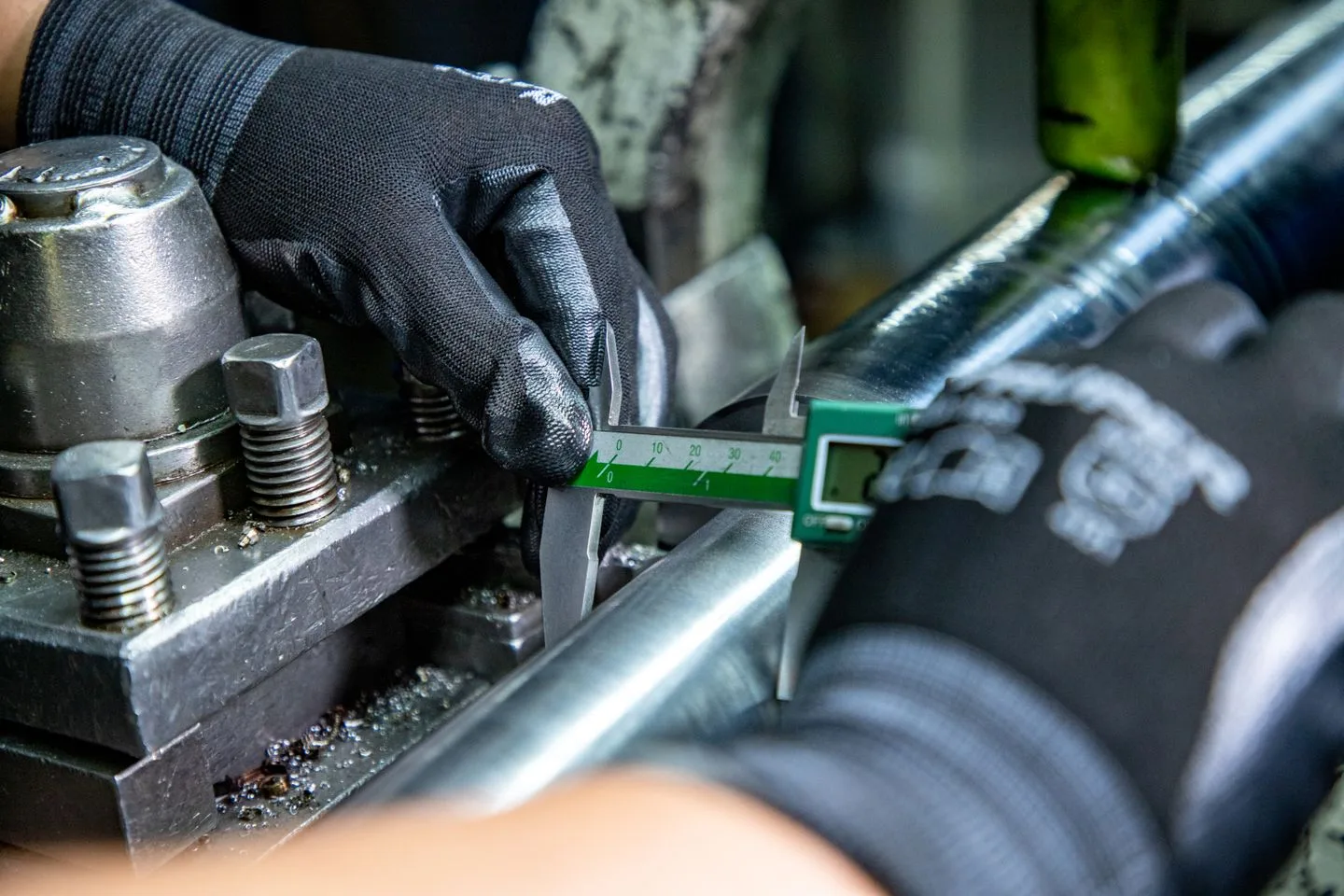
Quality inspection connects a machine’s drawings and specifications to what is built and what it produces. Material checks, dimensional measurements, assembly reviews and sample runs answer different questions. A useful inspection plan follows the equipment through these stages and ends with an agreed record of the configured machine and finished packaging.
Inspect against the correct drawing and specification
At the material stage, check the specified stock dimensions, identification and visible condition. For a machined part, use the correct drawing revision and identify the features that determine fit or alignment. The result should be tied to the component being checked, with a clear unit, acceptance limit and measurement method.
This is particularly useful for features such as shaft seats, mounting faces and locating holes. Recording a number without the feature or requirement gives the next person little to work with. A practical inspection record makes it possible to see what was measured, which criterion was applied and whether any follow-up is required before assembly.
Match the measuring tool to the feature
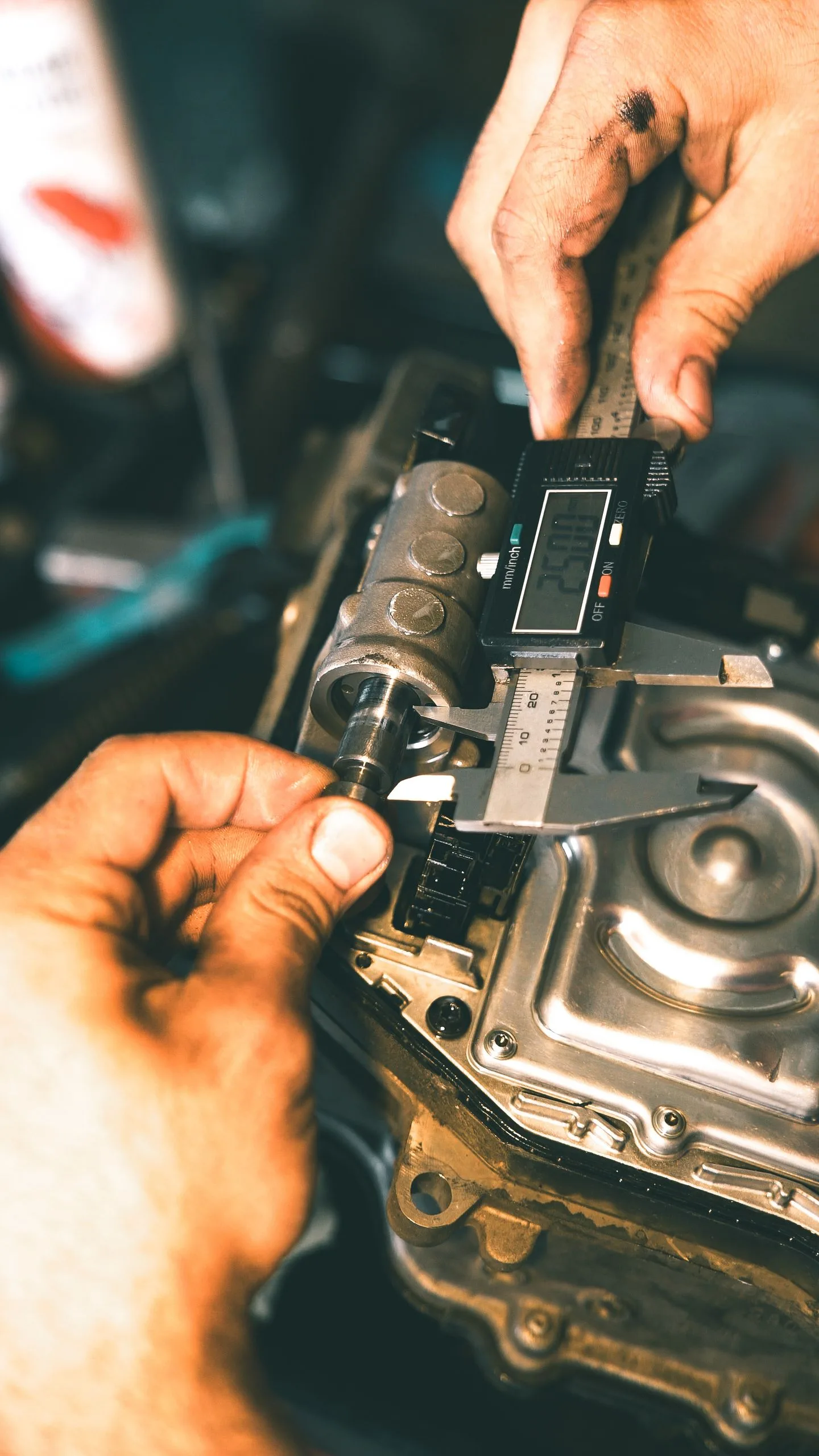
Calipers are useful for accessible outside, inside and depth dimensions. A micrometer, bore gauge or other instrument may be needed for a feature with different access or accuracy requirements. Select the method around the actual tolerance and geometry. The number of digits on a digital display describes its resolution and does not, by itself, establish measurement accuracy.
Check the instrument’s condition and calibration status, prepare the contact surfaces and align it correctly with the feature. Consistent contact and repeatable readings matter. For an internal feature, the measuring points must reach the intended location. Where a result is close to the acceptance limit, review the method and measurement uncertainty before deciding whether the part is acceptable.
Review the assembly before the sample run
Once components are fitted, the inspection focus moves to their relationships in the assembly. Review guide alignment, fixing points, moving clearances and the access needed for routine work. Wiring and pneumatic arrangements should be checked against the applicable configuration and documentation by qualified personnel. These checks address the assembled equipment rather than one isolated part.
Before a demonstration, agree the operating checks appropriate to the machine, including guarding and control functions. They should follow the manufacturer’s instructions and applicable requirements. An equipment photograph or a short running clip cannot replace that review. Keep the scope clear so that the demonstration starts from an agreed setup and operating procedure.
Use the intended board and box design for acceptance
For a box forming machine, the finished box gives the component and assembly checks a practical context. Use the agreed blank design and production board, then assess dimensions, squareness, folding and joint condition as applicable. For carton sealing equipment, include flap position and tape placement. Record the material and settings alongside the results so that the demonstration can be understood.
Agree how output will be counted, which box sizes need to be demonstrated and which records accompany the equipment. Send Jason Chen your drawings, board specification and inspection priorities when discussing a Xunding quotation. The acceptance plan should identify the model, configuration, sample material and agreed criteria, giving both sides a concrete basis for the review before shipment.
View the company photo album →
Review machine specifications and acceptance checks →
Explore box forming and carton packaging machines →
Discuss your machine requirements with Jason Chen →
Technical reading: Mitutoyo on caliper accuracy and calibration.