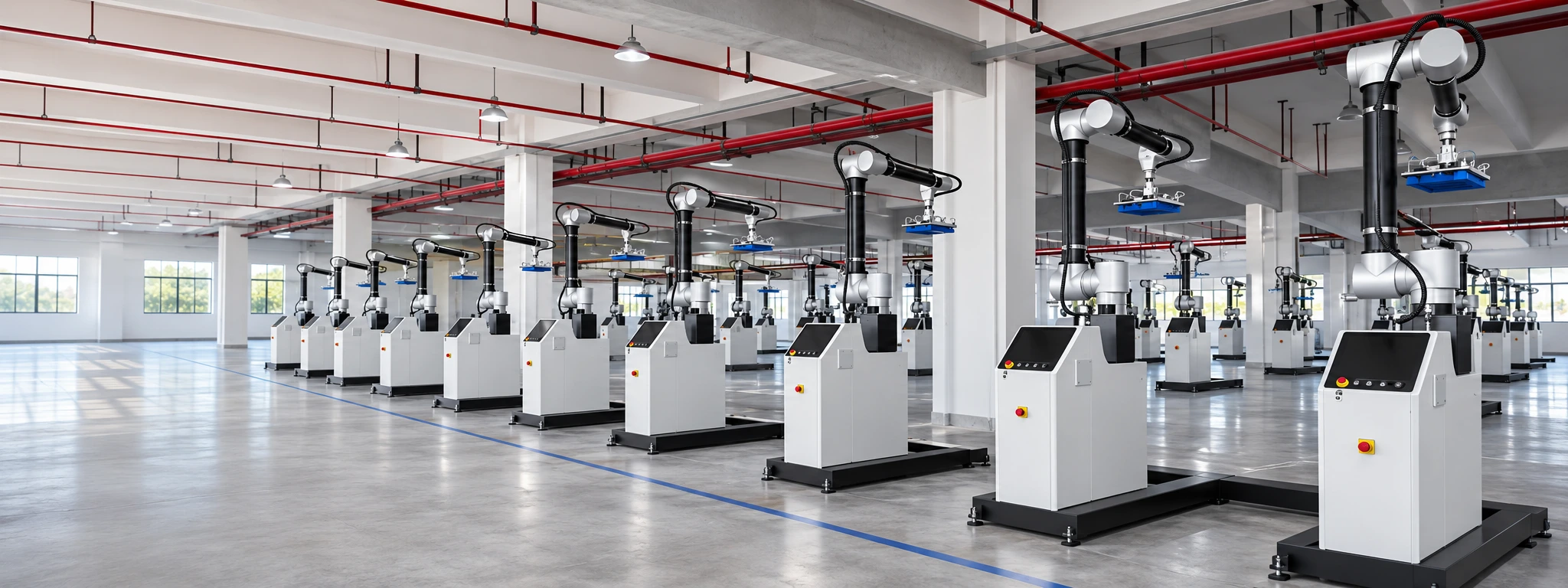
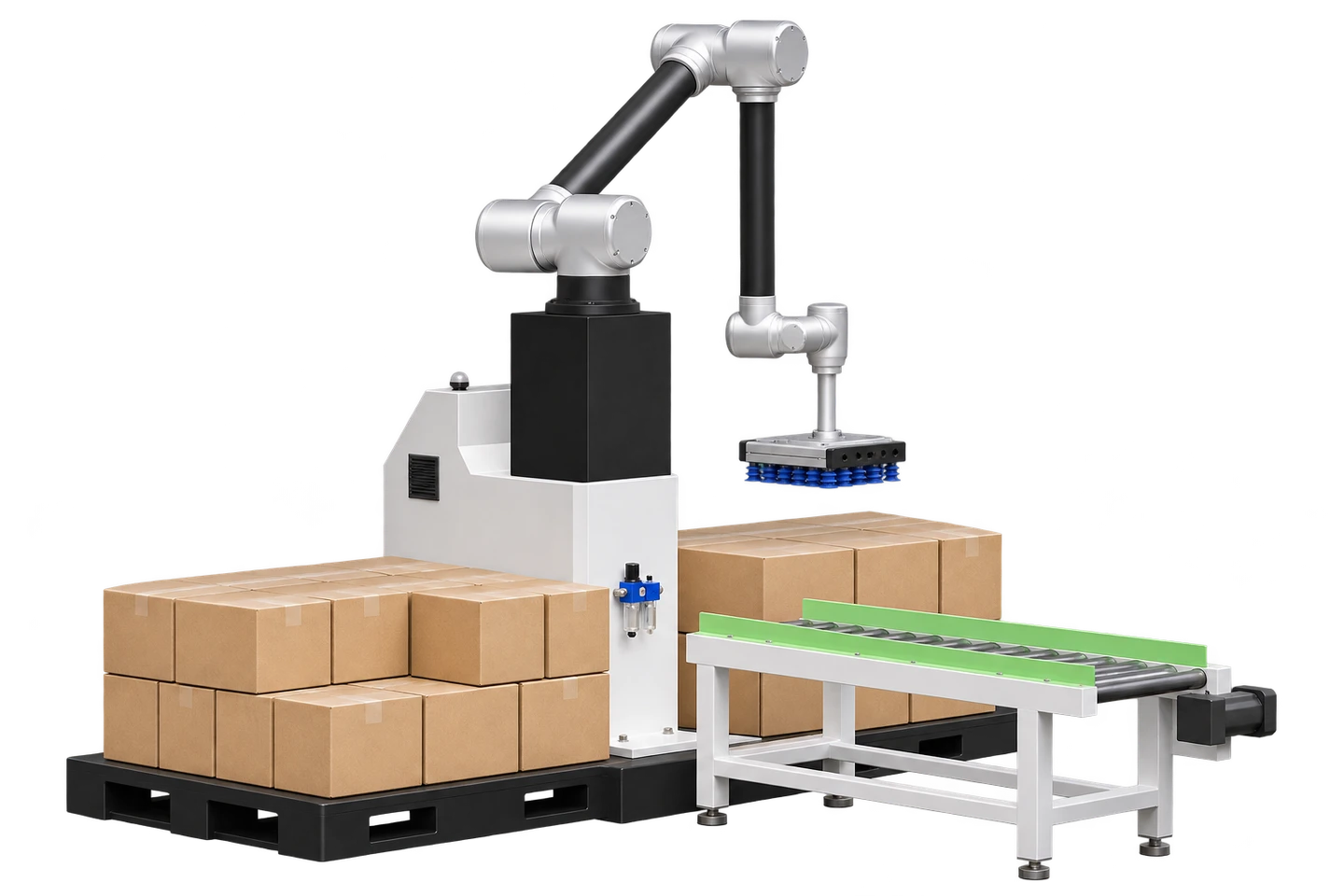
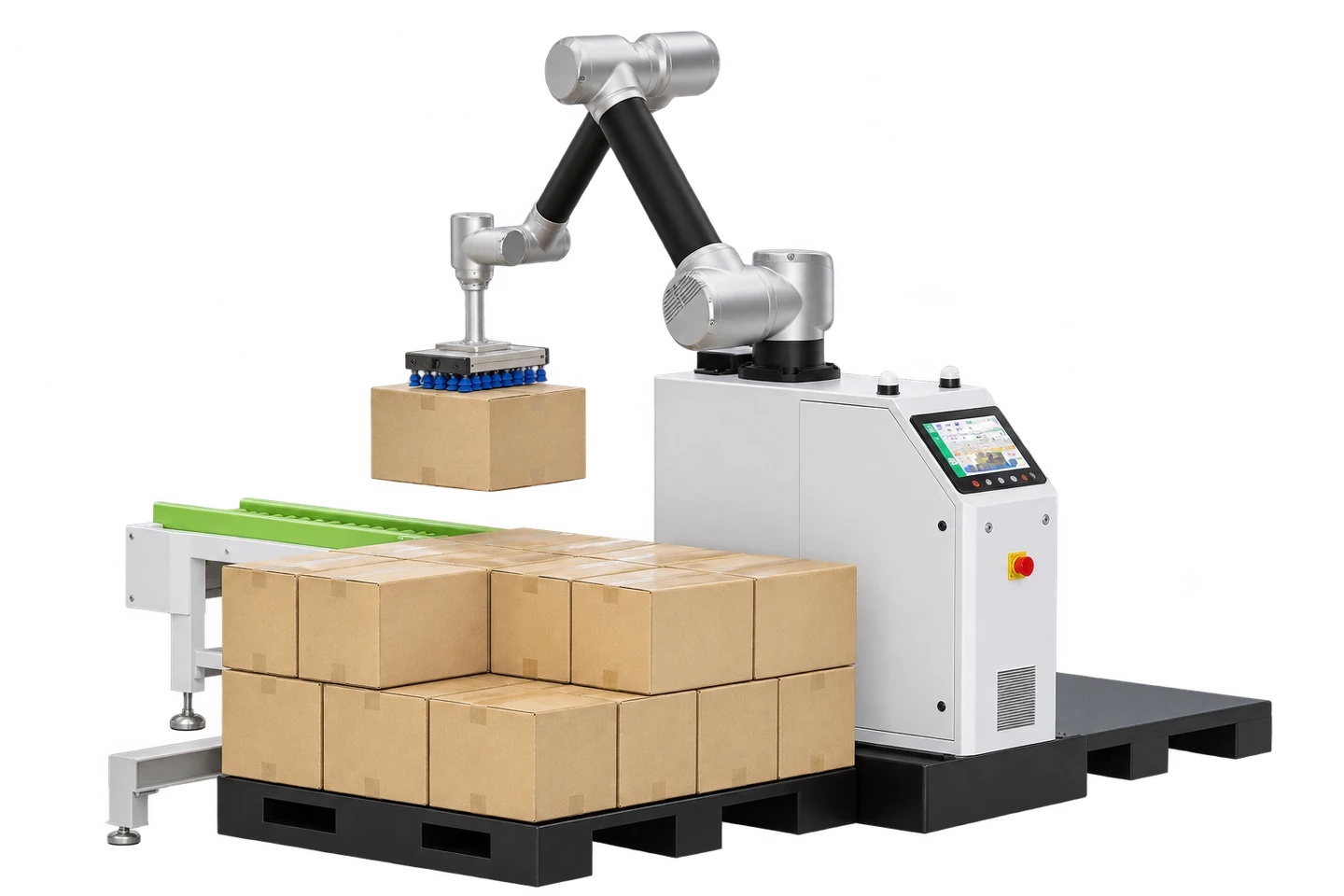
Configure a robot palletizing workstation for packed cartons. Compare fixed-base and lift-column arrangements against case weight, pallet pattern and finished stack height.
YM-MD25PRO is a fixed-base workstation with a 25 kg robot rating and a listed 1,900 mm working radius. Review the gripper and filled carton together, then verify the 2,100 mm catalogue stacking-height configuration against every pallet position.
YM-MD25PRO-G is a fixed-base workstation with a 25 kg robot rating and a listed 1,900 mm working radius. Review the gripper and filled carton together, then verify the 2,100 mm catalogue stacking-height configuration against every pallet position.
YM-MD30PRO is a fixed-base workstation with a 30 kg robot rating and a listed 1,900 mm working radius. Review the gripper and filled carton together, then verify the 2,100 mm catalogue stacking-height configuration against every pallet position.
YM-MD40PRO is a fixed-base workstation with a 40 kg robot rating and a listed 1,900 mm working radius. Review the gripper and filled carton together, then verify the 2,100 mm catalogue stacking-height configuration against every pallet position.
YM-MD25Max is a lift-column workstation with a 25 kg robot rating and a listed 1,600 mm working radius. Review the gripper and filled carton together, then verify the 2,100 mm catalogue stacking-height configuration against every pallet position.
YM-MD25Max-G is a lift-column workstation with a 25 kg robot rating and a listed 1,600 mm working radius. Review the gripper and filled carton together, then verify the 2,100 mm catalogue stacking-height configuration against every pallet position.
YM-MD30Max is a lift-column workstation with a 30 kg robot rating and a listed 1,900 mm working radius. Review the gripper and filled carton together, then verify the 2,600 mm catalogue stacking-height configuration against every pallet position.
YM-MD40Max is a lift-column workstation with a 40 kg robot rating and a listed 1,700 mm working radius. Review the gripper and filled carton together, then verify the 2,100 mm catalogue stacking-height configuration against every pallet position.
A fixed-base workstation suits a layout where the arm can reach the infeed and all required pallet positions. A lifting column changes the working elevation as the stack grows. Evaluate both against the lowest pick and highest placement, the farthest pallet corner and the clearance above the load.
Catalogue examples by robot payload and working radius
Workstation layout
Robot rated payload
Working radius
Fixed base
25 kg
1,900 mm
Fixed base
30 kg
1,900 mm
Fixed base
40 kg
1,900 mm
Lift column
25 kg
1,600 mm
Lift column
30 kg
1,900 mm
Lift column
40 kg
1,700 mm
Match the gripper to the filled case
Send maximum filled weight, dimensions, top-panel stiffness and sealing pattern. Allow for the weight of the end effector when assessing robot payload. Compare single-case and multi-case picks only after confirming the gripping surface, reach and required cycle. Include a drawing of the pallet pattern and any layer sheets.
Connect a palletizing cell to the line
Define the orientation and spacing of cases delivered by the sealer, how a full pallet leaves and where the next empty pallet waits. For higher stacks or frequent recipe changes, check the actual layer sequence using representative cartons. Agree safe access, protective measures and acceptance criteria for the proposed layout.
With your permission, we use Google Analytics to understand visits and saved inquiries. Analytics is optional; you can use this website without it. Privacy Policy