


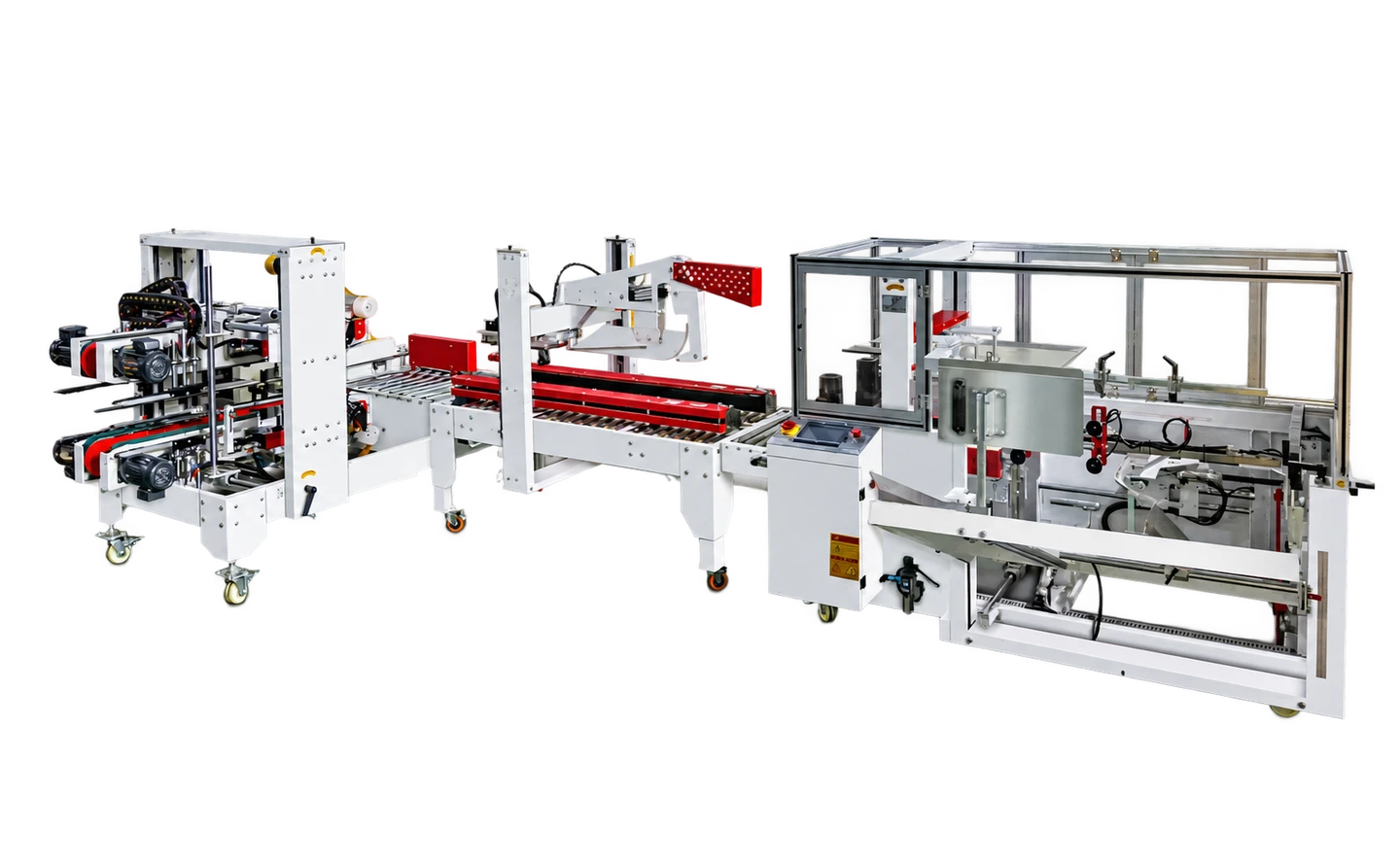
XD-FX5050
Carton sealing machine
Tape sealing equipment for assembled shipping cartons. Compare carton dimensions and tape width before selecting the sealing setup.
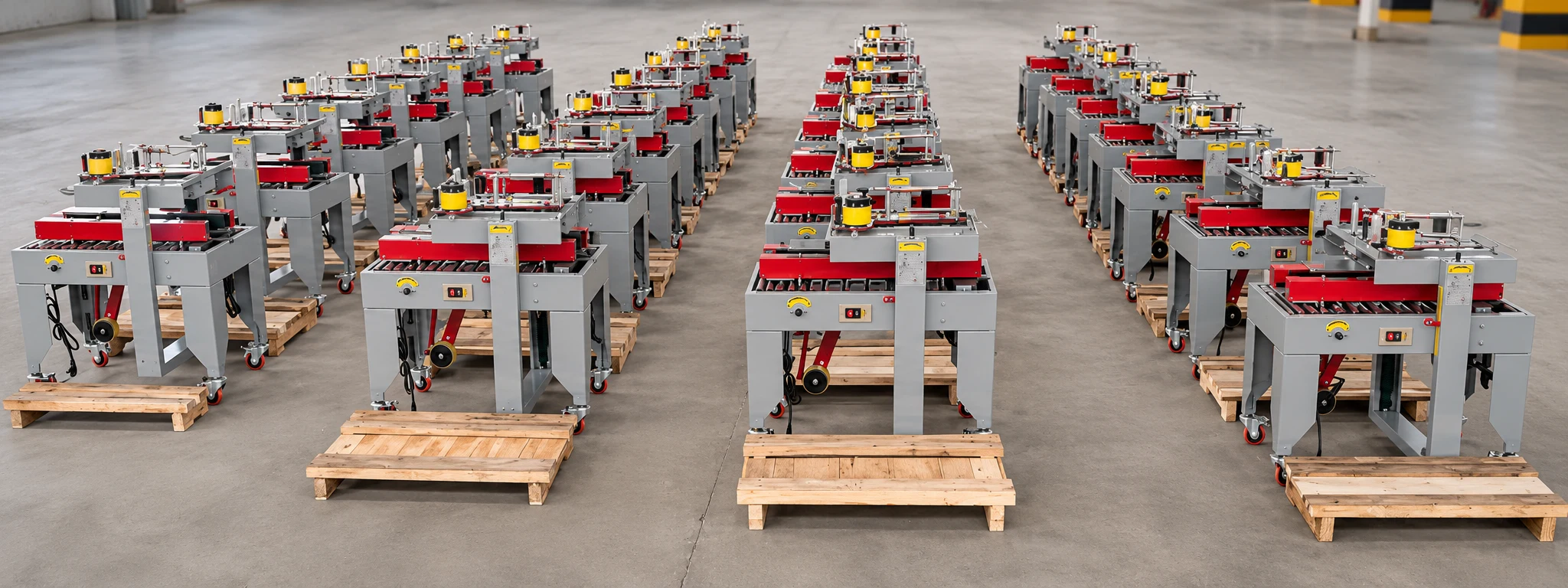
PRODUCT CATEGORY
Tape-sealing equipment for assembled shipping cartons, including automatic flap folding. Select the machine around carton dimensions, tape width and the packing-line arrangement.
Bring a filled case to the point where sealing begins. Look at its top flaps, its orientation and the next place it needs to go. Those three details help decide whether a machine should apply tape to closed flaps or also fold them. They also affect the choice between a setting for a single run of cases and a machine configured for mixed sizes.
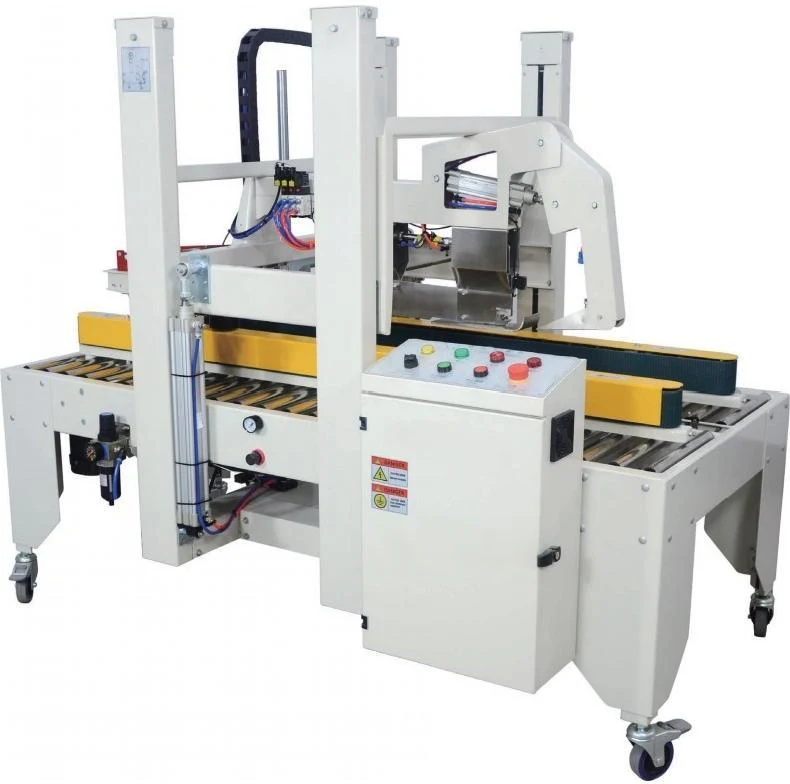
If staff already close the top flaps at packing, show that closed carton in the enquiry. If flaps stay upright, photograph their positions and lengths. Decide whether the packing operator or the machine should fold each flap. Note if any product, bag or liner sits near the flap path. Test with a filled sample in the same state as it will arrive on the line.
Separate a run of one size followed by a changeover from cases of different sizes arriving one after another. In batch work, record who makes the adjustment and which settings must be checked before restarting. In a mixed flow, send the actual sequence and the most difficult pair of carton sizes. Compare candidates in the same sequence rather than testing only batches of identical cases.
On a sealed sample, mark the centre seam and any edges that also need taping. State which faces need tape and confirm the proposed closure with the actual box. Follow the sealed case through discharge. Look for tape lifting at the end and for a case that turns, catches or shifts at the next handover. Count accepted cases at that point.
Send minimum and maximum filled samples and the common case you run most often. Add the film or tape requirements, box spacing and the route to the next station. Use the automatic and semi-automatic comparison to decide which flap actions to include. If the line changes sizes frequently, review the mixed-size application and request a trial with the actual case order.
MODEL SELECTION
Compare the forming, handling and adjustment requirements against your actual package.
XD-FX5050
Tape sealing equipment for assembled shipping cartons. Compare carton dimensions and tape width before selecting the sealing setup.
XDZG5050
Automatically folds carton flaps and seals shipping cartons with tape. The catalogue lists standard-carton output and adjustable table height.
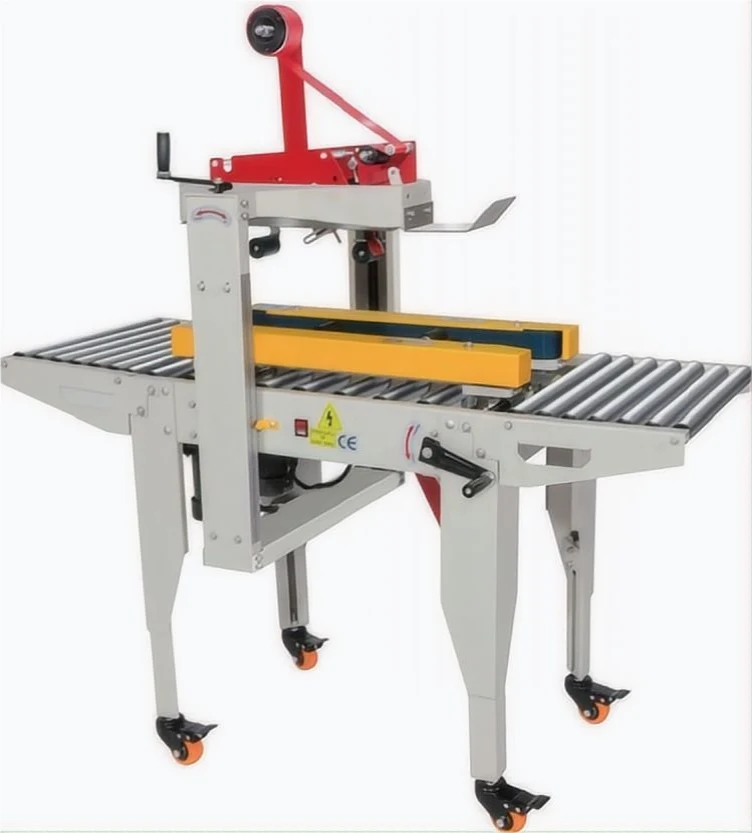
HPA-30
Side belts carry small shipping cartons through the tape heads. Width and height are adjusted for the intended carton size before a production run.
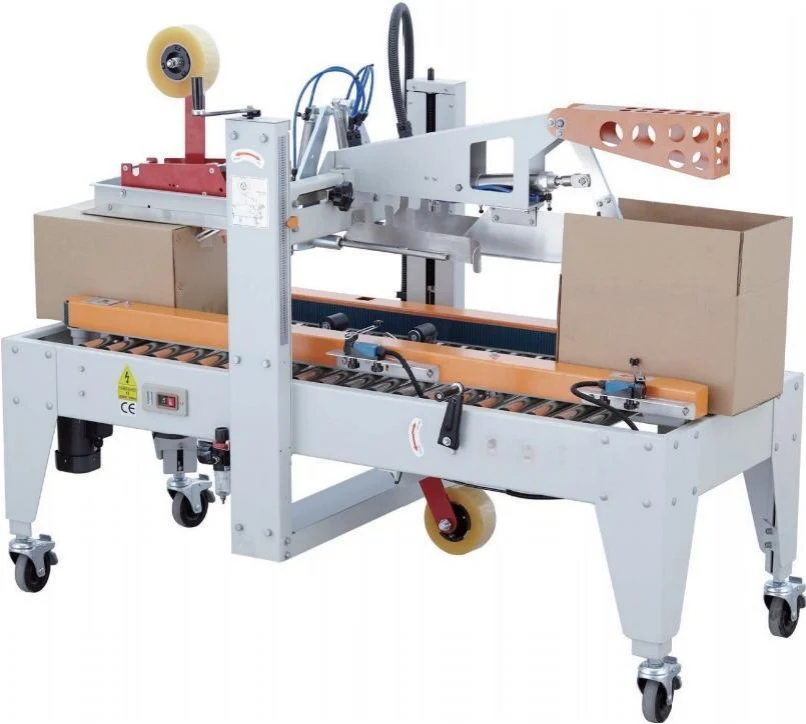
HPC-30
The small-carton sealer folds the top flaps and applies tape. Confirm the open flap position and the support of short cartons as they enter the folding section.
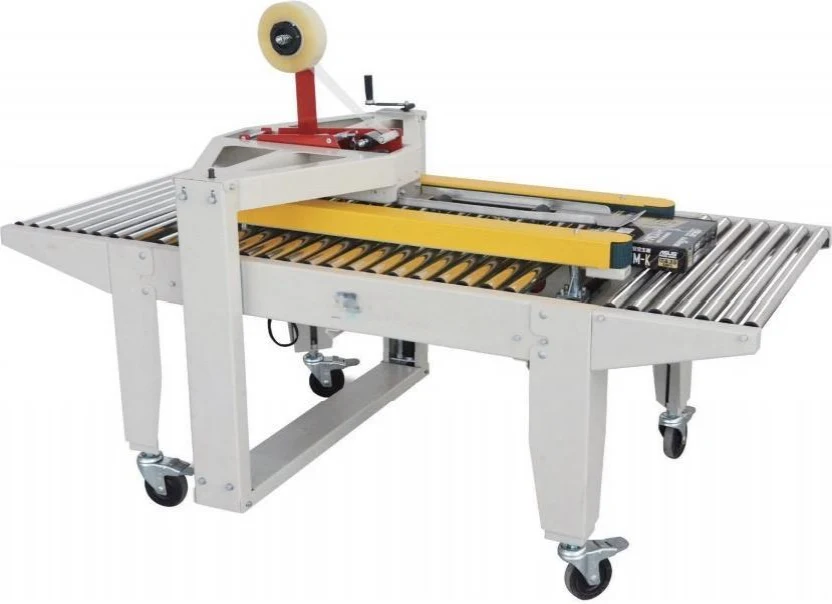
HPF-30
The mailer-box configuration closes prepared low-profile cartons using tape. Check the lid and side-flap geometry of the actual mailer rather than selecting from carton height alone.
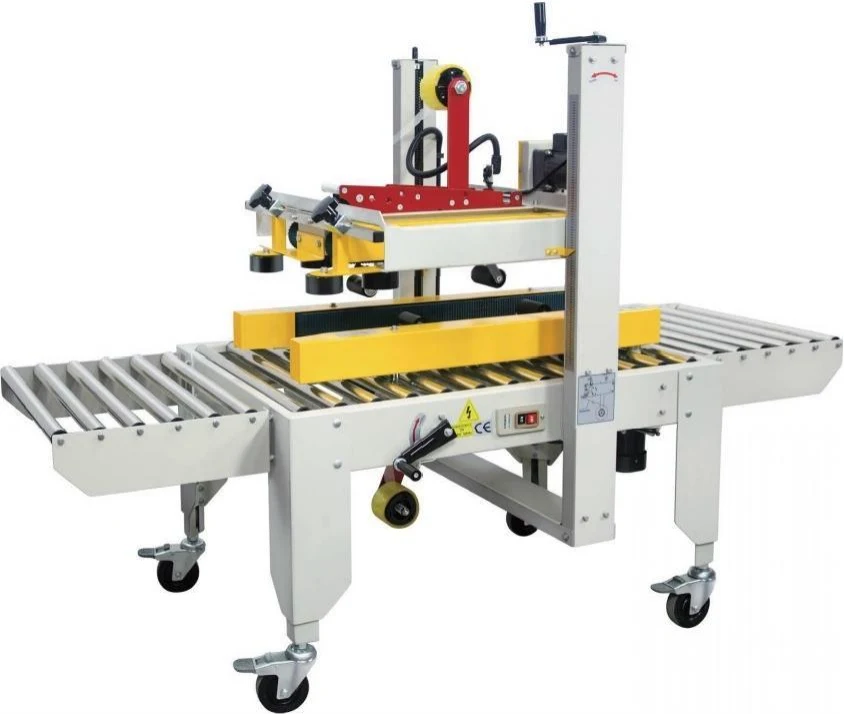
HPA-50P
Side and top-bottom belt drives guide the carton through the sealing operation. This arrangement is selected around the carton stiffness, contact faces and required tape position.
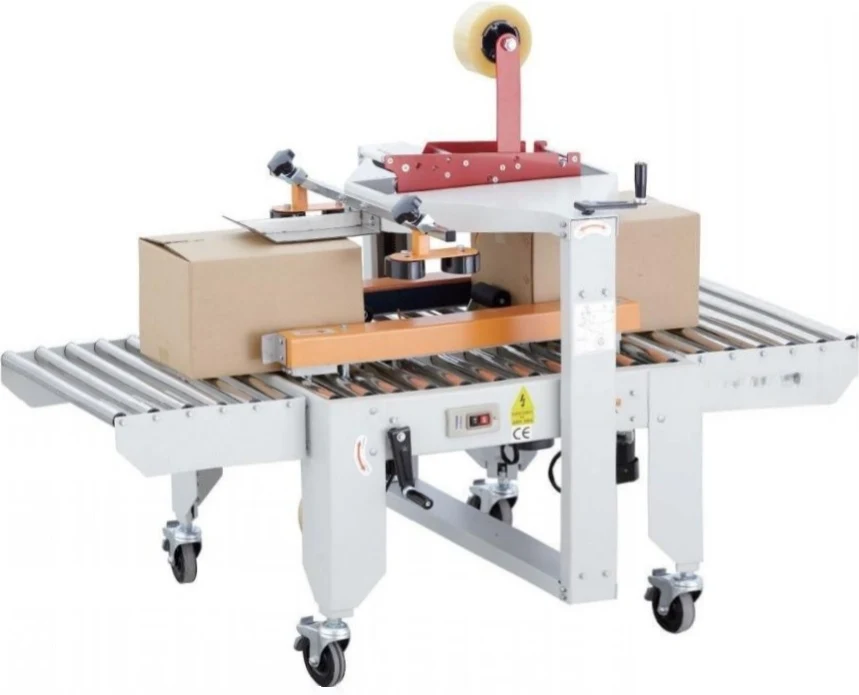
HPA-50
The side-belt tape sealer closes the upper and lower centre seams of assembled cartons. Two-inch and three-inch tape-head configurations have different listed carton ranges.
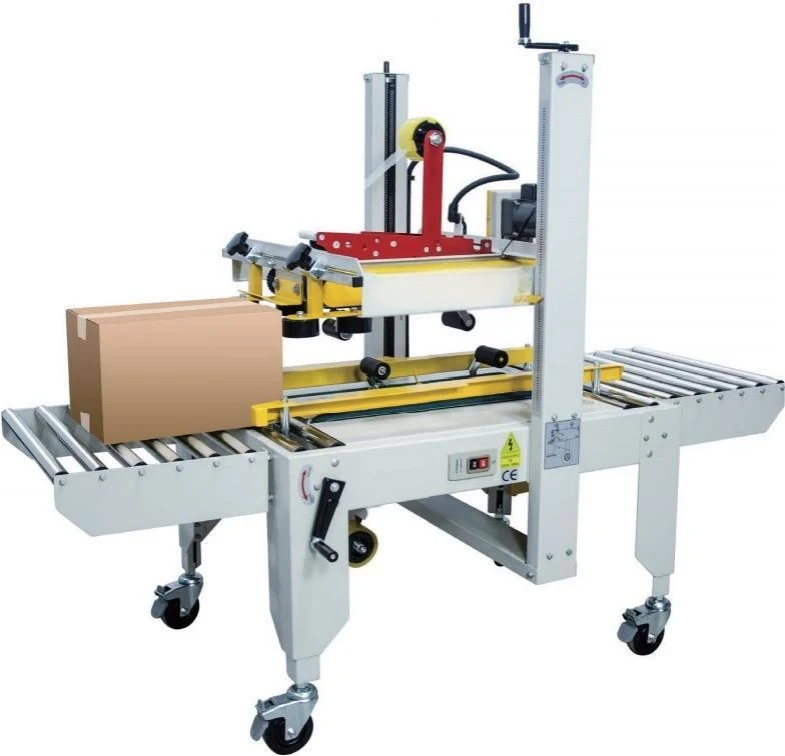
HPB-56
Top and bottom belts transport the carton through the tape heads. Review tall or narrow cartons for stable contact and confirm how the filled carton reaches the sealing station.
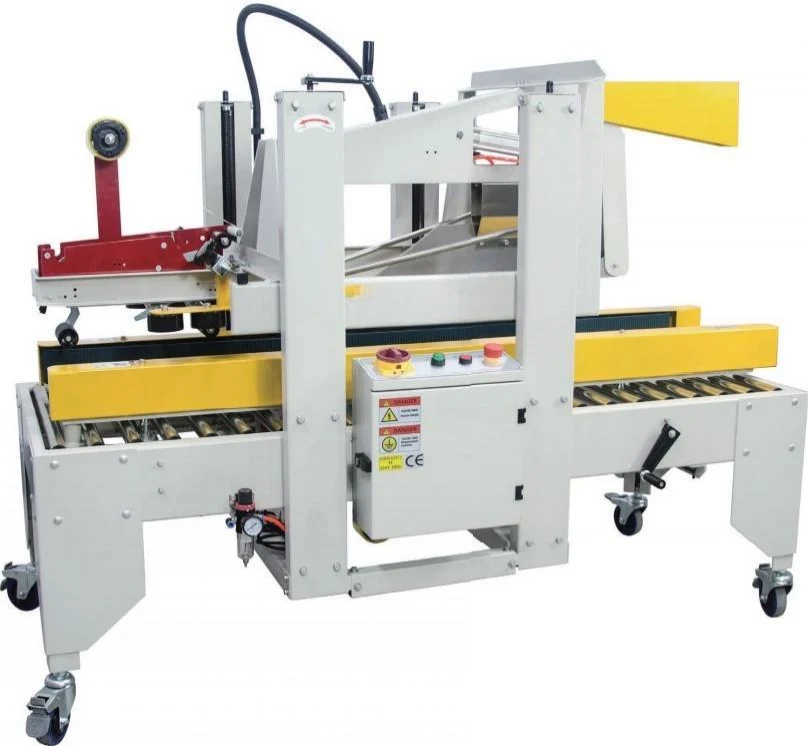
HPC-50
Twin columns support the automatic top-flap folding arrangement before centre-seam taping. The carton needs to reach the folding section with its top flaps in the agreed open position.
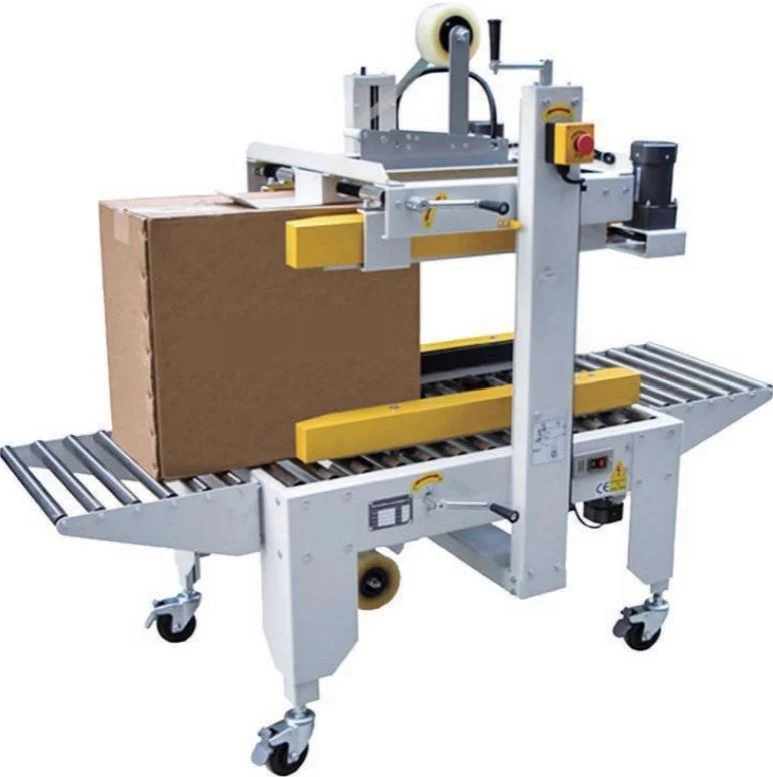
HPD-46
The side-belt configuration guides tall and narrow cartons through upper and lower taping. Confirm the filled carton’s side-panel stiffness and the available belt contact area.
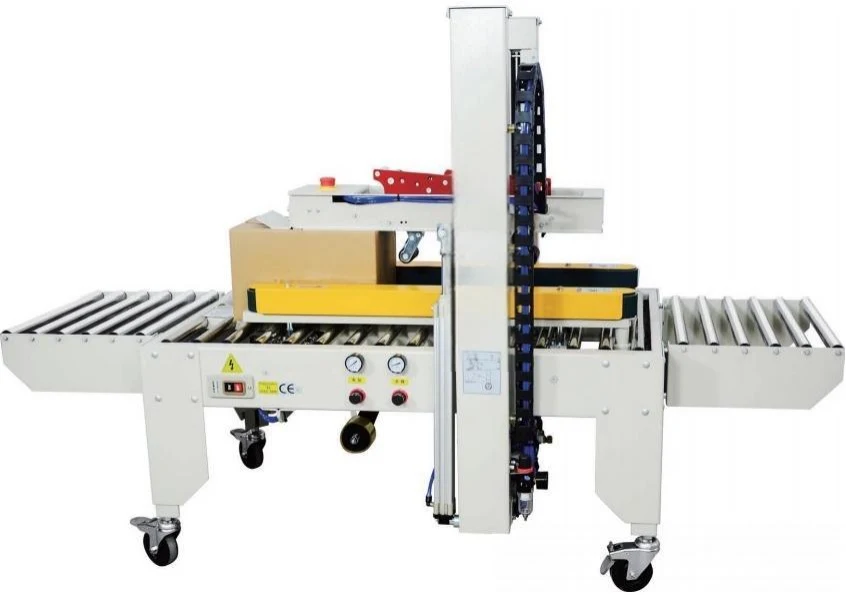
HPE-50
The size-adjusting tape sealer changes width and height for incoming carton sizes. Specify the size sequence and arrival spacing before choosing it for mixed-carton production.
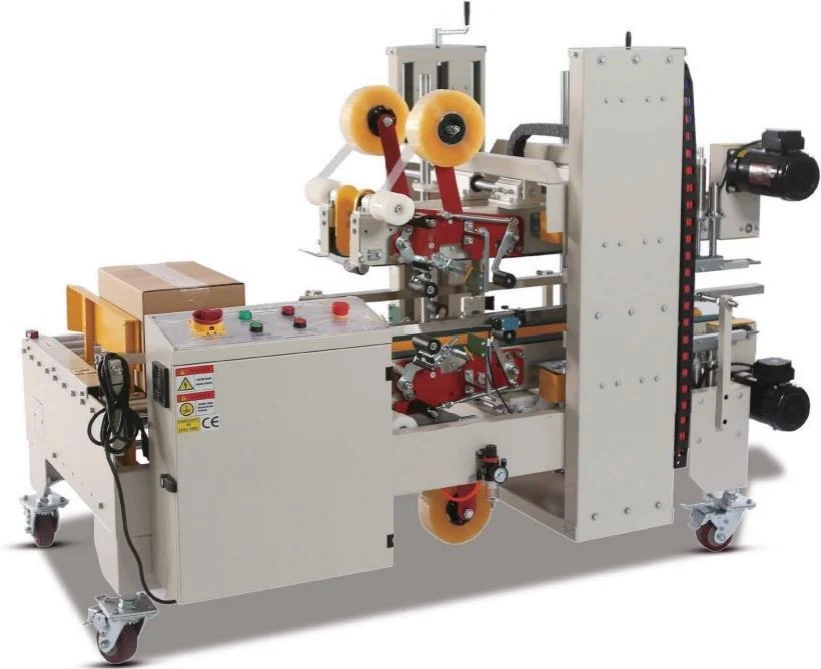
HPG-50
The corner-edge operation follows an upstream centre-seam sealer. Define the turn, transfer and tape positions so the edges reach the sealing heads in the required orientation.
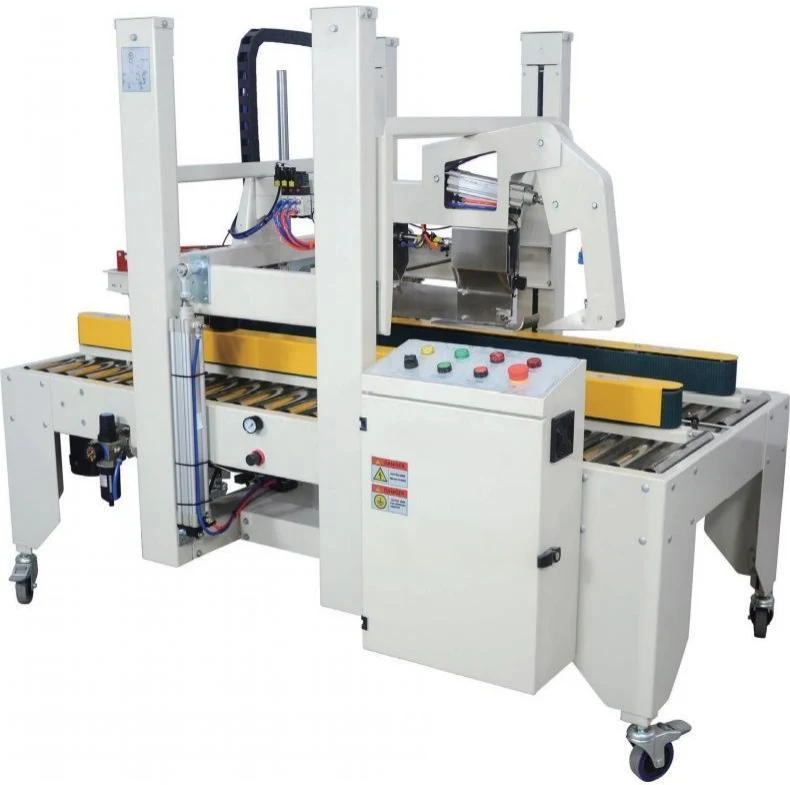
HPI-50
This configuration combines size adjustment with top-flap folding and taping. Review carton spacing and flap presentation as well as the smallest and largest dimensions.
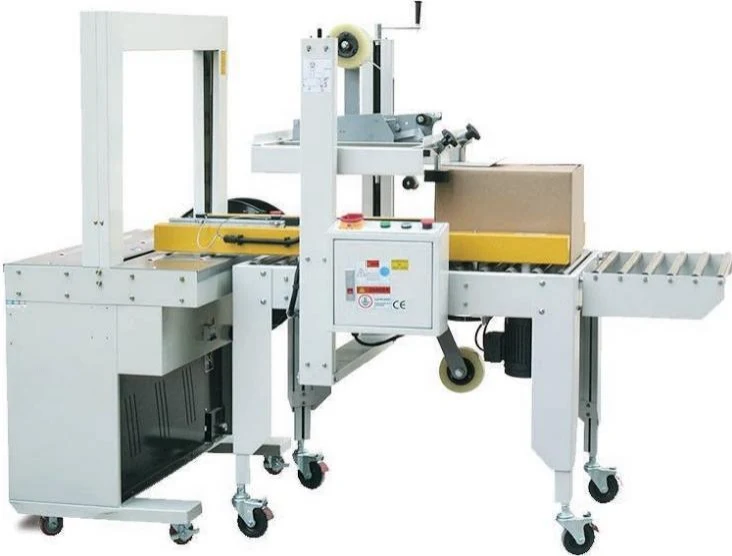
HPP-50A
The arrangement combines carton tape sealing with strapping. Confirm the strap positions, carton support and the strapping equipment included in the proposed configuration.
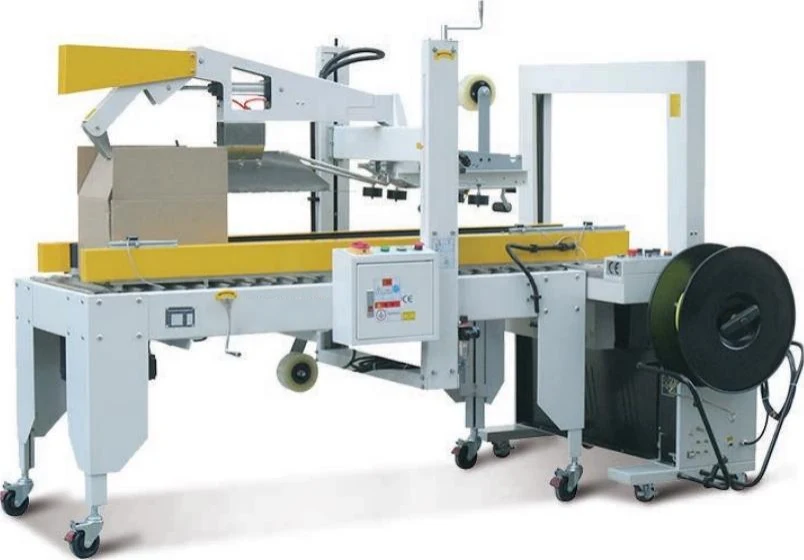
HPP-50
Top-flap folding, tape sealing and strapping are linked in this configuration. Agree the transfer sequence and strap layout for the actual packed carton.
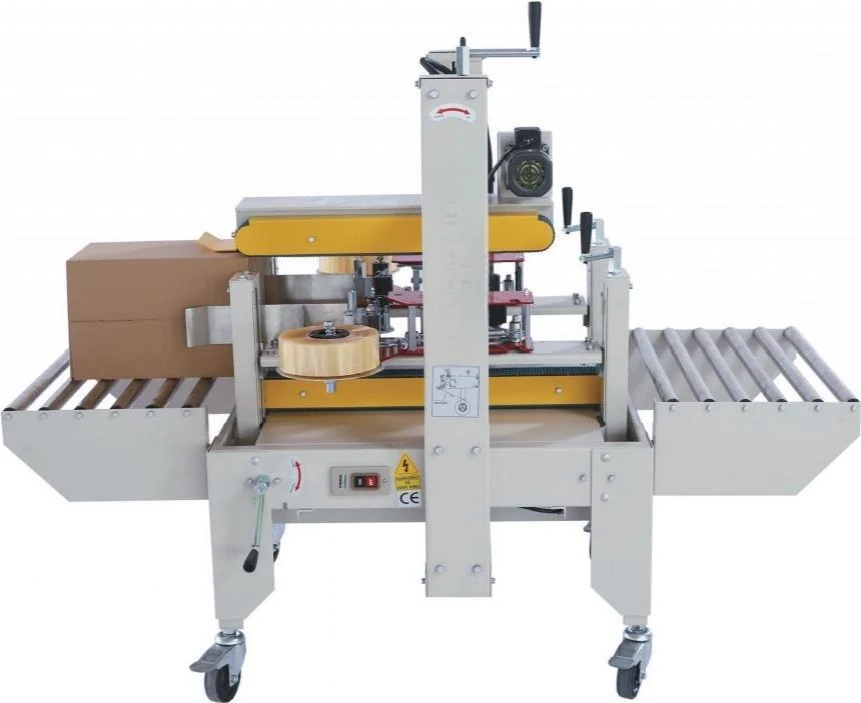
HPS-50
This sealer applies tape to side seams with the carton presented in the specified orientation. It is a different closure task from ordinary top-and-bottom centre-seam taping.
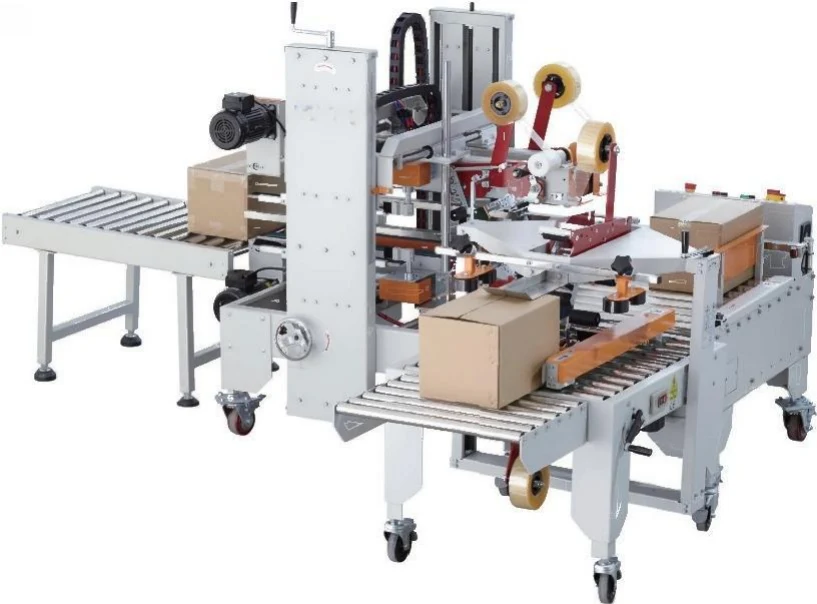
HPA-50+HPG-50
A centre-seam tape sealer is connected to a corner-edge sealing stage. The transfer and carton orientation between the machines determine how the final tape pattern is produced.
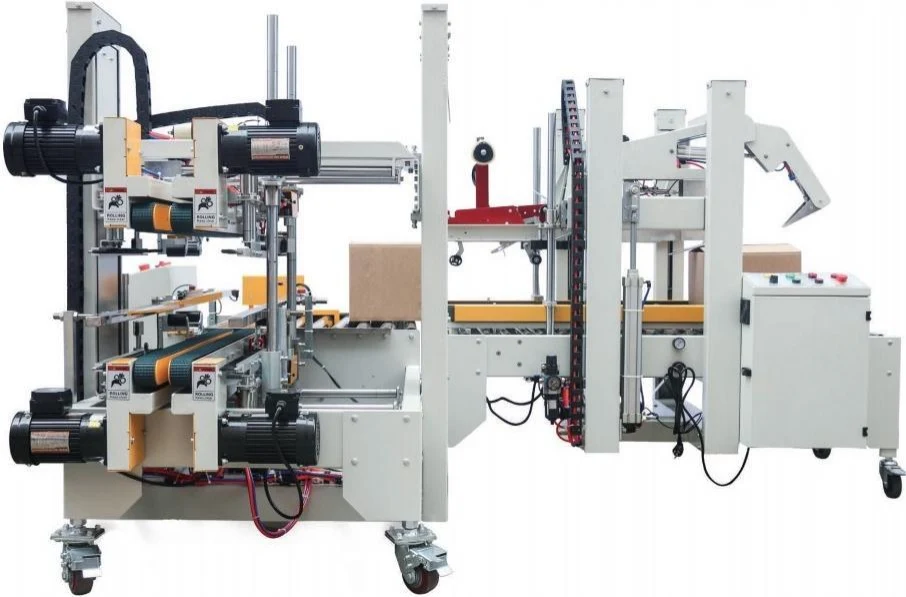
HPH-50
This corner-edge stage is shown in an automatic sealing configuration. Review the incoming centre seal, transfer direction and edge-taping positions before selecting the complete line.
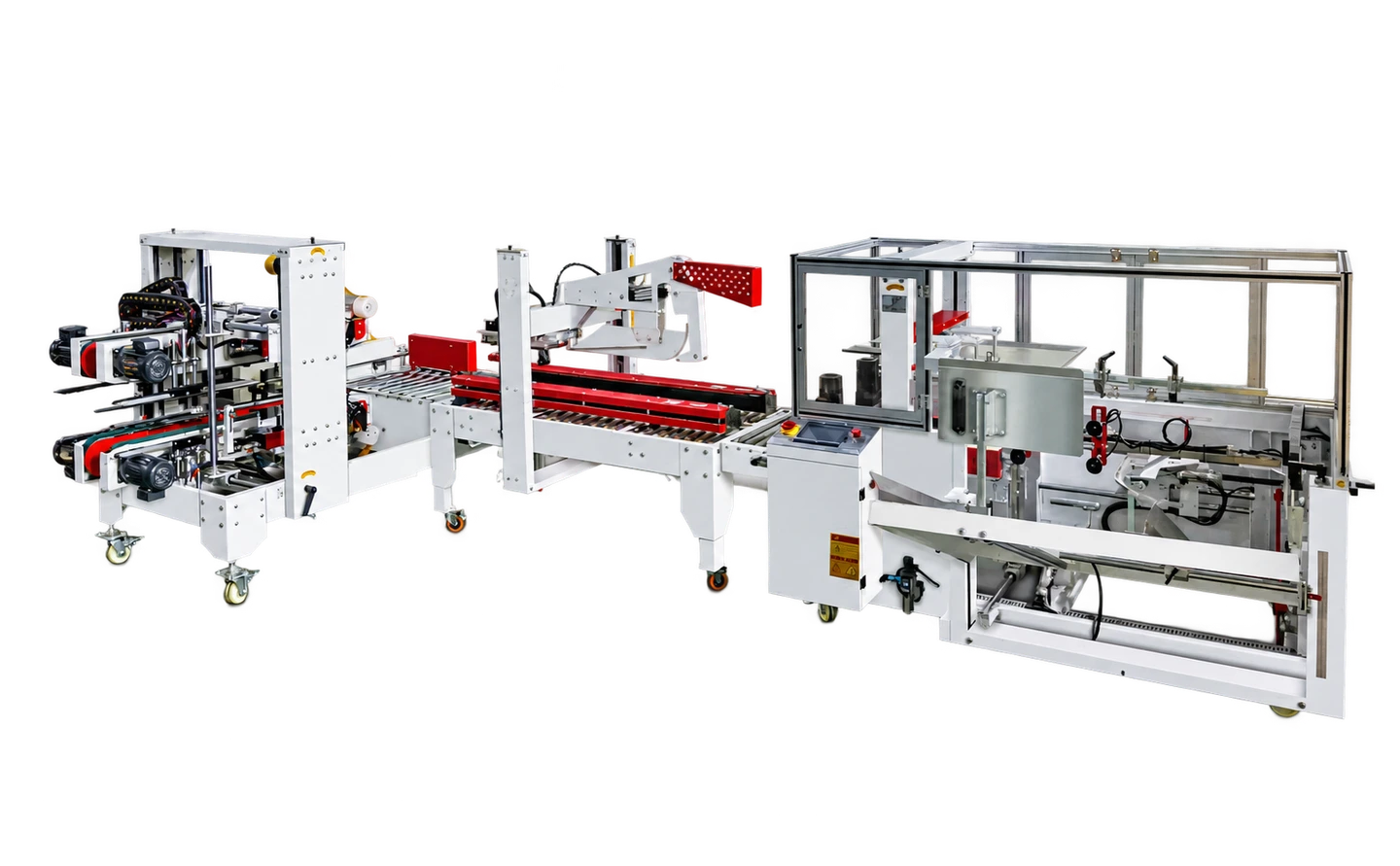
HPI-50+HPH-50
The configured line combines automatic flap folding and centre sealing with a downstream corner-edge operation. Confirm both stages and their shared carton range in the quotation.
A tape case sealer sits after filling. On a packing bench, first check whether the operator can hold the top flaps closed and deliver each case square to the tape head. On a conveyor-fed line, check whether open flaps reach the machine and whether a gap separates successive cartons. These details determine the work the sealer has to do.
Xunding offers tape sealing for assembled cartons and a configuration with automatic flap folding. The following figures describe two catalogue models. Confirm the limits together on your smallest and largest filled cases, using the board and tape you intend to run.
| Selection point | XD-FX5050 | XDZG5050 |
|---|---|---|
| Closing operation | Tape sealing of assembled cartons. Confirm how the top flaps are presented. | Folds the top flaps and applies tape. |
| Finished length × width × height | Length from 130 mm. Width 140–500 mm. Height 130–500 mm. Confirm maximum length. | Length 200–500 mm. Width 130–500 mm. Height 130–500 mm. |
| Tape width | 30–50 mm | 50–70 mm |
| Catalogue output on standard cartons | 800–1,000 cartons/hour | 600–800 cartons/hour |
| Working height | 550–740 mm | 550–740 mm |
For a fixed carton size, the machine can be set between runs. If successive cartons vary in width or height, request a size-sensing configuration and provide the running sequence. For side-opening cartons, ask about side sealing. Where the carton specification calls for taped edges, discuss a centre-seal station followed by corner or edge taping.
Other configurations include compact e-commerce carton and mailer sealing, a combined tape-and-strap station, and a linked sealing line. These are separate configurations. The model comparison above applies only to the two machines named.
Send a photograph of a packed carton at the point of sealing, its length, width and height, the flap position and the required tape width. Add the smallest and largest cases, their order of arrival, the cartons per hour you need and the conveyor height. Include a side view if the operator currently holds the top closed.
For a sample run, agree the tape position and end overlap, define what counts as a rejected seal and count accepted cases at discharge. If the line stops or a size change needs operator input, record the interruption separately.
Choose between operator-fed and automatic flap folding
Compare installed and operating costs