


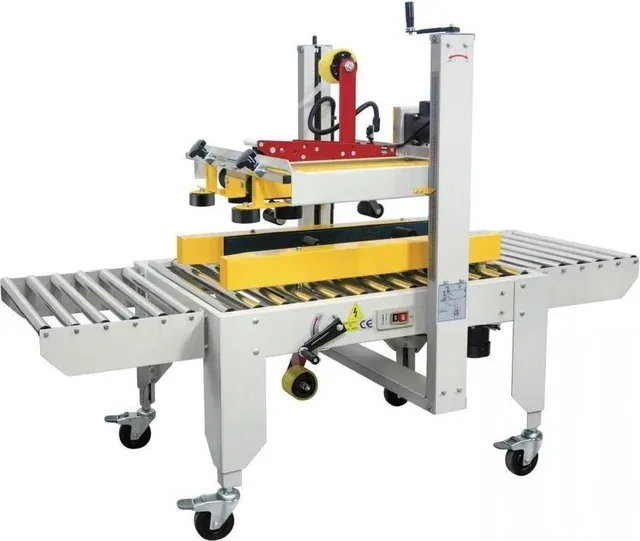
Side belts drive a carton by contacting its vertical sides. Top-and-bottom belts use the upper and lower faces to move it past the tape head. Choose by where the filled carton can accept that contact and stay straight. Use packed samples to check belt coverage, wall strength and tape alignment through the same infeed and discharge conditions.
What a side drive relies on
Side belts need a usable contact band on both side walls. Mark the proposed belt line on a sample and check what lies behind it. A smooth-looking panel can have an unsupported area because the product sits lower or away from the wall. A handle opening, deep indentation or protruding joint can also interrupt contact. Follow the carton while the belts first catch it and when it leaves their grip.
What a top-and-bottom drive relies on
Check the surfaces that the belts touch near the top and underneath the box. A lid that bows around the contents or a bottom that sits unevenly may change the way the case enters. Check the real flap state at infeed as well as the support under the carton. For any configuration, identify separately which faces the tape heads will seal. The drive layout and the tape-head layout are two decisions.
Compare the same cartons on both layouts
Use the same board, fill and carton direction. Include the tallest narrow case and any carton with soft panels in the range. At discharge, record where the tape sits, whether the box turned and where any marks first appeared. If the carton is already crooked before it reaches the belts, correct the presentation or record it as an infeed problem before assigning the fault to the drive.
Check release as well as grip
A carton may run straight while fully held and turn when one belt lets go before the other. Mark the leading face, then use the same observation point at the outlet for both layouts. Look for one-sided marks, a moved seam or a carton arriving at a different angle. If the next conveyor is part of the equipment scope, trial that handoff with the same carton.
Write the contact surfaces into the quotation
Send photographs of the filled carton from the top, side and bottom with a simple tape-path sketch. Mark any area that must stay untouched. Ask the equipment supplier to identify where the belts contact the case and how the smallest and largest boxes will be presented. Review the carton sealing machine range and specify drive and seal pattern as separate line items.