


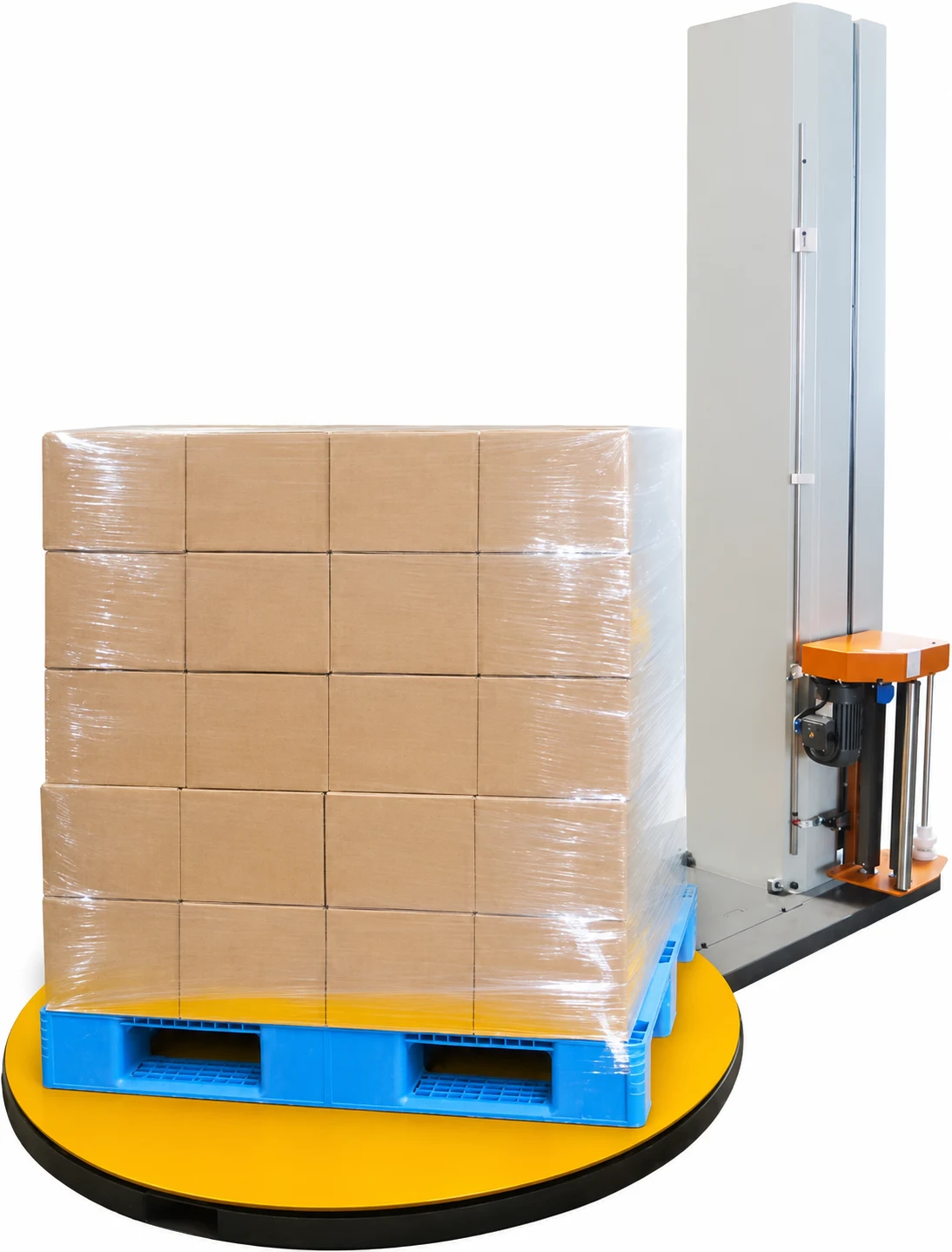
TP1650F-L
Pre-stretch turntable pallet wrapper
A powered turntable rotates the pallet load past a pre-stretch film carriage. This configuration is for pallet loads that can be placed on the closed turntable.
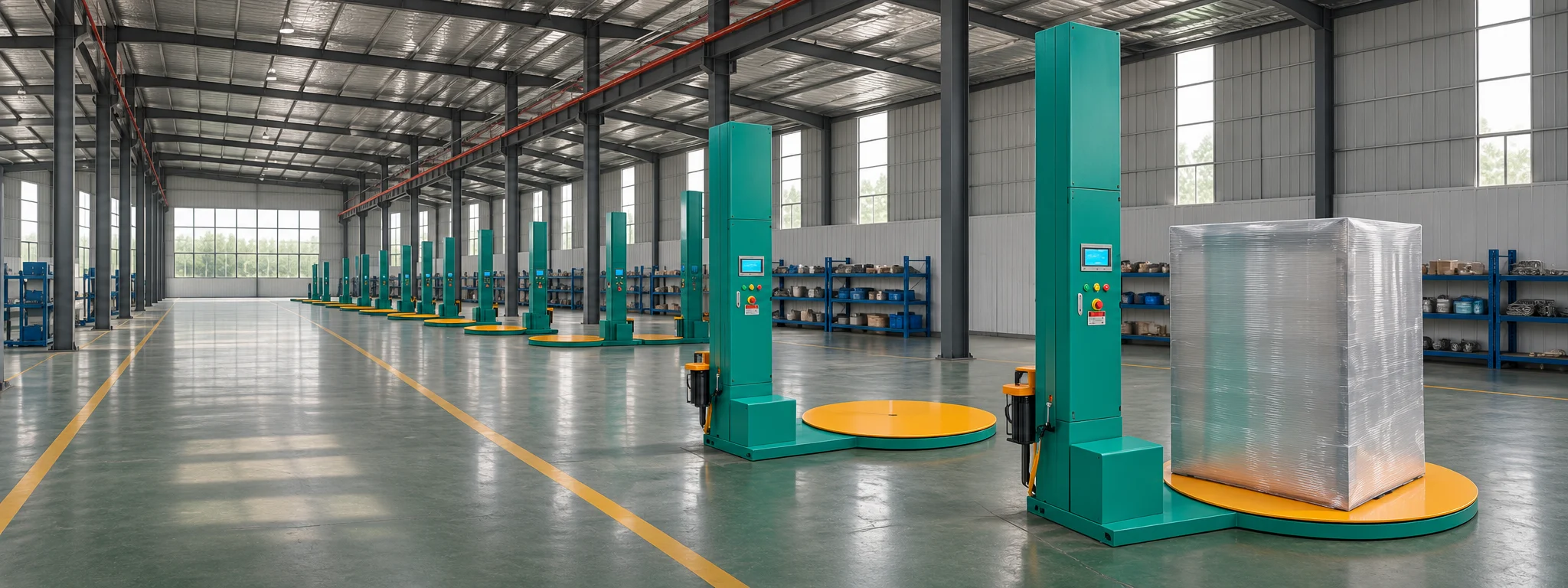
Packaging application
A carton pallet needs a wrapping method matched to its size, mass and stability. The loading method is part of the selection, particularly for an open pallet-truck turntable.
Get a QuotePACKAGE AND PROCESS
Define how the pallet is positioned, how film starts and ends, and how the wrapped load leaves. An in-line conveyor and a separate turntable require different transfer arrangements.
Compare TP1650F-L, TP1650F-M and TP1650F-ZF for the stated loading and film-handling tasks, or TP1650F-ZX for a proposed conveyor-fed layout.
A wrapped pallet can look good at the machine and still shift before it enters dispatch. For a useful trial, follow the load from the wrapping position through the same pickup, turn and waiting area used on site. Agree which faces need coverage and what should remain in place when the pallet reaches its next stop.
Photograph the stack from the front and side. Give the pallet dimensions, finished stack height and gross mass. Point out any carton corner that projects or an unusual gap between layers. If some loads are lighter or less stable, identify them as separate sample types. A trial using only the most stable stack will leave those cases untested.
State whether a conveyor, pallet truck or forklift places the load. Mark the approach and turning direction on the floor plan, including any ramp, column or waiting position. Show how the load leaves the station and whether the same person or vehicle collects it. Use those clearances and handling steps to review the proposed wrapper layout.
Mark the coverage at the base, middle and top before testing. After wrapping, send the load through the planned pickup and transfer, then look for a loose film tail, a shifted case or a layer that no longer aligns. Record where each problem first appeared. If two wrapping settings are compared, use the same route and acceptance criteria for both.
Send the loaded-pallet photos, route sketch and loads per shift. Compare the stretch wrapping range against that handling plan. If film use matters, add grams per accepted pallet once both settings meet the same load requirements. Ask the supplier to include the demonstrated wrap pattern and handoff arrangement in the proposal.
Keep the production material and selected configuration together in the sample review. Count accepted packages and record interruptions or rejected output separately before agreeing the production requirement.
Discuss this applicationMODEL SELECTION
Compare the forming, handling and adjustment requirements against your actual package.
TP1650F-L
A powered turntable rotates the pallet load past a pre-stretch film carriage. This configuration is for pallet loads that can be placed on the closed turntable.
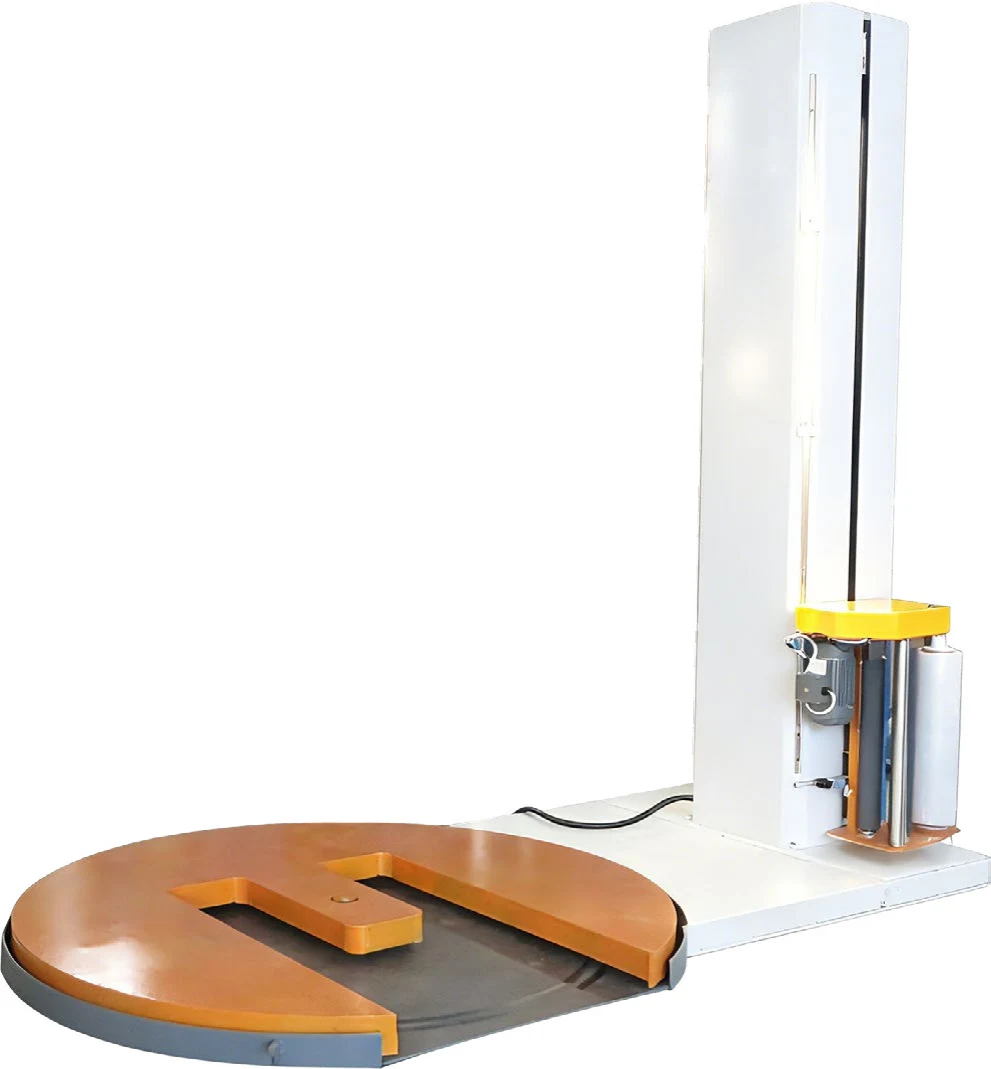
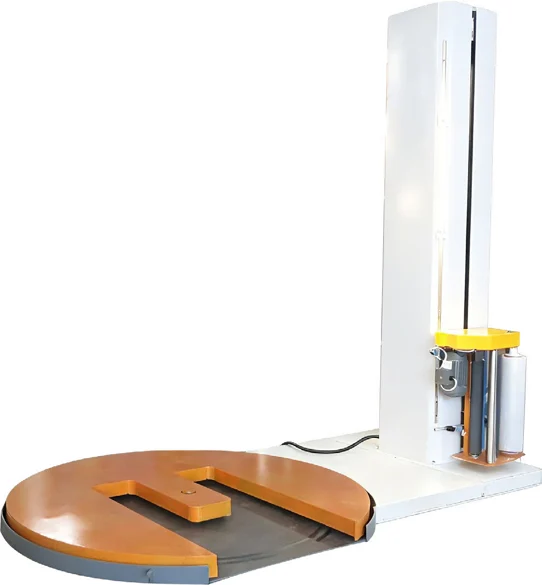
TP1650F-M
The open turntable allows pallet-truck access to the wrapping position. Compare the pallet and loading wheels with the opening, and use this model’s own load rating.
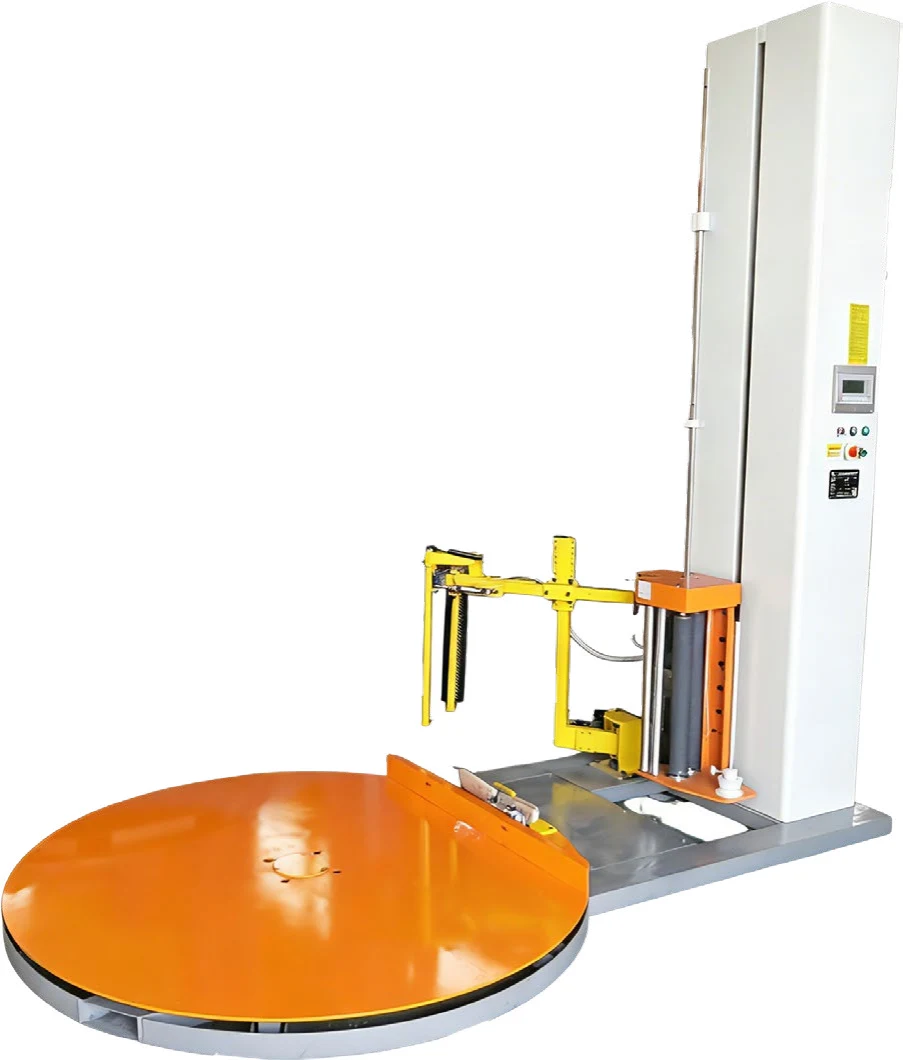
TP1650F-ZF
The automatic film-handling configuration adds film attachment and cutting functions to a turntable pallet wrapper. Confirm the film tail, starting position and unloading sequence for the intended load.
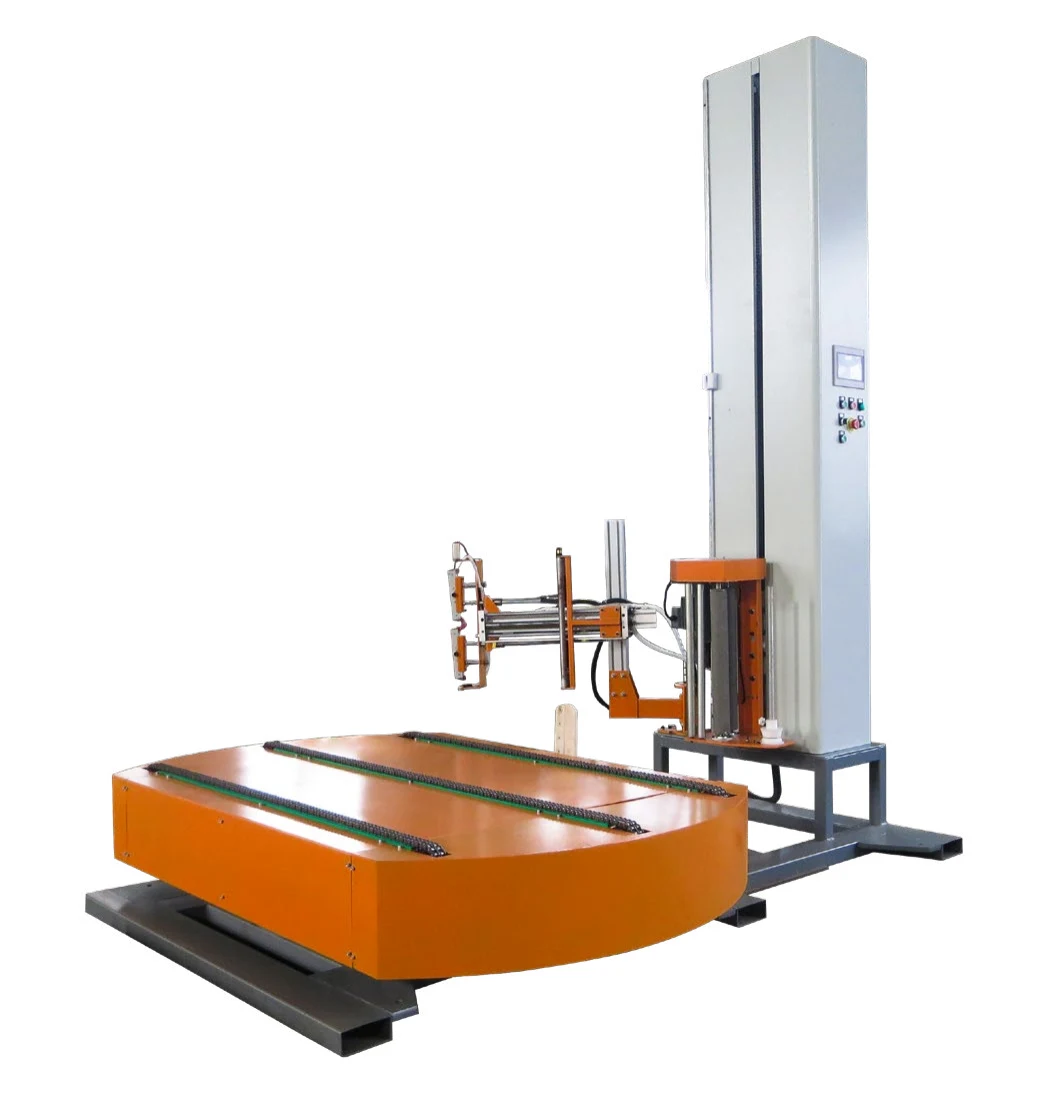
TP1650F-ZX
The in-line configuration presents pallet loads through a conveyor-supported turntable arrangement. Conveyor heights, entry direction and the transfer of the completed load must be agreed as part of the line.