


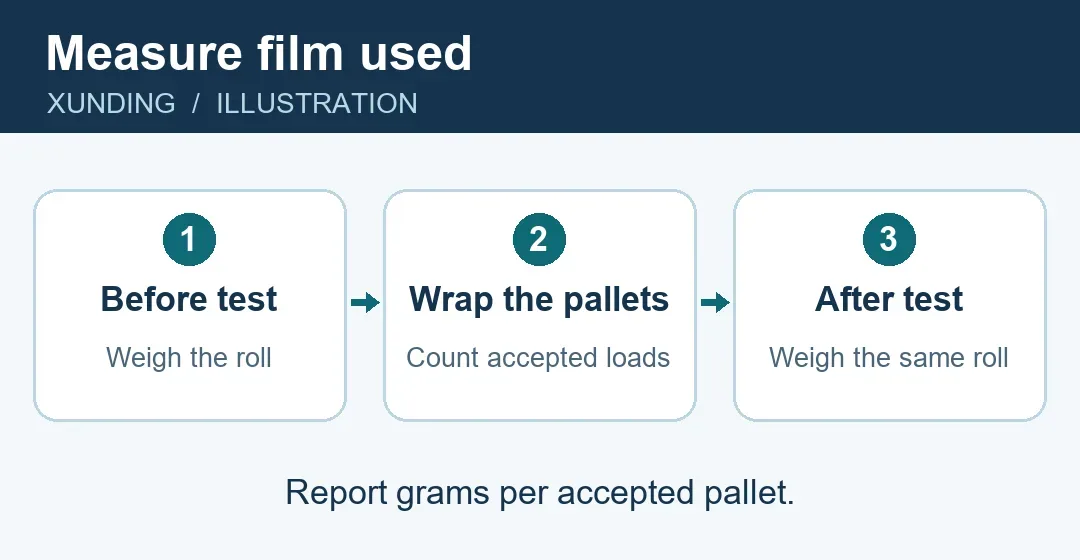
Film consumption makes more sense in grams per accepted pallet than in rolls per shift. Roll counts can hide part rolls, film lost on a break and pallets that had to be wrapped again. Put competing settings through the same dispatch job and weigh the film used. Compare the results only after each finished pallet meets the agreed requirements for coverage, tail security and handling.
Set a common pallet and delivery requirement
Use the same load pattern and film grade for the first comparison. Mark any required base, middle and upper coverage and how the tail should be secured. Agree how you will handle the wrapped load after the test. If candidates require different films, run those as a separate set and record the film width, grade and purchase price for each. Include the easiest and least stable loads you expect to ship.
Weigh film consumed, including losses
Weigh the same roll before and after the run, with the core included both times. Record any replacement rolls separately. Count only pallets that pass. In an illustrative run, a roll loses 2.2 kg while 20 pallets pass. That is 110 g per accepted pallet, including the film consumed on retries during the test. Report both the pass count and waste events so the number can be interpreted.
Observe the same movement after wrapping
Move the accepted pallets through the handling route agreed for the trial. Record loose tails, shifted cartons and the spots where film pulled into a corner. If a lower-consumption setting changes the finished load, review whether it still passes the same criteria. Note the wrap pattern, overlaps, cycle time and interruptions so the film figure can be repeated.
Read the film figure alongside retries
Keep two notes beside every result: how many pallets passed on the first attempt and how many needed attention. A roll-weight difference includes any film that came off the roll, including short lengths thrown away during setup. If two trials handle startup differently, say so and rerun with a common boundary before comparing film spend. For a mixed dispatch area, calculate results separately for each pallet family first. Combining unlike loads can hide the format that consumes most of the film or requires the most intervention.
Turn the trial into a purchase comparison
Multiply film used per accepted pallet by the film price per unit of mass. Keep labour and pallet handling time alongside that figure, as separate columns. Use the stretch wrapping range and the palletised cartons application to identify the layouts worth testing. Send your pallet photo, film grade, expected loads and acceptance conditions with the enquiry.