


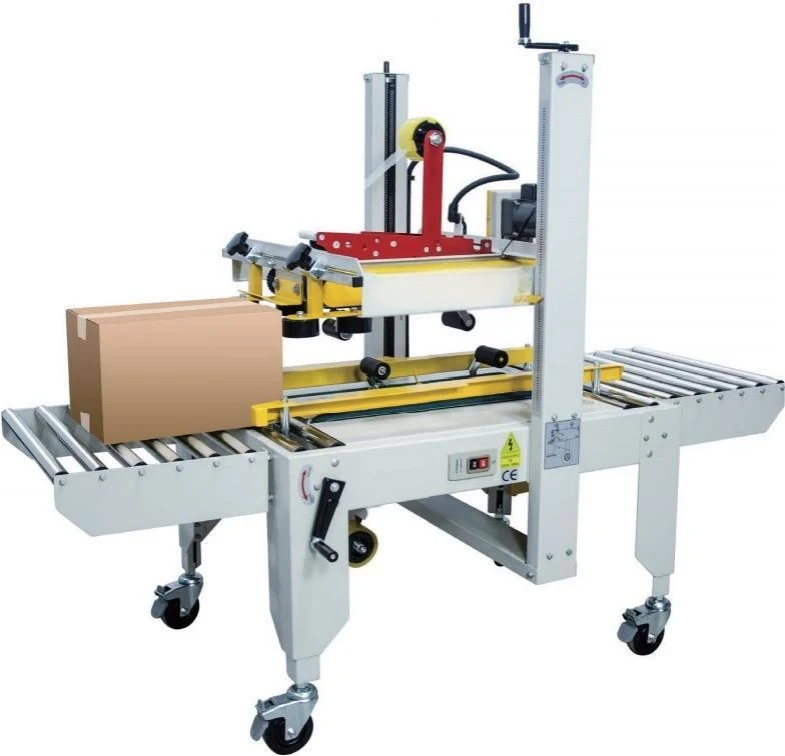
HPB-56
Top-bottom belt carton sealer
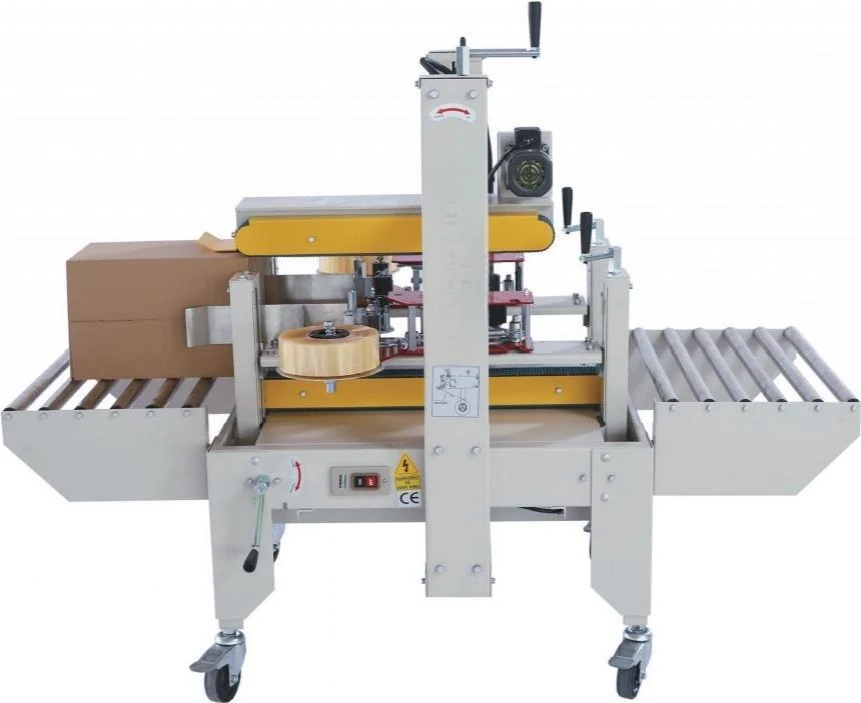
Top and bottom belts transport the carton through the tape heads. Review tall or narrow cartons for stable contact and confirm how the filled carton reaches the sealing station.
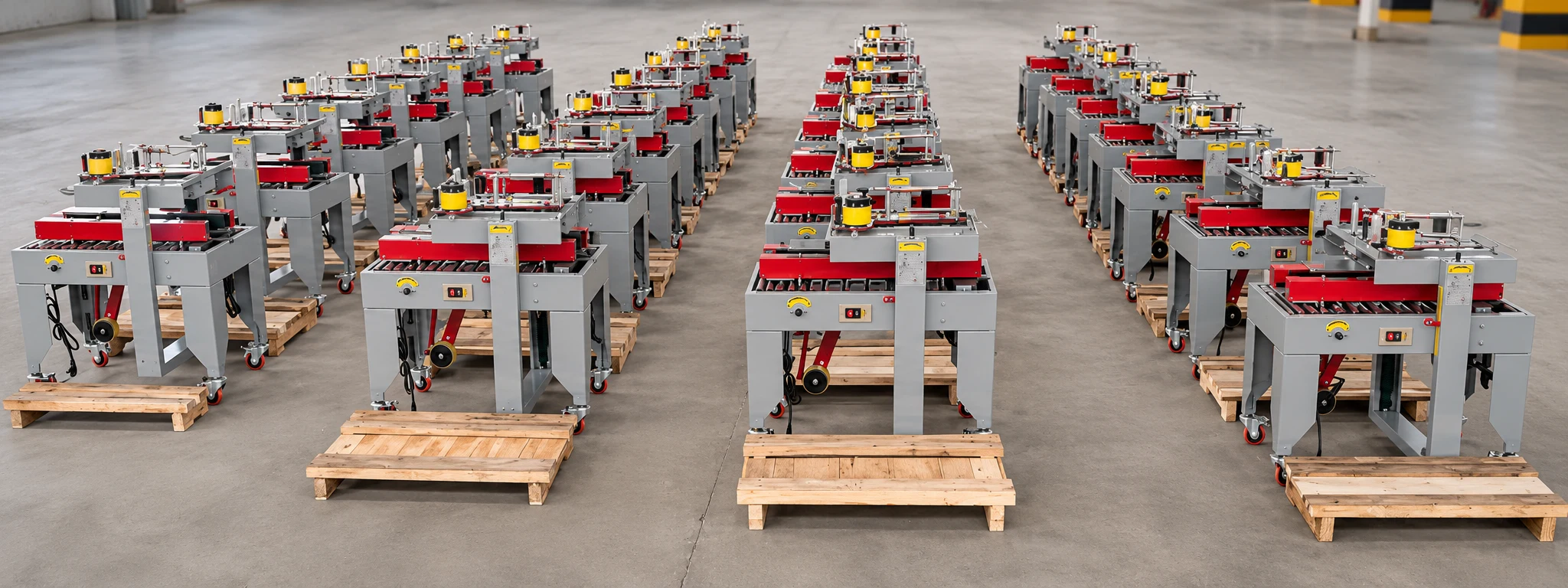
Packaging application
Tall or narrow cartons need stable belt contact during tape application. A side-opening carton introduces a different seam location and orientation.
Get a QuotePACKAGE AND PROCESS
Review which carton surfaces contact the belts and where the tape heads must reach. Keep upper/lower centre seams separate from a side-seam sealing task.
Compare HPB-56 and HPD-46 for their belt-drive arrangements, HPA-50P for its additional drive contact, or HPS-50 for side seams.
A tall, narrow carton can enter the sealer upright and still lean at the tape head or turn at the discharge. The important question is where its support changes. Use a filled sample and follow the carton through the guides, drive belts and discharge transfer. The first point at which it moves tells you more than the appearance of the finished seam.
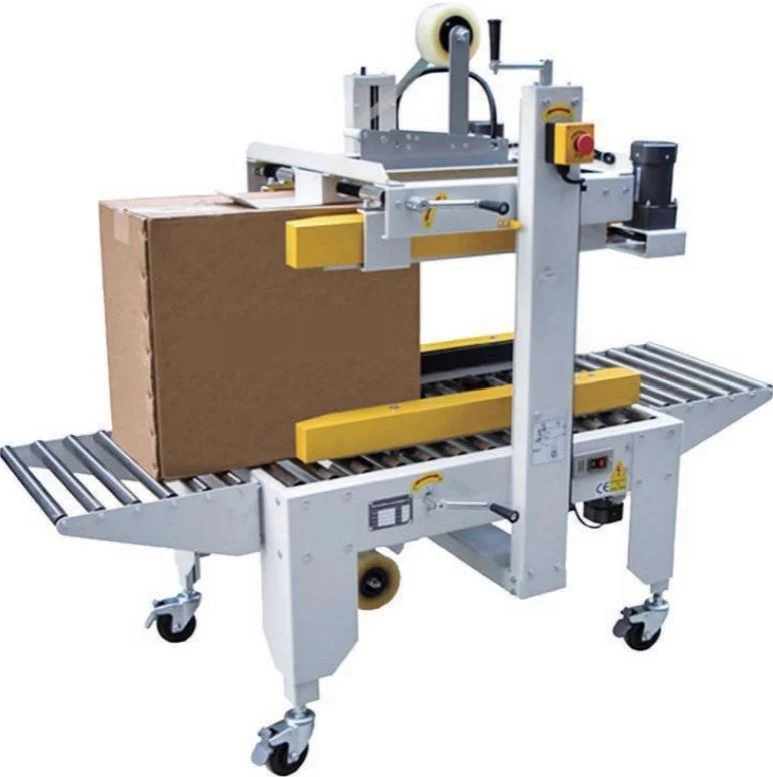
A tall carton on a narrow base has less room to lean before its load shifts towards the edge of the footprint. Internal load distribution also matters. A box with heavy product near one side or loose contents can behave differently from an empty sample of the same dimensions. Mark the normal orientation and the heavy side on a representative carton. Include the smallest base, the highest filled sample and any combination that actually occurs in production. A list of independent maximum and minimum dimensions can miss the difficult carton.
At the infeed, photograph the carton before it touches the guides. Look for change in angle as it crosses onto the driven section. At the tape head, note whether the case slows, one side moves ahead or a flap pushes upward. Mark the point at which the seam stops following the centreline. If the case is already skewed before tape touches it, start with infeed and support. If the case remains square until the tape contact, check the closure and the support available at that point. Use the supplier’s approved procedure to adjust any equipment.
Compare how each proposed sealer supports the actual carton. Side belts depend on suitable contact surfaces along the sides. A top-and-bottom arrangement introduces contact elsewhere and needs its own check of the carton and flaps. The catalogue lists HPD-46 for tall-carton sealing. It is a candidate to discuss with the real sample. Ask the supplier to demonstrate how the proposed configuration maintains alignment from entry to exit. For a side-opening case, also identify the panel that should form the seam before selecting the taping arrangement.
Follow the same carton past the exit. A short unsupported span or a small change of level can matter once the case leaves the machine guides. Check whether top-heavy cartons need a longer guided transfer and whether the outfeed takes the carton in the intended orientation. A carton may leave the sealer square and twist only as it reaches the next belt. Record that as a handoff issue. Adjusting the tape placement alone would leave that cause in the line.
Skew before tape contact calls for a check of entry alignment and support. Lean at tape contact calls for a check of the carton closure and the way the head approaches the filled box. Turning only after discharge calls for a transfer check. Record the event and its first location separately. A single note marked ‘bad seal’ loses the distinction.
Use representative filled cartons. Mark which surfaces the belts and guides may contact, where the seam should finish and what counts as unacceptable tilt, scuffing or tape offset. Photograph the same sample before entry and after the normal transfer. Record the first change of position and keep one accepted case. Ask for the trial to include the most difficult normal orientation and a representative sequence of sizes if the line regularly mixes them.
Keep the production material and selected configuration together in the sample review. Count accepted packages and record interruptions or rejected output separately before agreeing the production requirement.
Discuss this applicationMODEL SELECTION
Compare the forming, handling and adjustment requirements against your actual package.
HPB-56
Top and bottom belts transport the carton through the tape heads. Review tall or narrow cartons for stable contact and confirm how the filled carton reaches the sealing station.
HPD-46
The side-belt configuration guides tall and narrow cartons through upper and lower taping. Confirm the filled carton’s side-panel stiffness and the available belt contact area.
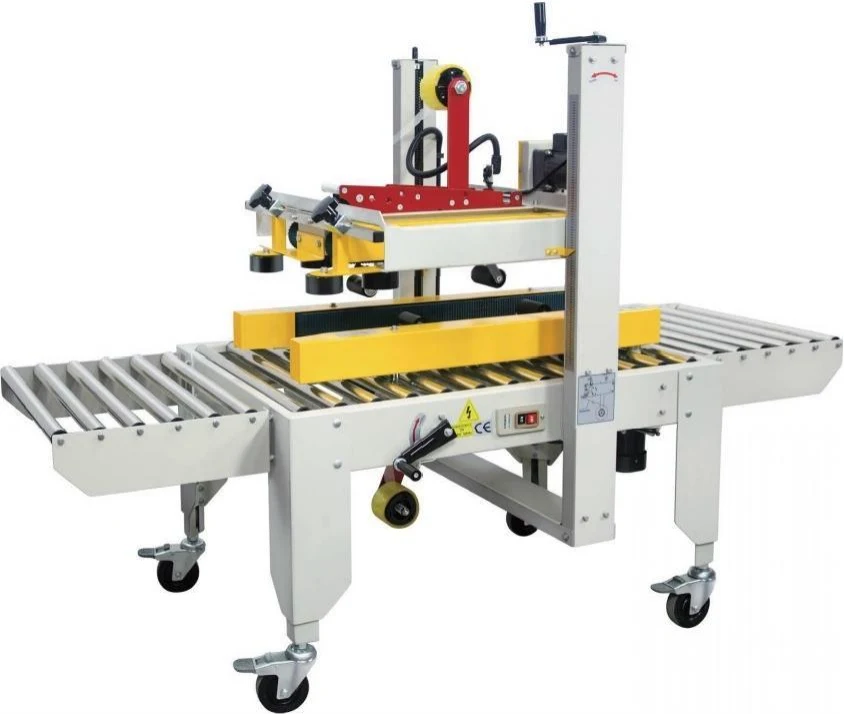
HPA-50P
Side and top-bottom belt drives guide the carton through the sealing operation. This arrangement is selected around the carton stiffness, contact faces and required tape position.
HPS-50
This sealer applies tape to side seams with the carton presented in the specified orientation. It is a different closure task from ordinary top-and-bottom centre-seam taping.