


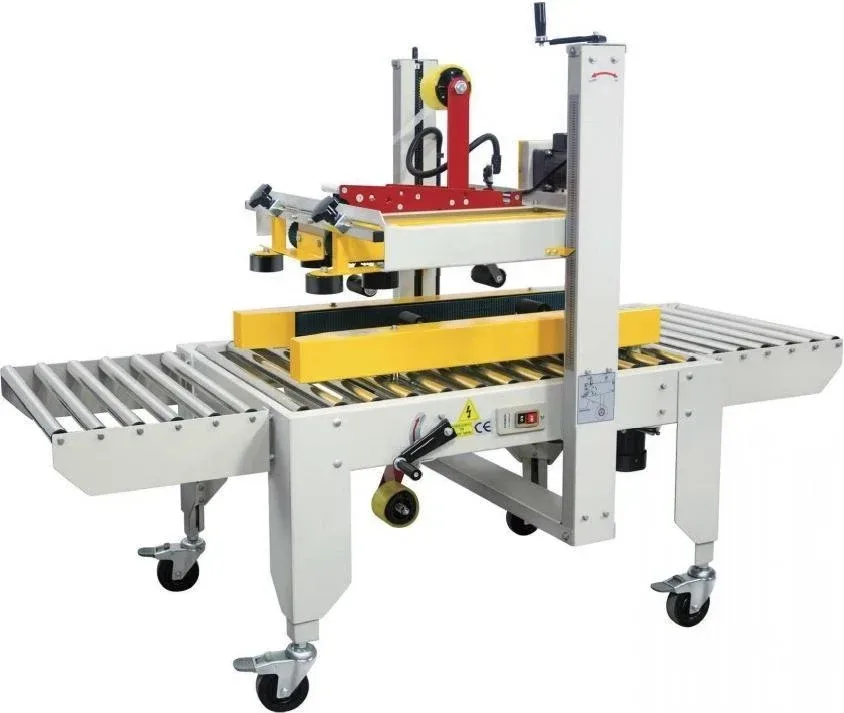
Loading starts where the packer hands an assembled case to the sealer. The first case should arrive square, with the flaps in the state the station expects and enough room for the next case to follow. Verify those three conditions before releasing a batch. Follow the installed machine's operating instructions and the site's guarded start-up procedure.
Prepare the first case and the job record
Bring one filled case from the actual order. Record its size, tape specification and the expected tape position on the case. Include the flap state in the record. The XD-FX5050 is a tape-sealing example for assembled cartons. The XDZG5050 includes top-flap folding. Check which arrangement is fitted before deciding how to present the case.
If the product protrudes above the flap crease or the packed case has lost its shape, set that sample aside for a packing check. A first case that cannot close in its normal condition will give a misleading test of the sealing station.
Check the mechanical handoff
Look at the conveyor where it meets the machine. The carton should reach the guides square and in the travel direction agreed for the line. A drop, side shift or bump between the bench and conveyor can change the seam position before the case reaches the tape head.
Authorised staff should confirm the guides, tape head and working height against the job setup. The two example models publish a table-height range of 550–740 mm. Verify the actual setting and adjacent conveyor, especially on an existing line with fixed transfers.
Check the operating controls
Before releasing cartons, verify that the line is ready under the approved start-up procedure and that the discharge can accept the first case. Agree who controls infeed release when the preceding workstation is a packing bench. Where a conveyor supplies the cartons, confirm the required spacing and how upstream release is stopped when the discharge backs up.
Keep hands clear of the driven belts, folding mechanism and tape-head area. If a carton stalls, stop and use the site's procedures for clearing a fault.
Pass one case and inspect it at discharge
Use the normal guarded feed method. Collect the case at the discharge inspection point and check that the flap seam stayed in position, the tape covered the agreed area and the ends met the specified overlap. Where both top and bottom are in scope, inspect both faces before recording the first case as accepted.
Then run a short, representative group. Watch the gap and orientation between successive cases. The first carton shows that the setup can produce an acceptable result. The group reveals whether the handoff can keep doing it as the packing bench feeds the next cases.
When the size or flap presentation changes, confirm that the setup still matches the order. For a new infeed layout, review the carton sealing range and send a side view of the transfer to Xunding.
How to Test a Case Sealer at the End of a Tape Roll
A full roll makes a convenient start to a factory trial. It tells you little about the last case before a roll change. Add a near-empty roll to the trial materials and agree what should happen to the final carton before asking for a low-tape warning option.
Check which head ran out
On a top-and-bottom sealer, identify the heads separately. Use the authorised roll-changing procedure and run ordinary trial cases with the near-empty roll in the agreed head. Observe when the operator gets a warning, if fitted, and what length of seam the last tape actually covers. Keep the final two cartons in their original order.
Account for stock between stations
Mark the last fully closed case and the first one requiring inspection. If the line continues conveying after the warning, count the cartons that reach dispatch before the operator intervenes. Write down who holds those cartons and how both seams are checked after the restart. This turns a warning demonstration into an acceptance test with a traceable result.
What constitutes a pass after roll replacement?
Compare the first post-change box with the signed reference on both faces. Check tape presence, seam coverage and the end tabs. If boxes were held during the stop, keep their inspection separate from the first-off check. One good new box cannot release a group of uninspected old ones.