


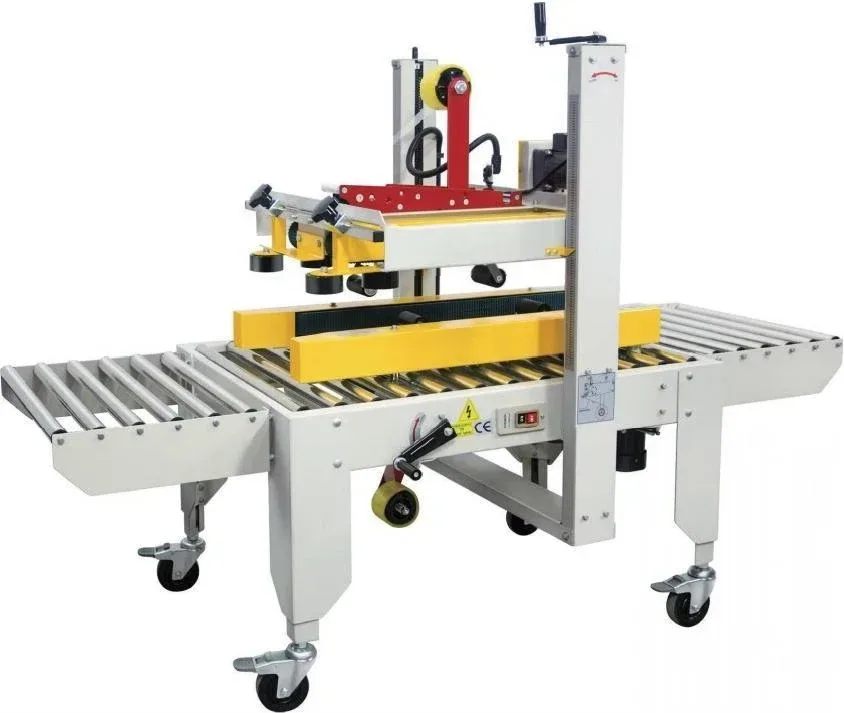
A carton sealer can keep running while the seal slowly deteriorates. Tape begins to wander, overlap changes, or an operator reseals more cartons by hand. A maintenance routine should catch that drift early. Keep an accepted reference carton, then give the shift team a practical way to report when today's seal starts to look different.
Set the maintenance schedule around the machine
Use the instructions for the installed sealer and tape head to set maintenance intervals. Record the machine model, tape-head identifier and the tape specification on the schedule. Operating hours, dust and the carton mix help the maintenance team decide whether the inspection frequency is adequate.
| Point in the work | What to record |
|---|---|
| Before a shift | First accepted filled case, its size and tape lot, plus any visible change at infeed or discharge |
| At a roll or order change | New tape identification, setup reference and first accepted seal for that order |
| During scheduled maintenance | Parts inspected or changed, findings, technician and next date under the service plan |
| After servicing | Sample acceptance and any fault that reappears under the same conditions |
Make the regular checks useful
Start with the carton path
From the permitted observation point, look for a case that skews as it travels or repeatedly touches the same guide. Save the incoming and outgoing views. Debris and loose packaging material around the line should be reported and cleared using the site's procedure. A recurring tracking problem deserves a record, even when the shift can still achieve its target.
Give the tape head its own entry
Record changes in the quality of the cut, tape placement and the bond on the carton. Identify the fitted head when ordering parts or requesting service. For example, Xunding catalogues 30–50 mm tape for the XD-FX5050 and 50–70 mm for the XDZG5050. The purchase specification and fitted head should agree with the tape on the line.
Work on cutters, drives or internal assemblies should follow the model service instructions and the site's isolation procedure. Use trained personnel and the approved parts. Store the service record alongside part identifiers, so the next shift can trace what changed.
Record the output as well as the work
After the approved return-to-service check, compare a sealed case with the reference sample. Look at position, end overlap and adhesion. If a different board or tape is now in use, add a new reference record for that order. Otherwise a legitimate material change may look like a machine fault.
What if the same fault keeps returning?
Collect the affected cases and compare them with the last accepted one. Keep the tape lot, board type, fault times and maintenance history together. If a fault appears immediately after a new roll or only on one size, that pattern gives the service team a starting point.
Review what to include in a spares handover. For a persistent problem, send the model and service record to Xunding.