


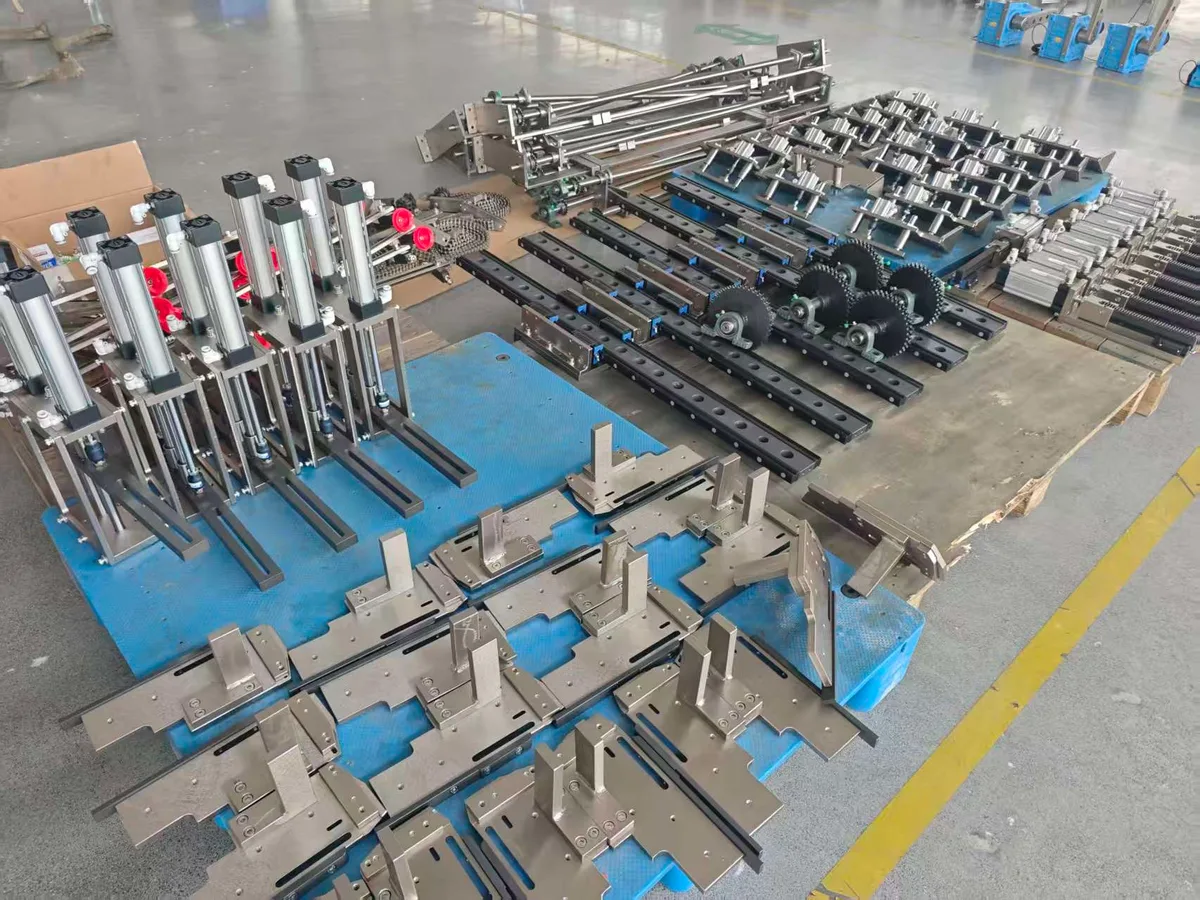
The part you cannot buy in year three was decided in month one. Packaging machine spare parts availability is fixed long before the first breakdown — in which suppliers were chosen, what the drawings recorded, and whether the parts list ever carried an item number. Buyers tend to test that at the worst moment: a forming station starts creasing short, the fitter photographs a guided pneumatic cylinder, and the question becomes whether anyone can still read the drawing it was built to. Every supplier promises support and sounds the same doing it. The difference is on paper. This guide takes the four conditions a replacement part has to meet, shows where each is decided, and gives you the questions to put to any supplier, with [the six machine specification and acceptance checks](/company/quality/) as the reference for what was built.
Why spare parts availability is a purchasing question, not a service promise
Availability is bought with the order, not granted afterwards. A builder who kept the drawings, numbered the parts and named the wear items can answer a request years later. A builder who did not cannot fix that with a hotline.
The cost of a missing part is the wait, not the part
A seal kit costs less than the paperwork that orders it. What you pay for is the line standing still, the crew kept on shift, and the packing stations waiting on boxes that are not being made.
What a warranty covers — and what it does not
A warranty covers a part that failed inside its terms. It says nothing about the wait, the freight or the lost production. A long warranty period is not evidence of parts support.
Peak season is when a missing part hurts most
Fruit and produce lines do not break down in a quiet month. A tray former that stops during harvest takes the packing schedule with it, so plan wear items against your season, not your maintenance calendar.
Holding a quotation? Ask for the drawing revision and the item numbers first, and see what comes back.
What “spare parts availability” actually requires
Four conditions have to hold at the same time. Miss one and the part is not available, however helpful the reply.
- A supply base that is still there. The material and component suppliers behind the part must still make it, or the builder must still be able to make it in-house.
- A specification that makes the part repeatable. A drawing with a revision, a tolerance and a material that someone can read and machine to.
- An as-built record. Not the catalogue page for the model, but the configuration that actually went into your machine.
- Part numbers and drawings that outlive the people who built it. Identification that survives staff changes on both sides of the transaction.
Why the conditions fail years later, not on delivery
All four are satisfied the day the machine is commissioned, because the people who built it are still in the building. The failures show up when the machine is older than the team that assembled it, and nobody remembers whether the third revision or the fourth went into the forming station.
Condition one — a supply base that is still there
What buyers see at the machine, and what they never see
You see the frame, the stations and the cabinet. What you cannot see is where the guided pneumatic cylinders came from, who bent the stainless brackets, and whether that workshop still exists. Those decisions are made before your machine does, and they set what is available afterwards.
Why long-standing suppliers change what you receive years later
A part is only repeatable if its input is repeatable. Sheet arrives in batches, seals arrive in batches, and a supplier who has made the same item for years holds the specification memory that keeps those batches compatible. When a source changes, the difference rarely shows on the invoice — it shows as a bracket that fits differently.
Xunding buys materials and components from a settled list of suppliers we have worked with for years. The list does not change between orders, which is why a part is usually sourced again rather than re-engineered. Ask for the type reference on any bought-in item; that answer is the test of whether the list is real.
Consistency is a supply decision before it is an inspection decision
Inspection can reject a bad batch. It cannot make the next batch the same. If the grade or the supplier changes, the machine has to be re-validated rather than assumed. How metal grade and fabrication shape machine construction covers what those checks involve.
The components inside a box forming machine that no buyer inspects
Nobody walks the acceptance test with a torch inside the frame. The key components of a packaging machine are chosen and fitted long before you see it, and each fails in a way that makes identification the hard part.
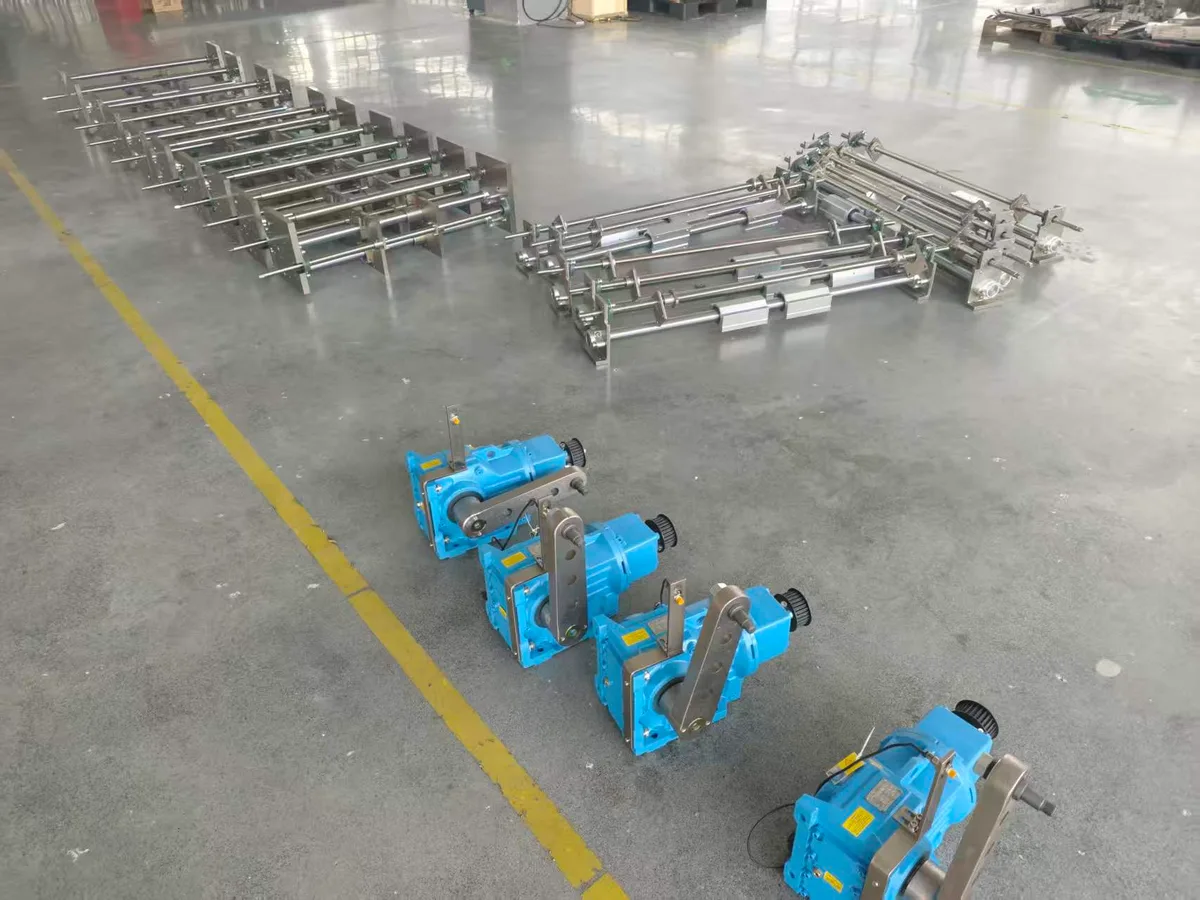
Pneumatic, guidance and drive components: where wear shows first
| Component category | Typical wear or failure point | Why identification matters later |
|---|---|---|
| Guided pneumatic cylinders | Seals, rod-end clevis, barrel sensor | Stroke, bore and mounting must match; photos hide two of the three |
| Linear guide rails and sliders | Contamination, lubrication loss, play | Rail size and block type are unreadable once fitted |
| Gears and racks | Tooth wear, backlash at the mesh | Module and tooth count must be stated |
| Geared motors | Bearings, output shaft, brake | Frame size and flange decide the replacement |
| Stainless rollers and shafts | Glazing, bearing-seat wear | Diameter and covering decide whether board feeds |
Fabricated stainless parts and rollers: made in-house, damaged in service
Brackets, guards, frame panels and roller assemblies are made to drawing, not chosen from a catalogue. Good for fit, bad for improvisation: a bracket that has lost its angle needs the drawing, and a workshop working from the damaged part copies the damage.
Control cabinets and electrical hardware: the identification problem
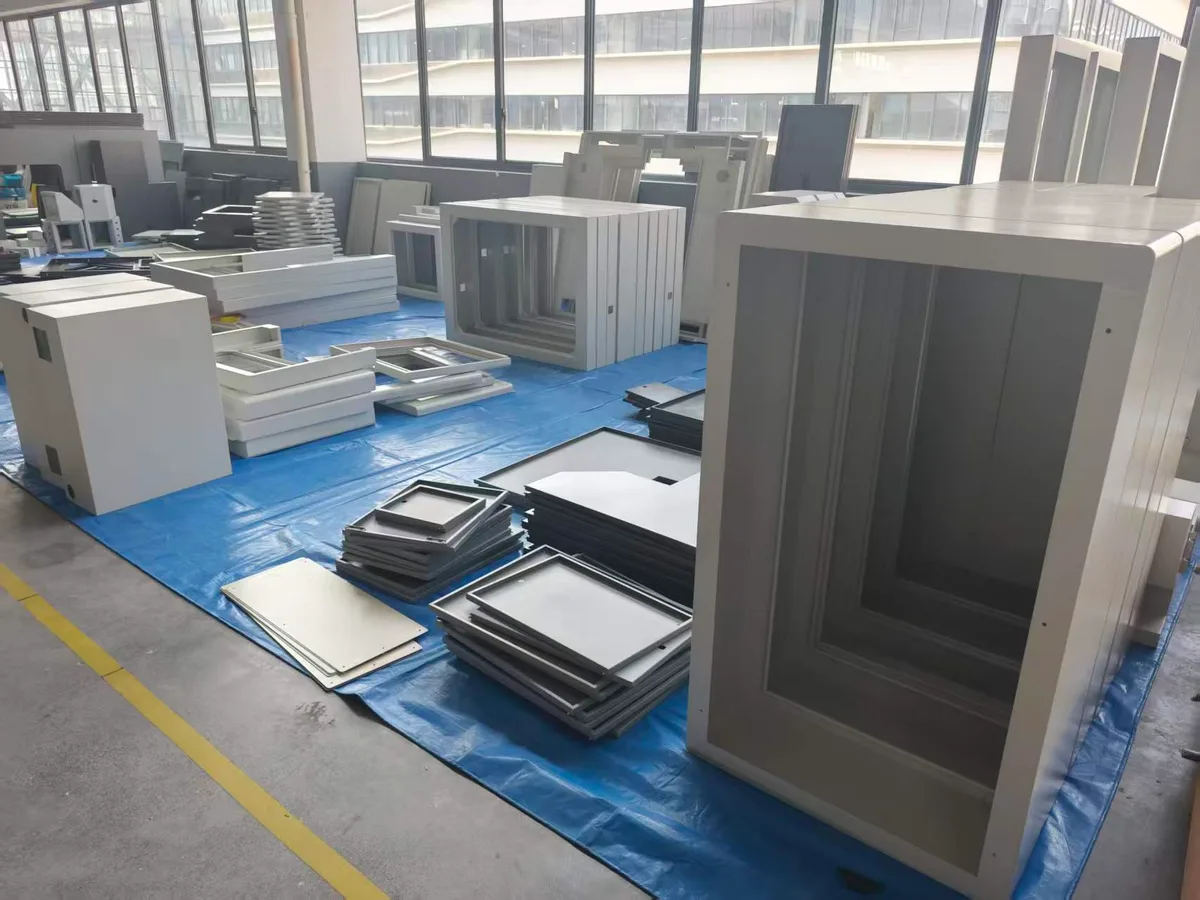
A cabinet door, gland plate or terminal block looks interchangeable and usually is not. Cut-outs, hinge positions and layout follow your machine’s drawings, and this hardware often has the longest route back to a supplier.
Condition two — a specification that makes a part repeatable
Drawing revision, tolerance and the one feature that must match
A drawing without a revision letter is a rumour. The revision tells a machinist which version was made, and it is the difference between a part that fits and one that nearly fits. Tolerance matters too: a shaft turned to the right diameter but finished without attention to the bearing seat will run, then rumble, then take the bearing with it.
Every part also has one feature that must match exactly — a mounting pattern, a bore, a crease line. Identify it before you discuss price, because it is the one a substitute will get wrong.
What an inspection record adds years later
An inspection record proves the part was checked against the drawing at the time, which is the only way to know later that the drawing still describes what is on your machine. The inspection steps from machined parts to the finished box show how those checks are recorded.
Condition three — an as-built record, not a catalogue page
Why “same model” is not the same machine
Two machines with the same model reference can carry different options: a different feeding arrangement, an extra station. The catalogue describes the family. Only the as-built record describes yours, and that is what a parts request is really asking for.
Where options and field changes get written down
Options chosen at order stage and changes made on site both have to land somewhere permanent — a drawing set with a revision letter, a parameter record from commissioning, and a parts list that matches them. Documents and acceptance terms agreed before purchase covers what to ask for.
Condition four — part numbers and drawings that outlive the people who built the machine
What a serviceable parts list should contain
A box forming machine spare parts list — often called a recommended spare parts list — should carry these columns for your machine:
| Item | What it should show | Why it matters |
|---|---|---|
| Item number | As ballooned on the assembly drawing | It is the only reference a machinist can work from |
| Drawing reference | Drawing number plus revision letter | Tells the supplier which version was built |
| Description | Size, stroke, mounting, material as applicable | Turns a photograph into a specification |
| Quantity per machine | How many are fitted | Decides whether you order one or a set |
| Wear part flag | Which items have a working life | Separates planned buying from emergency buying |
| Make-or-buy flag | Made to drawing, or bought in | Tells you who can supply it and who carries the lead time |
Why a part number without a drawing is only half an answer
A number gets you a conversation. A drawing gets you a part. If a supplier can quote an item number but cannot produce the drawing behind it, ask what happens when the original maker stops offering that item.
Revision control: the change that quietly breaks compatibility
Parts get improved, and an improvement is a change. A new revision that fits the current machine may not fit yours, which is why the revision letter has to travel with the order, not sit in someone’s memory.
Own-made parts vs bought-in components: two recovery routes
Forming tooling and machine-specific parts: single source by nature
Forming tooling, fabricated brackets, machined shafts and guards exist only for your box format and your frame. Nobody else has the drawing, and a copy made from the worn original inherits the wear. For these the builder is the source, and the drawing is what makes it usable.
Commercial components you could source locally — and what you need to do it
Cylinders, valves, geared motors, sensors and bearings are bought in. You can often buy them elsewhere, sometimes faster, if you hold the identification: type reference, key dimensions and the mounting or electrical interface.
| Part type | Who can supply it | What you must hold to buy it elsewhere |
|---|---|---|
| Forming tooling | Machine builder only | The approved box drawing and tooling revision |
| Fabricated and machined parts | Machine builder, or a workshop with the drawing | Drawing number, revision, material and finish |
| Bought-in components | Component channel or machine builder | Type reference, dimensions and interface |
Xunding makes the machine-specific parts and buys the commercial ones, and a request is routed accordingly. It cuts both ways: it limits what we can supply, and it means we cannot substitute a part whose drawing we do not have.
The complete guide to carton erecting machines separates the machine families, and carton erecting machines lists the erecting and sealing range, if you are still deciding which family to keep supplied.
Trained technicians: what a training record proves, and what to verify
The tasks a technician should have been assessed on
A training record proves someone was assessed on specific tasks, not that they are generally capable. The tasks worth seeing named are assembly, alignment, pneumatic connection, control settings, running a trial box, and diagnosing a fault on a machine already in service. Xunding keeps documented training records for specific assembly and commissioning tasks, which is the form of evidence a buyer can actually check.
Why the training record belongs in your machine file too
Ask who assembled your machine and what they were signed off for; that record tells you later whether a site adjustment sat inside the original setting.
Questions to ask any packaging machine supplier about spare parts
Twelve questions, grouped. Ask them in writing and keep the answers with the order.
Identification
- Which item number on the assembly drawing identifies this component?
- Can you identify a part from the machine serial number alone?
- Do you keep the drawing revision that was built into my machine?
Documentation
- Will the parts list mark which items are wear parts?
- Does each item carry a drawing reference and a quantity per machine?
- Which documents are handed over on paper, and which as controlled files?
Supply
- Which of these parts do you make, and which do you buy in?
- If your supplier of a bought-in component changes, who holds the identification?
- What do you do when a component has been discontinued?
Continuity
- Who reads a parts request, and what happens to that knowledge when the person leaves?
Response and tooling
- What do you need from me to identify a part — model, serial number, photographs, drawing item?
- If my machine is older than your current range, can the tooling still be made?
How to score the answers
Score the specificity, not the enthusiasm. An answer that names a document, a revision or a person is worth more than a promise of fast service, and “no, we cannot” is more useful than a vague yes. Evaluating a packaging machine supplier on these points is a buying decision, not a support complaint.
What happens when you send a spare parts request
What to include in the request
Machine model and serial number from the plate on the frame, a photograph of the part in place, a close-up of the part, the drawing item number if you have the list, and what the machine was doing when the fault appeared. Those details usually settle the question in one exchange.
Machine-specific or commercial: how the route is decided
The request resolves into one of three answers: the part is held and can be confirmed; it is made to drawing and the wait is a machining slot; or it is bought in and the lead time belongs to its maker. The third is the one buyers dislike, and the one that hides behind a vague reply — which is why we say so when a photograph is not enough, rather than guess.
If you are still at quotation stage, spare parts and on-site support in a quotation comparison shows where this conversation belongs.
When an engineer needs to come to site
Alignment, control faults and faults that only appear at production speed are faster in person than by message. A request that keeps returning to the same station is a signal to discuss a visit.
Frequently asked questions
How long should spare parts be available for a packaging machine?
No supplier can verify a number like that, and one who offers it without checking the part is guessing. Ask for the method instead: which items are made in-house, which are bought in, and what happens when a bought-in component is discontinued. Then ask for that in writing.
Can I buy the part from a third party instead of the machine builder?
It depends on the part type. Forming tooling and machine-specific parts need the builder’s drawing, so third-party supply means copying a worn original. Commercial components can often be sourced elsewhere, if you hold the type reference, the key dimensions and the interface.
Does a longer warranty mean better parts support?
No. A warranty covers a part that fails within its terms; it does not cover the wait, the freight or the production lost while a drawing is found. Treat them as two separate questions.
What is a recommended spare parts list?
A list configured for your machine rather than the model family: the wear items your format and shift pattern will consume, plus the few spares whose failure would stop the line without warning. Agree it at order stage, when it can still affect the price.
Conclusion
Packaging machine spare parts availability is decided in the supply base, the drawing revision, the as-built record and the numbering — all settled before the machine is assembled. Three actions carry most of the weight:
- Ask for the parts list, with wear parts flagged and item numbers that match the drawings.
- Check the revision letter on the drawing set for your machine, and keep it with the manual.
- Split your parts by route, own-made or bought-in, so you know who to call.
That conversation is cheaper now than in the middle of a production night. Send us your machine model and the parts you are considering → We will tell you how each item is identified, whether it is made to drawing or bought in, and what you can realistically expect when you need it again.