


Reference sample
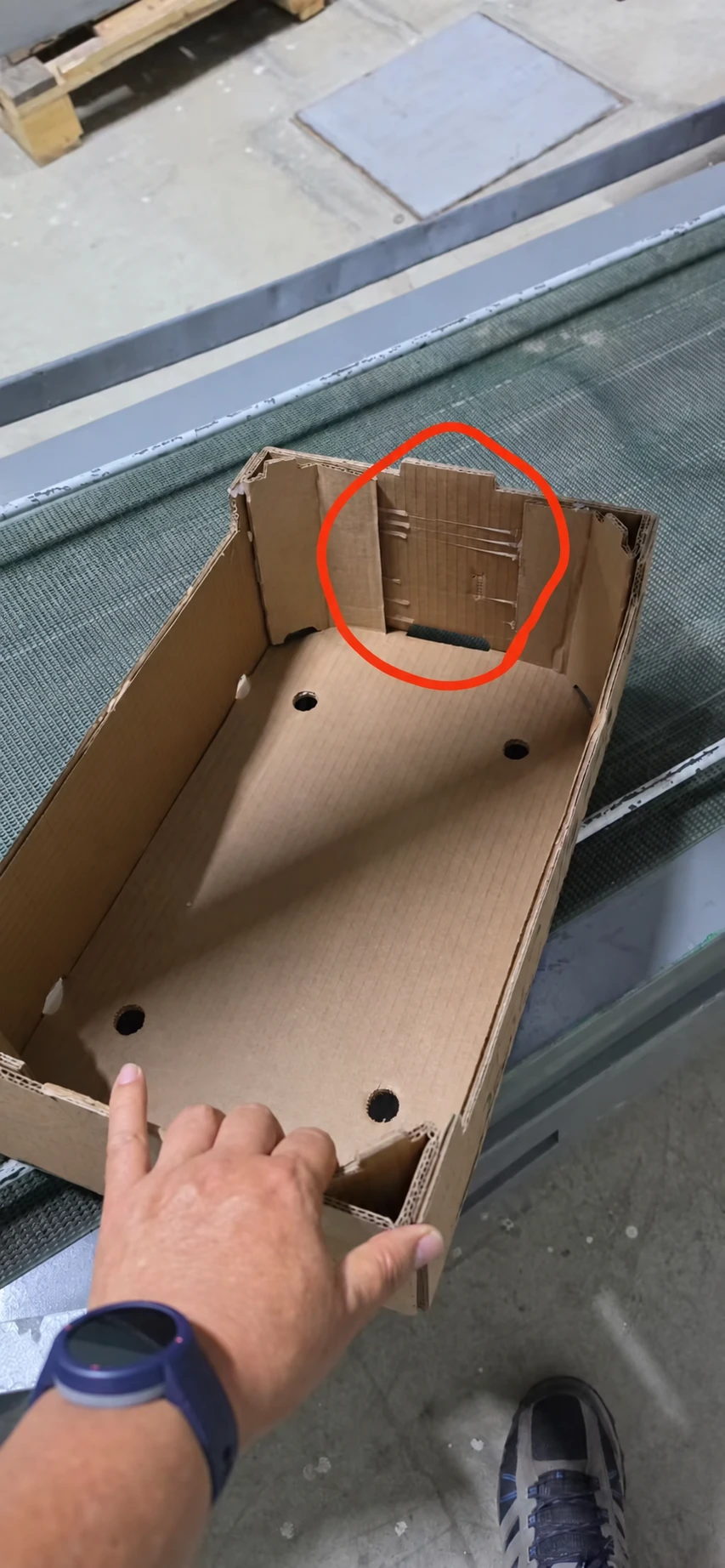
Xunding sample
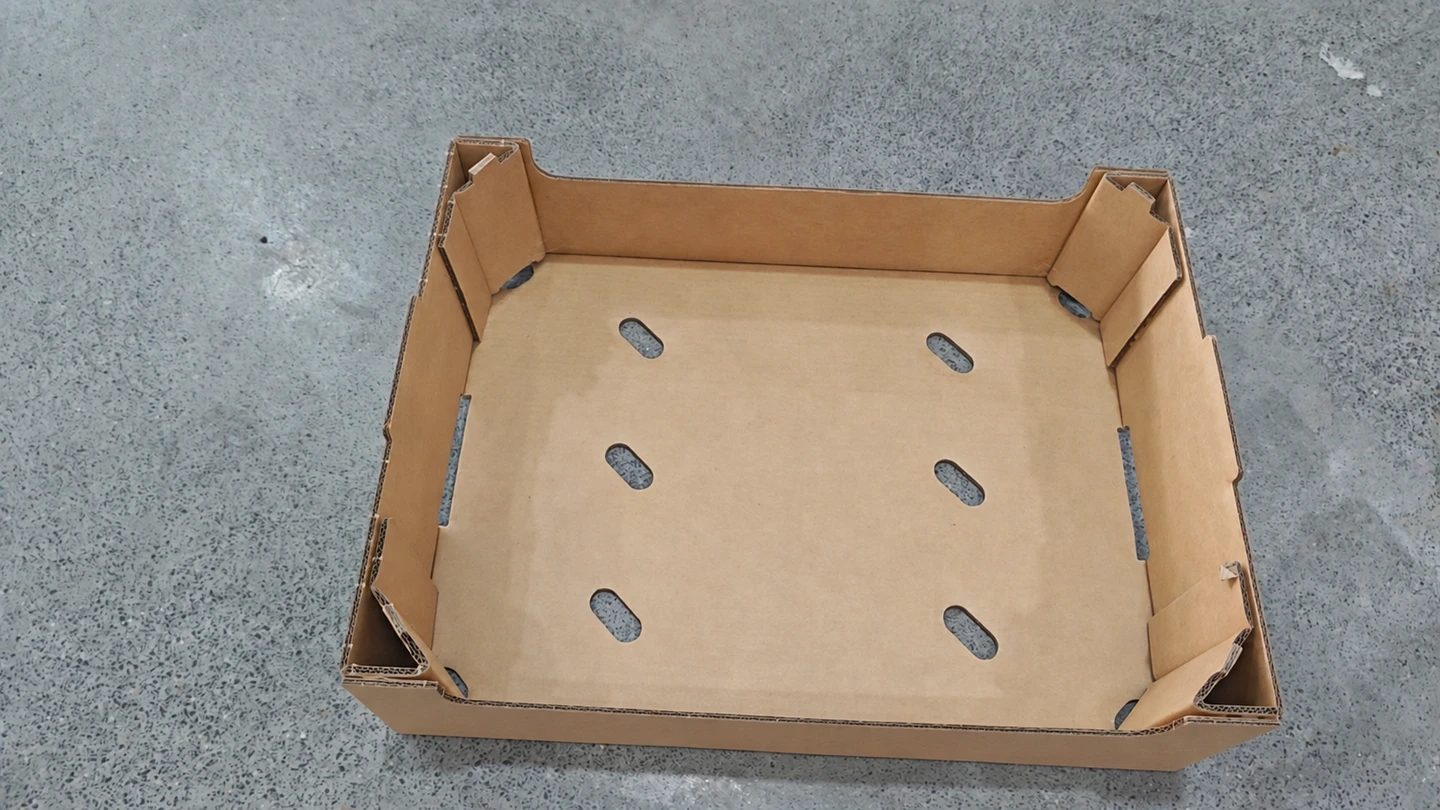
To compare fruit tray gluing, inspect adhesive placement and corner joints, then test both proposals with the same blank, board and agreed trial conditions. The two photographs below show a difference in visible glue threads; they do not establish bond strength, glue savings or machine output. This case explains what to check before choosing a fruit tray forming machine or accepting a lower quotation.
What the two sample photographs show
The reference sample on the left has visible threads of adhesive across the inside panel in the circled area. The Xunding sample on the right has no similar glue threads visible in the photograph. Both images have had identifying print removed for display; read them as sample photographs, not as unedited production records.
The trays have different structures. These photographs do not measure bond strength, glue consumption or production speed, and this is not a controlled machine-to-machine trial. A visible finish difference is a reason to investigate the gluing setup, rather than proof that one machine will outperform another on every tray.
For your own purchase, first identify the bonding areas on the blank drawing. Compare the inside surface, folded corners and intended joints together. Keep a photograph of the flat blank beside the formed sample so the supplier can see which surfaces should meet and where adhesive should remain.
Fruit tray gluing comparison checklist
Use the same checks for each supplier. A clean-looking tray, a strong joint and an attractive quotation answer different questions. Record the conditions beside each result so that a sample made from one board grade is not treated as evidence for a different production material.
| Check | What to inspect | What to record or confirm |
|---|---|---|
| Blank and board | Tray structure, dimensions, board thickness, printing and coating. | Use the same drawing revision and production board for both trials. |
| Adhesive placement | Glue in the intended bonding areas; threads or deposits on exposed panels. | Photograph the glue pattern and finished interior under comparable conditions. |
| Corner joints | Alignment, closure and joints that open during the agreed handling check. | Agree a joint acceptance method and record failures separately from appearance defects. |
| Usable output | Accepted trays over a measured run, including stops and rejected trays. | Record run duration, accepted count, rejects and the reasons for stops. |
| Adhesive use | Measured adhesive use over the same recorded run. | Compare adhesive per accepted tray; include waste and document the measurement method. |
| Changeover | What must be adjusted or replaced for another tray size. | List included tooling, operator tasks and the formats actually tested. |
| Quotation and service | Feeding, gluing, forming, conveying, tooling and support scope. | Compare included items, exclusions, delivery terms and service costs in writing. |
How to run a useful sample trial
Start with the actual tray blank and board intended for production. Send the drawing revision, formed dimensions, board specification and any printed or coated surfaces before arranging the trial. If the two suppliers cannot test the same material, record the difference and leave the result qualified.
Agree the inspection method before running the machine. Identify the joints to check, the exposed areas that should remain free of stray adhesive and the handling steps the tray must pass. A demonstration video should show the relevant forming steps and the resulting samples, not just the conveyor moving.
Separate appearance checks from joint checks. Inspect multiple trays during the run rather than selecting only the best-looking sample. Record whether a rejection concerns glue threads, an open joint, alignment or another agreed defect. Keep the rejected samples or photographs with the trial record so that an adjustment can be evaluated against the same issue.
Count accepted trays over a stated period and record stops, rejects and adjustments. Nameplate speed alone does not show how many usable trays your board and box design will produce. If adhesive cost matters to the decision, compare measured adhesive use over that run and divide by accepted trays, using the same measurement method for both proposals.
Include the production situations that matter to your order: the main tray size, a second format if changeover is important, and the board surfaces you actually purchase. A successful test on one format is evidence for that configuration; other formats still need confirmation. Keep the resulting sample, drawing and agreed settings together as the acceptance reference.
Does a cleaner tray mean lower glue use or a stronger bond?
A cleaner interior shows where adhesive is visible on that sample. It does not, by itself, establish how much adhesive was applied inside the joint or how the bond behaves during handling. Reducing stray adhesive is a useful inspection objective, but reducing the glue quantity without an agreed joint check does not demonstrate an improvement.
Ask the supplier to review nozzle application against the intended bonding areas and to show the resulting joint on your blank. Treat the glue pattern, formed geometry and joint inspection as related checks. Where your packaging will face specific storage or handling conditions, define those conditions before accepting a sample rather than assuming the photograph covers them.
Neither of the displayed photographs establishes a percentage saving in adhesive, a load rating or suitability for a particular food-contact requirement. Request the relevant material documents and trial evidence for any such requirement. Keep claims about appearance separate from claims that need measurement or a different type of assessment.
How to interpret the 70% quotation in this case
For the equipment compared in this case, Xunding’s quoted price was 70% of the alternative quotation. This is a case-specific quotation comparison, not a standard discount or a price promise for other fruit tray machines. It does not establish that the two offers contained identical equipment or delivery terms.
Before comparing totals, align the scope: blank feeding, adhesive equipment, forming stations, conveying or stacking, tooling and the box formats included. Then check currency, quotation validity, freight, installation, training and any exclusions. Ask each supplier to identify optional items separately so that a lower total is not confused with a smaller scope.
Compare purchase price alongside the trial results and the costs relevant to your operation. Adhesive per accepted tray, changeover work and the planned spare-parts package can be reviewed only when their conditions are known. Do not turn this single quotation ratio into a total ownership-cost or payback claim.
Which fruit tray forming machine should you discuss?
For corrugated fruit and vegetable trays, begin with the fruit tray forming range and the actual blank structure. XD-Z02 and XD-Z03 are catalogue starting points for a discussion about feeding, gluing, folding and stacking. The photographs in this case do not identify a tested model or establish compatibility with either machine.
Share the folded tray and flat blank before selecting a model. Confirm the board, size range, required accepted output, number of formats and how the formed trays will leave the machine. A catalogue model becomes a purchase candidate only after its configuration and tooling have been checked against those inputs.
Compare fruit tray forming machines
Agree spare parts and on-site support before ordering
Xunding provides after-sales support and handles spare parts requests. For an existing machine, include its model, a clear photograph of the part and a description of the issue. For a new order, ask which wear parts are recommended, how parts are identified and which items are included in the quotation.
An engineer can also be sent to site for installation or service. Contact the team with the machine, location and work required, then agree timing, scope and costs in writing. Confirm availability, travel and response arrangements for your project alongside the visit details.
What to send for a comparable quotation
Send Jason Chen a formed-tray photograph, flat blank or dieline, dimensions, board thickness and specification, printing or coating details, and the output you need over the available working time. Include the main formats, changeover frequency and any downstream conveying or stacking requirements.
State what you want confirmed: a cleaner visible finish, a joint acceptance method, a recorded sample run, or a quotation with an itemised scope. If comparing an existing offer, share the equipment scope you are permitted to disclose. The next useful result is a configuration and trial plan for your tray, followed by a written quotation against the same requirements.
Frequently asked questions about fruit tray gluing
What should I compare when choosing a fruit tray gluing machine?
Compare adhesive placement, corner alignment, joint acceptance, accepted output, measured adhesive use and changeover requirements. Run the same blank and board under agreed trial conditions, then compare quotations with the same equipment and service scope.
Do glue threads prove that a tray has a weak bond?
No. Glue threads show stray adhesive on the visible surface. The joint needs a separate agreed inspection or handling check. A clean interior also does not prove bond strength, so record appearance and joint results separately.
Can these photographs prove lower adhesive consumption?
No. A photograph cannot quantify adhesive use. Measure consumption over a recorded trial, count accepted trays and document waste and the measurement method. Compare the resulting adhesive per accepted tray under equivalent conditions.
Does Xunding always cost 70% of another supplier’s price?
No. The 70% figure refers only to the quotations in this case. It is not a standard discount. Your price depends on the confirmed configuration, tooling, included equipment, delivery terms and service scope.
Which materials are needed to check machine suitability?
Provide the formed tray, flat blank or dieline, dimensions, board thickness and specification, and printing or coating details. Add required accepted output and the formats to be changed between. Model and tooling suitability must be confirmed against these inputs.
Can Xunding arrange an engineer visit and supply spare parts?
Xunding provides spare parts support and can arrange an engineer visit. Share the machine model, location, issue and part photographs as applicable. Agree availability, timing, work scope, travel arrangements and costs before relying on a visit.
Request a quotation or arrange service with Jason Chen
Read the carton folding and gluing guide