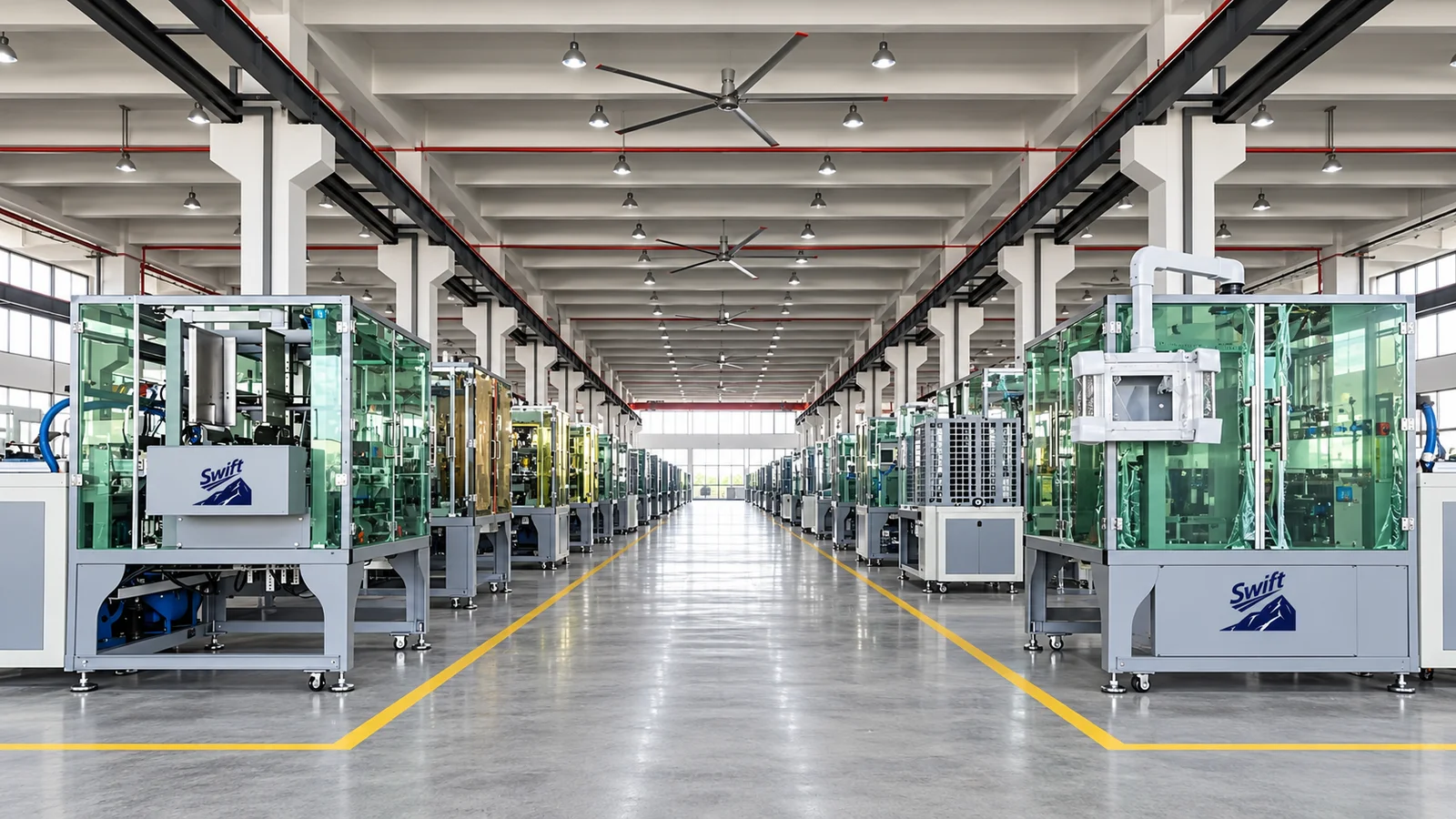
Automatic folding and forming equipment for cardboard mailer boxes. Compare standalone models and configured assembly lines for your lid, tab and corner structure.
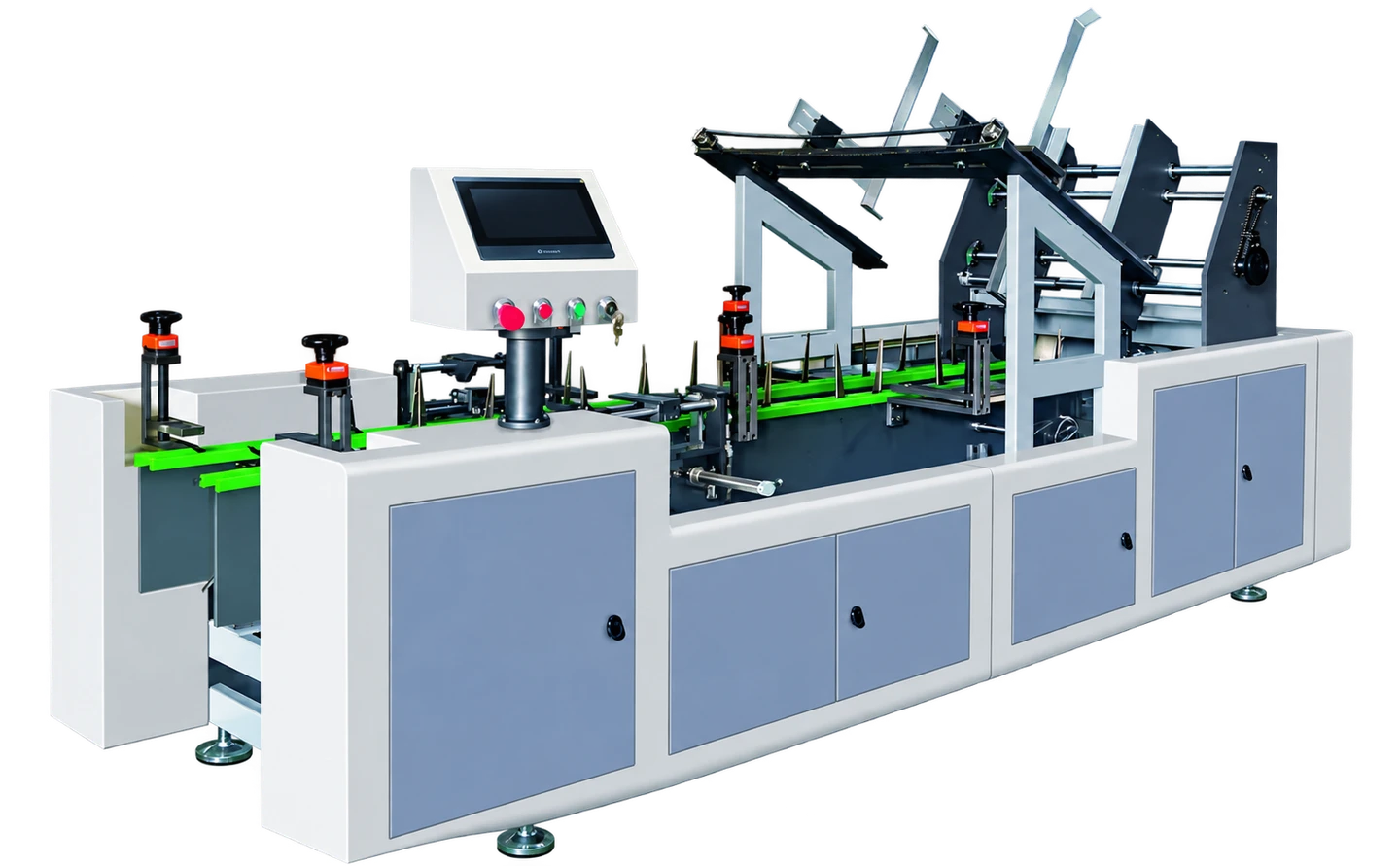
Automatic forming for folding mailer boxes, described as aircraft boxes in the catalogue, for clothing, crafts, electronics and general product packaging.
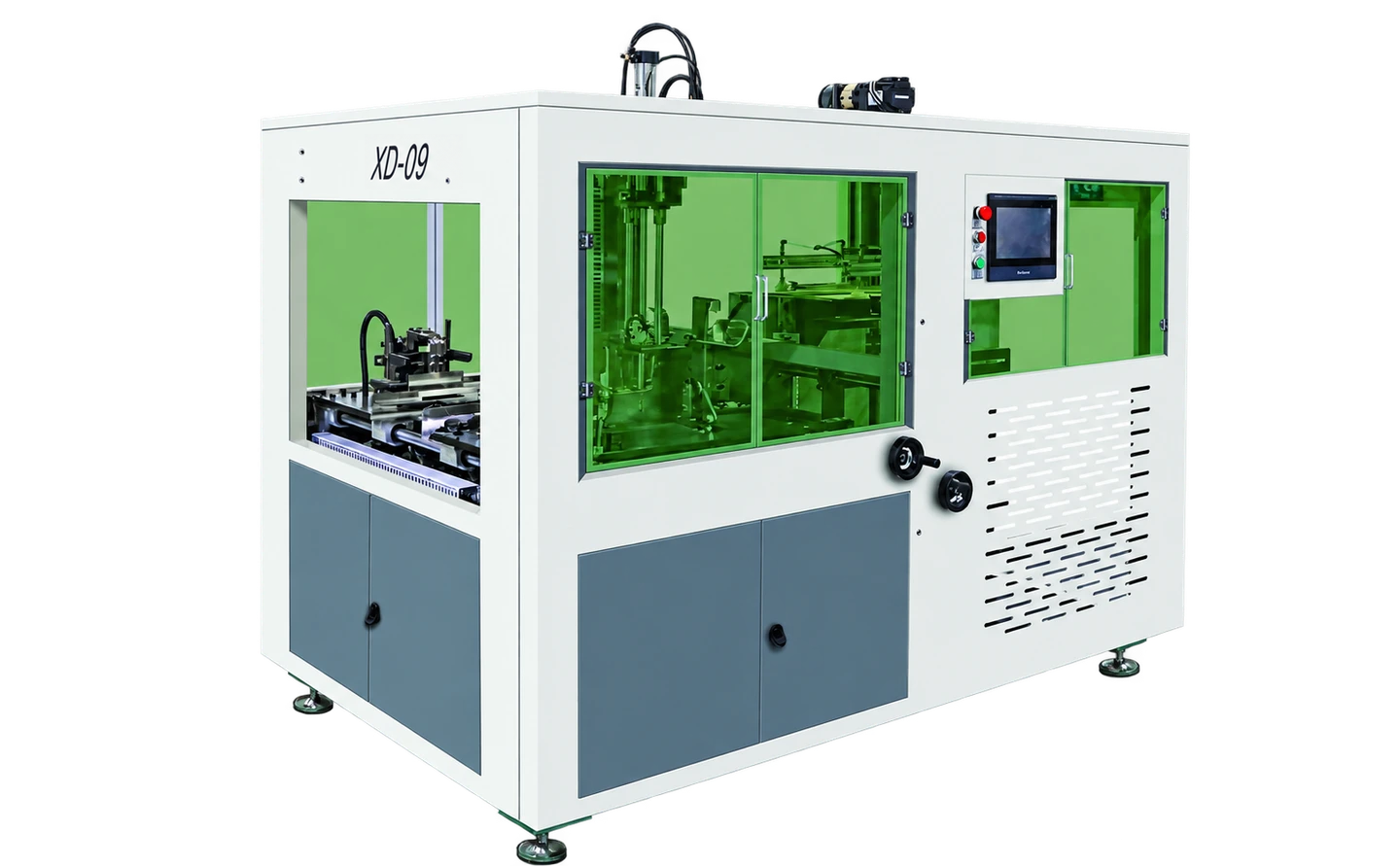
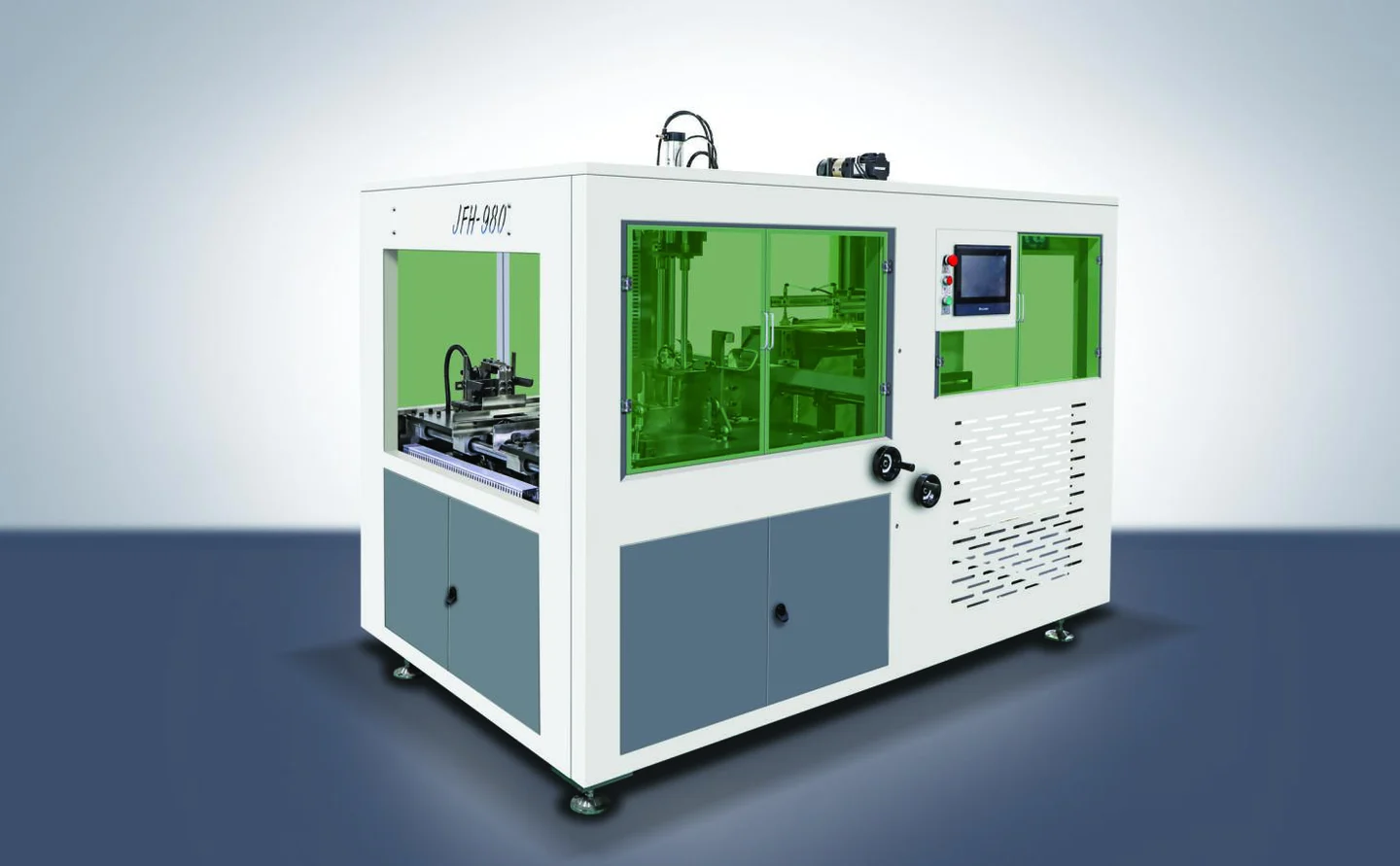
Catalogue illustration with edited model lettering (XD-09). Confirm identification against the machine documentation.
A fully automatic single machine that feeds, glues and folds mailer boxes in one pass, with multi-station forming and vacuum bottom feeding that allows blanks to be replenished without stopping.
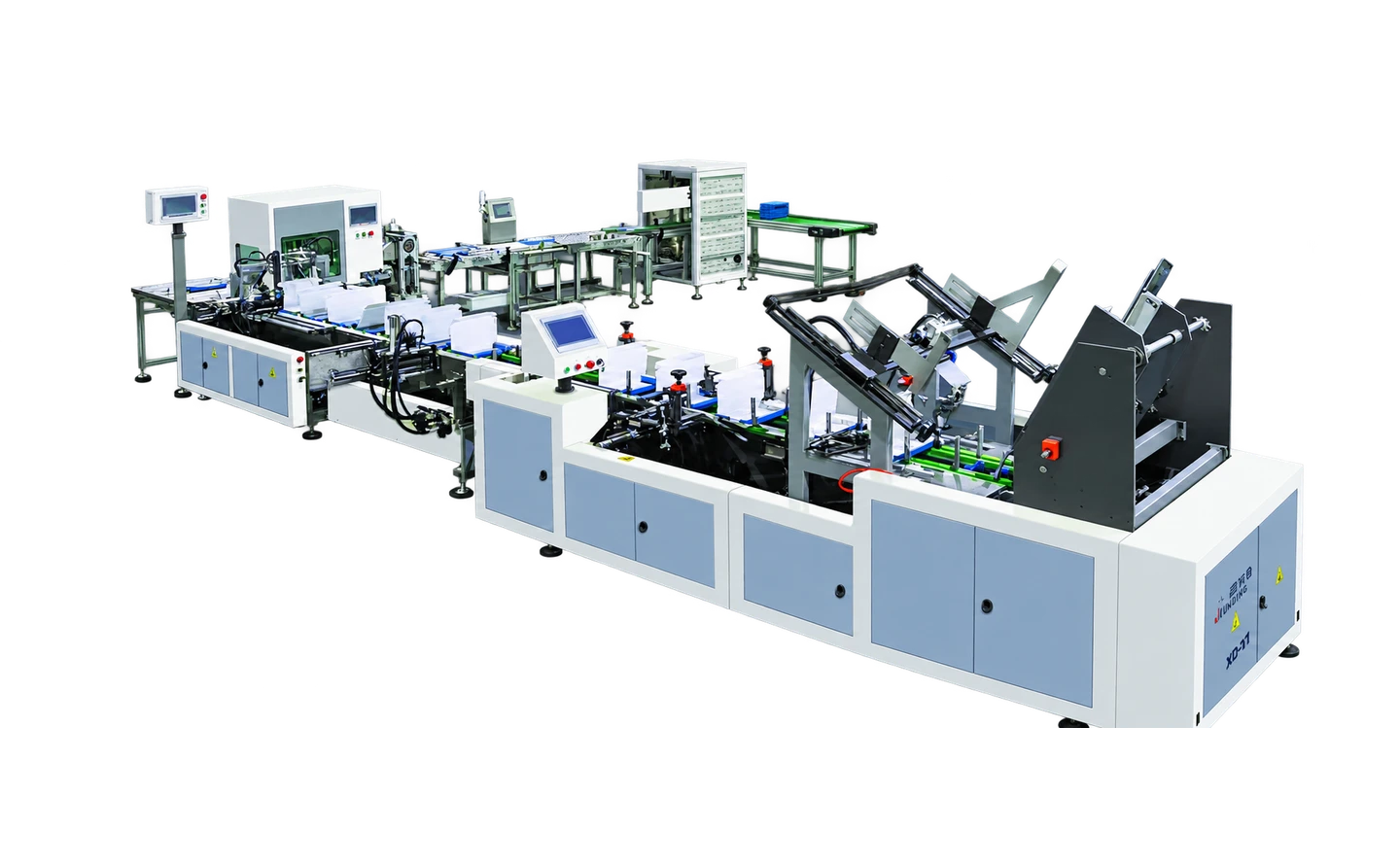
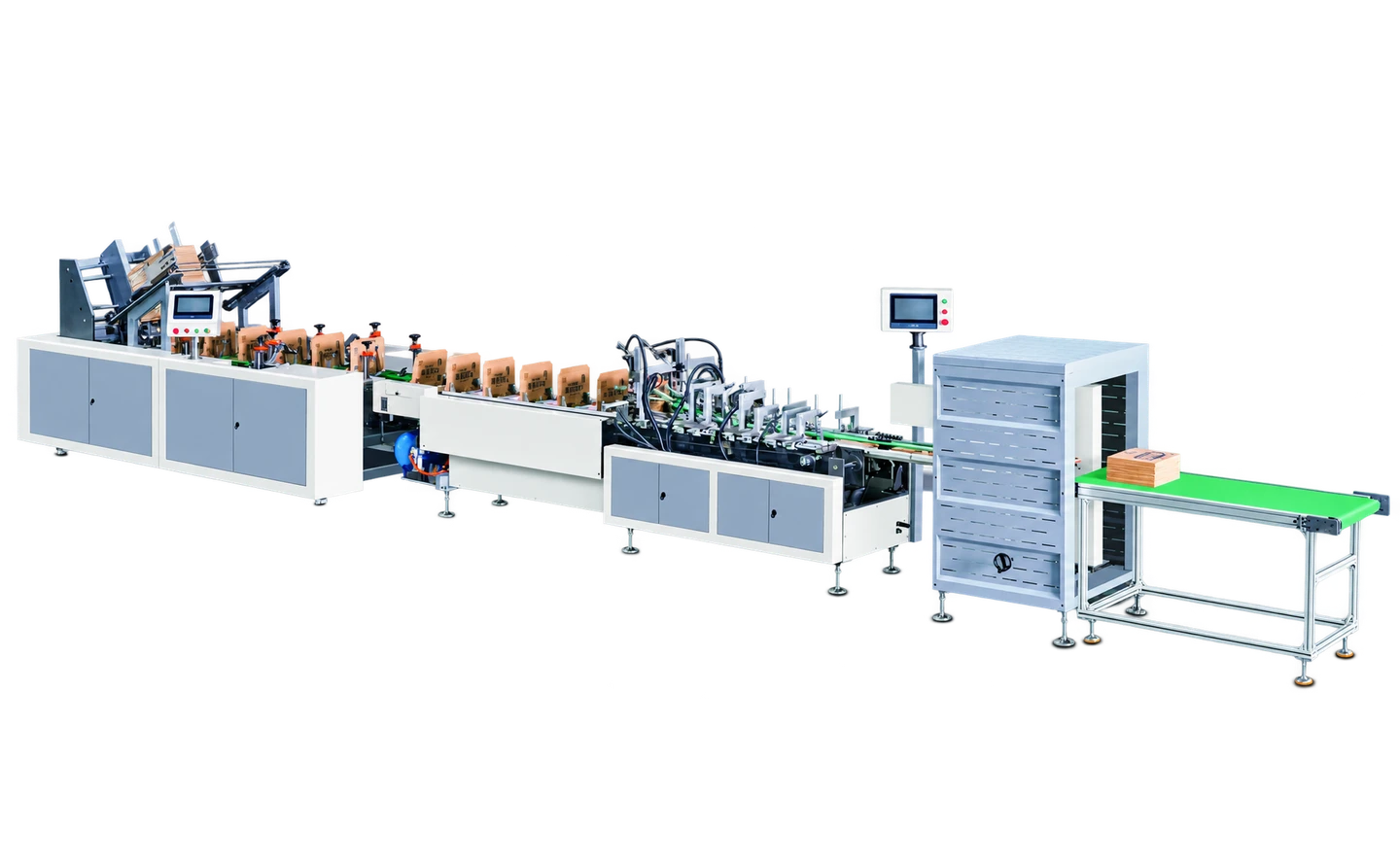
A configurable mailer-box assembly line for clothing, crafts, daily goods and electronics packaging. Confirm the blank structure and line arrangement with Xunding.
Figures are from the 2025 Xunding catalogue. Actual output depends on box design, cardboard and configuration. Confirm the current specification, electrical supply and box sample before ordering.
What to send for a kraft mailer machine quote
A request for a kraft mailer box machine should include more than the board name. Two brown mailers can have different creases, locking tabs and side folds. Send a flat-blank photo, a drawing with formed dimensions and your daily quantity for each format. That gives the supplier a practical basis for estimating output and checking a model before preparing a quote.
XD-09 catalogue image. Confirm machine selection against the flat blank and the finished dimensions.
Use a real flat blank
Show the whole blank from above. Keep the cut lines and creases visible and include a close photo of any latch or tucked corner. If the production batch is already printed, identify the outside face and the feeding orientation you expect. Send the board thickness and a representative sample so a trial can reproduce the material that actually enters the machine.
Show which dimensions belong to the finished box
Mark finished length, width and height in the same unit. Specify whether the measurements were taken inside or outside the box and mark the lid area. If a drawing gives flat-blank dimensions as well, label those separately. Keep a made-up sample for checking the fit of the lid and locking tabs after it leaves the forming station.
Turn daily quantity into a trial target
Give both daily quantity and the hours available for forming. For illustration, 2,400 acceptable boxes over four forming hours equals an average of 600 good boxes per hour. That is a planning figure, not a machine rating. List replenishment and changeovers you expect during those hours, and say whether the output target is for a single format or a mix.
Confirm the model, then compare quotes
Send the photos, drawing and output target together. Use the mailer and parcel application to review what the machine must hand over. If printed blanks will be run, include the printed-blank trial checks. Ask for the proposed model, material used in the trial and accepted output for each tested format, so the quote reflects your actual box.
Compare the XD-09, XD-Z10 and XD-Z11 forming machines with the XD-Z12 line configuration. Start with the lid, tabs and corner folds of your mailer box rather than the product packed inside it.
Prepare your selection materials
Send a flat blank drawing and a photograph of the assembled sample, with finished length, width, height, board thickness and daily output. Include the box sizes that require changeovers.
Open each candidate model to compare its specifications. Confirm the forming sequence, tooling, collection arrangement and quotation scope for your actual blank before selecting a configuration.
With your permission, we use Google Analytics to understand visits and saved inquiries. Analytics is optional; you can use this website without it. Privacy Policy