


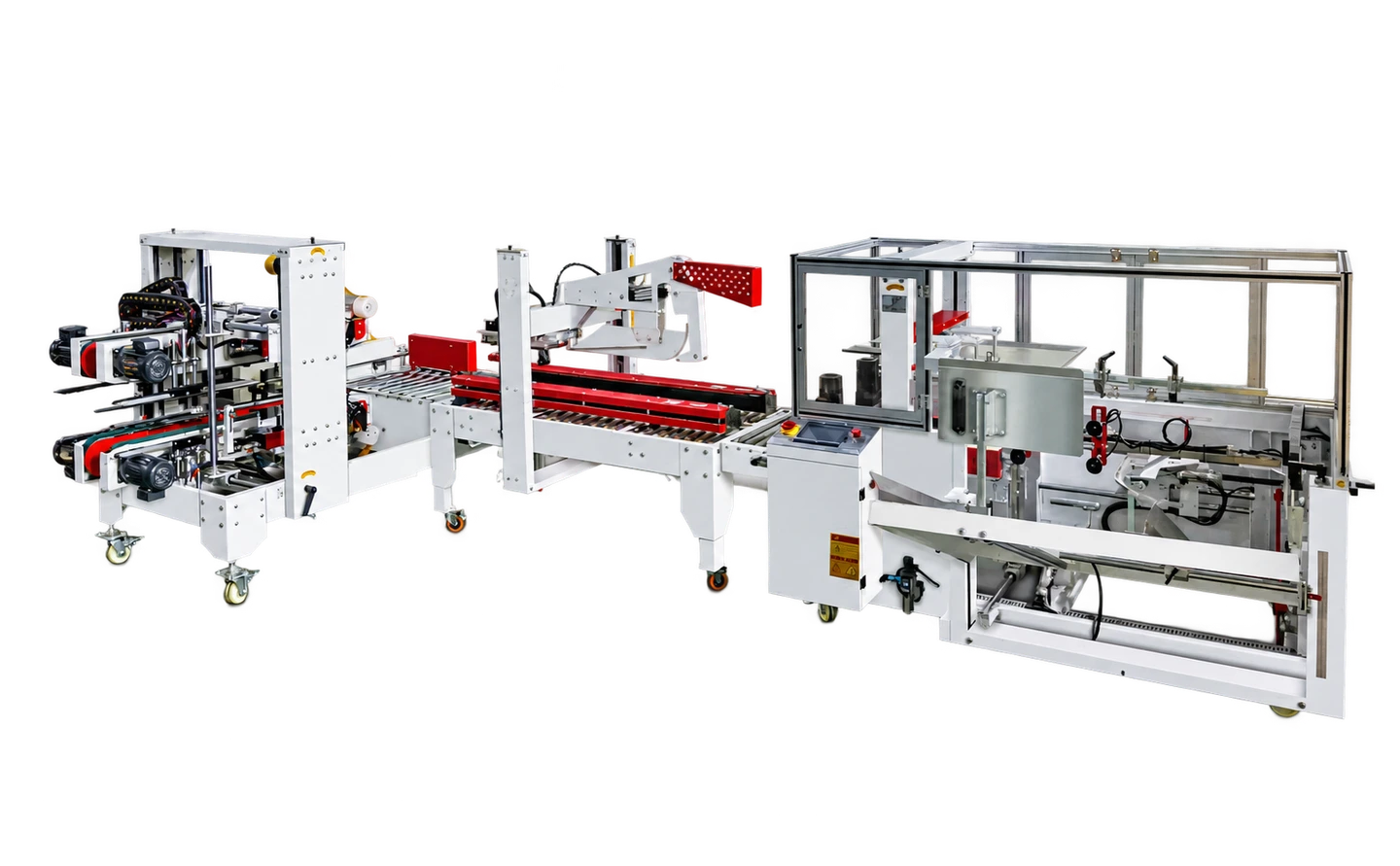
A carton box folding and taping machine enquiry needs one extra detail: what condition is the carton in when it reaches the equipment? An empty flat carton and a filled carton need different handling.
Draw the packing sequence
Write down the steps from the supplied carton to the carton ready for dispatch. For example, cartons may be erected, filled at a packing station, then have their top flaps folded and taped. Identify the step you want to automate and the work that happens before and after it.
Include a photograph of the carton at the machine entry point. Tell the supplier whether an operator folds any flaps, whether cartons arrive on a conveyor and whether the line runs one size at a time or a mixture of sizes.
Erecting and flap-folding sealing do different jobs
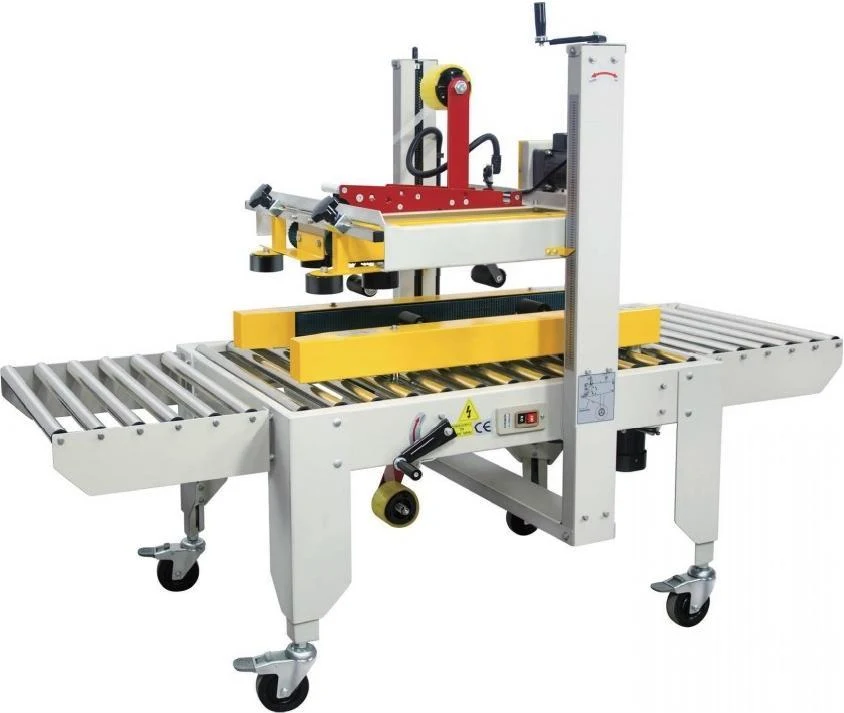
The Xunding catalogue lists XD-KX450 as automatic carton opening and erecting equipment. XDZG5050 is described as an automatic flap-folding carton sealer. XD-FX5050 is tape-sealing equipment for assembled shipping cartons. These descriptions refer to different stages of packing.
A flap-folding sealer should not be presented as a machine that forms every kind of paperboard box from a die-cut blank. Fruit tray forming and shipping-carton sealing use different box structures. Match the model to the operation shown in your packing sequence.
Carton dimensions and tape width
Supply the carton length, width and height together with the intended tape width. The catalogue gives XDZG5050 a 200–500 mm length range, 130–500 mm width and height ranges, and 50–70 mm tape width. XD-KX450 has a different carton range and lists 48–70 mm tape width.
Do not compare these models on a single maximum dimension. The sample, flap arrangement and line setup still need confirmation. State where the tape should be applied and include any requirements for the finished seal.
Plan the line around the packing operation
Give the required cartons per hour, table or conveyor height and the position of the packing station. Discuss how cartons transfer between steps and what needs manual handling. A compact standalone station and a connected line need different layouts.
The published speeds are catalogue figures, not a guarantee for mixed-size packing. Send Jason Chen the carton sample and your sequence of operations to discuss a suitable erecting or sealing setup. The quote should identify the exact model and the functions included.
Plan the handoffs before requesting a line quote
An erecting and sealing line starts with an empty carton and finishes with a packed case ready for the next operation. Between those points, someone or something must load the product and present the top flaps to the sealer. A useful quote identifies who supplies each station, what the carton looks like at each handover and how the complete sequence will be tested.
Draw the three handovers
Mark empty case discharge, filling and entry to top sealing. Record conveyor height and travel direction at each shared point. If the packer stands beside a table, show which surface they use to slide the filled carton onto the next belt. Include how far an open flap extends beyond the box envelope. A simple dimensioned sketch can reveal interference that a list of machine models does not show.
Separate existing equipment from the new scope
Beside each position, label the machine, conveyor, guide or operator activity already in place. Ask the supplier to list what the new scope covers, including transitions, discharge rollers and controls at the boundary. If two companies supply adjacent stations, agree who sets the transfer height and who verifies the connection in the trial. Put those responsibilities on the quotation drawing.
Decide how the line handles a pause
If cartons continue to arrive while the packing station pauses, mark where the next empty cases can wait. Also define what happens when packed cases cannot leave sealing. During the trial, record when the first station stops and how the line resumes after the queue clears. A repeatable response matters when short delays happen several times in a shift.
Compare quotes with the same loaded sample
Include a flat case, an empty erected case and a filled case with the agreed flap position. Ask for a short integrated run at the planned spacing, and record accepted cartons at the last handover. Shortlist the erector and sealer as separate components, then compare suppliers using the same station layout, sample set and acceptance record.
Catalogue models to discuss
These models are starting points for an enquiry. Confirm the configuration against your blank and sample.
- XD-KX450 · Automatic carton erecting machine
Automatic opening and erecting equipment for shipping cartons. Confirm the carton blank and tape-sealing requirements for your packing line.
- XDZG5050 · Automatic flap-folding carton sealer
Automatically folds carton flaps and seals shipping cartons with tape. The catalogue lists standard-carton output and adjustable table height.
- XD-FX5050 · Carton sealing machine
Tape sealing equipment for assembled shipping cartons. Compare carton dimensions and tape width before selecting the sealing setup.