


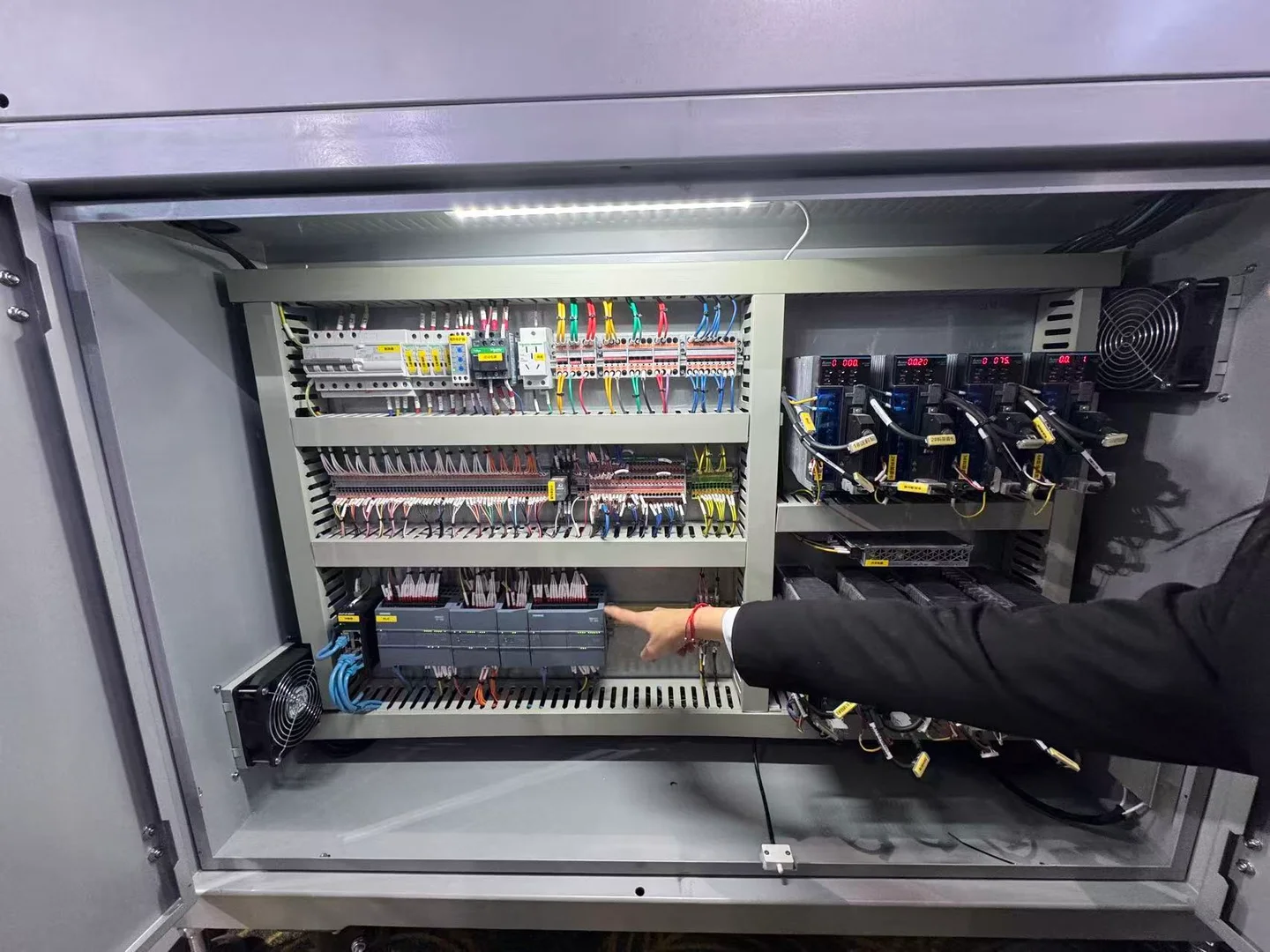
A packaging line can stop even when every machine on it is working. The case sealer may wait for room to discharge, while the case erector continues to feed a buffer that is nearly full. Decide which controller coordinates the line and which decisions stay with each machine before specifying signals, test sequences and restart behaviour.
What does the line controller do?
The coordination layer decides whether product can move from one station to the next. It may collect each station’s ready, running, blocked or fault state, and give permission for upstream machines to feed. For example, a sealer may report that it can accept a case while the rest of the line remains held because there is no space beyond the palletiser. Agree which condition has priority, which stations stop feeding and which finish a case already in progress. A project can achieve this with a dedicated controller or another agreed architecture. Record the owner of each decision on the interface drawing.
What should stay with the machine?
The local controller runs its own process: detect the incoming carton, fold the flaps if fitted, apply tape and transfer the carton out. It also knows whether it can accept the next product in its current state. Local setup, inspection and fault recovery should have documented limits and should obey the approved safeguarding design. A line run request is only a request under which the machine may run. It does not demonstrate that the machine is ready or that its own protective conditions have been satisfied. Confirm the behaviour of each mode with the responsible integrator.
Compare the decisions at the boundary
On a two-station link, the downstream station communicates space to receive the next case. The upstream station reports whether it has a case to release. The conveyor supplier or designated line integrator should own the transfer rules, including minimum spacing and what happens when a sensor cannot distinguish two adjacent cases. A status label such as ‘ready’ needs a definition. It could mean the motor is available, the conveyor has room, or the station will accept a filled carton immediately. Put that definition, the sender, the receiver and the expected time to respond beside the signal name.
Three states to put on the interface sheet
Downstream available: document who authorises release and who confirms arrival. Downstream full: document how the upstream station stops admitting more cases and where the current carton can wait. Local fault: document which equipment is held, what remains in the buffer and which party owns the restart check. These are interface requirements to agree on the project, not a wiring specification.
Follow one stopped carton through the line
Start with an agreed normal case. Create the downstream hold using the specified test method. Record where the current case stops or clears, whether another carton is admitted, and what inventory remains between stations. Remove the hold and follow the documented restart sequence. Check which conditions clear on their own and which require acknowledgement. Repeat with a local fault presented through the agreed test method. In the records keep operational stops and protective stops separate. The machinery team should validate protective functions under its safety plan rather than infer them from a successful line-control trial.
What to put on the quotation drawing
Mark the control owner, inbound and outbound states, the location of each transfer and the response expected on loss of a signal. Include cases for normal running, blocked discharge and restart with a carton still on the conveyor. Give every interface a supplier or integrator name and one test owner. The line can then be quoted against a shared sequence instead of assuming the words ‘can link to other equipment’ define the same responsibility for everyone.