

A box forming machine has a long journey after it leaves the workshop. For sea freight, we use wooden crates to protect the equipment during handling and transport. Packing, container loading and regular updates are part of the delivery service, so customers know how their shipment is progressing.
Wooden crates for the sea journey
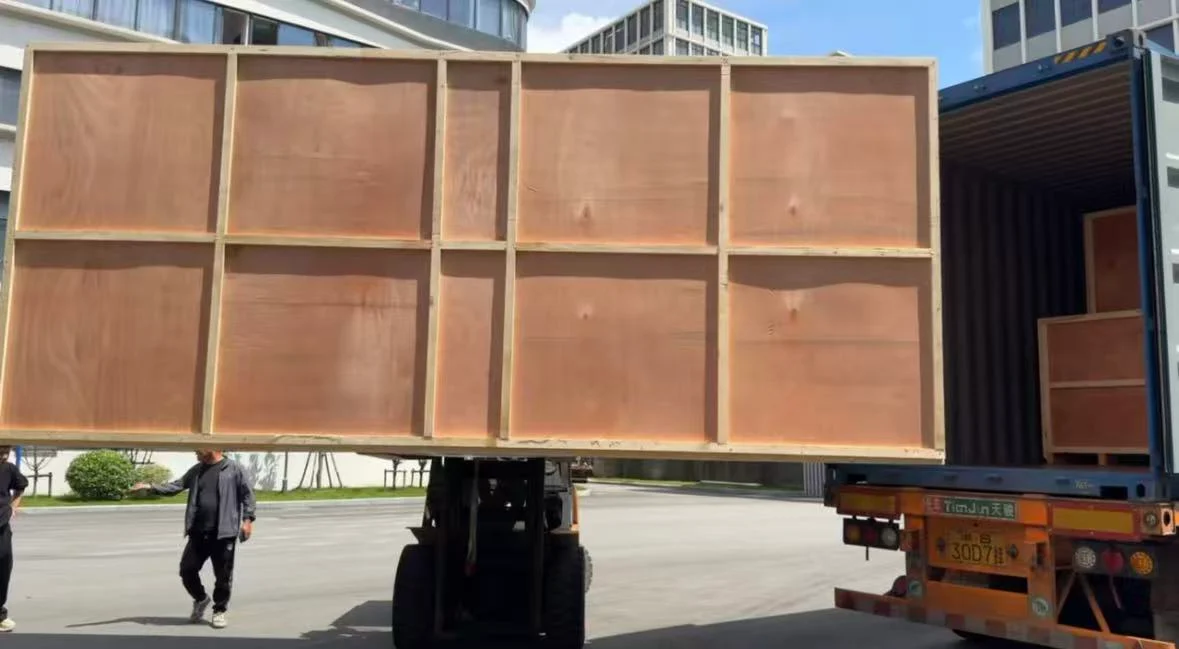
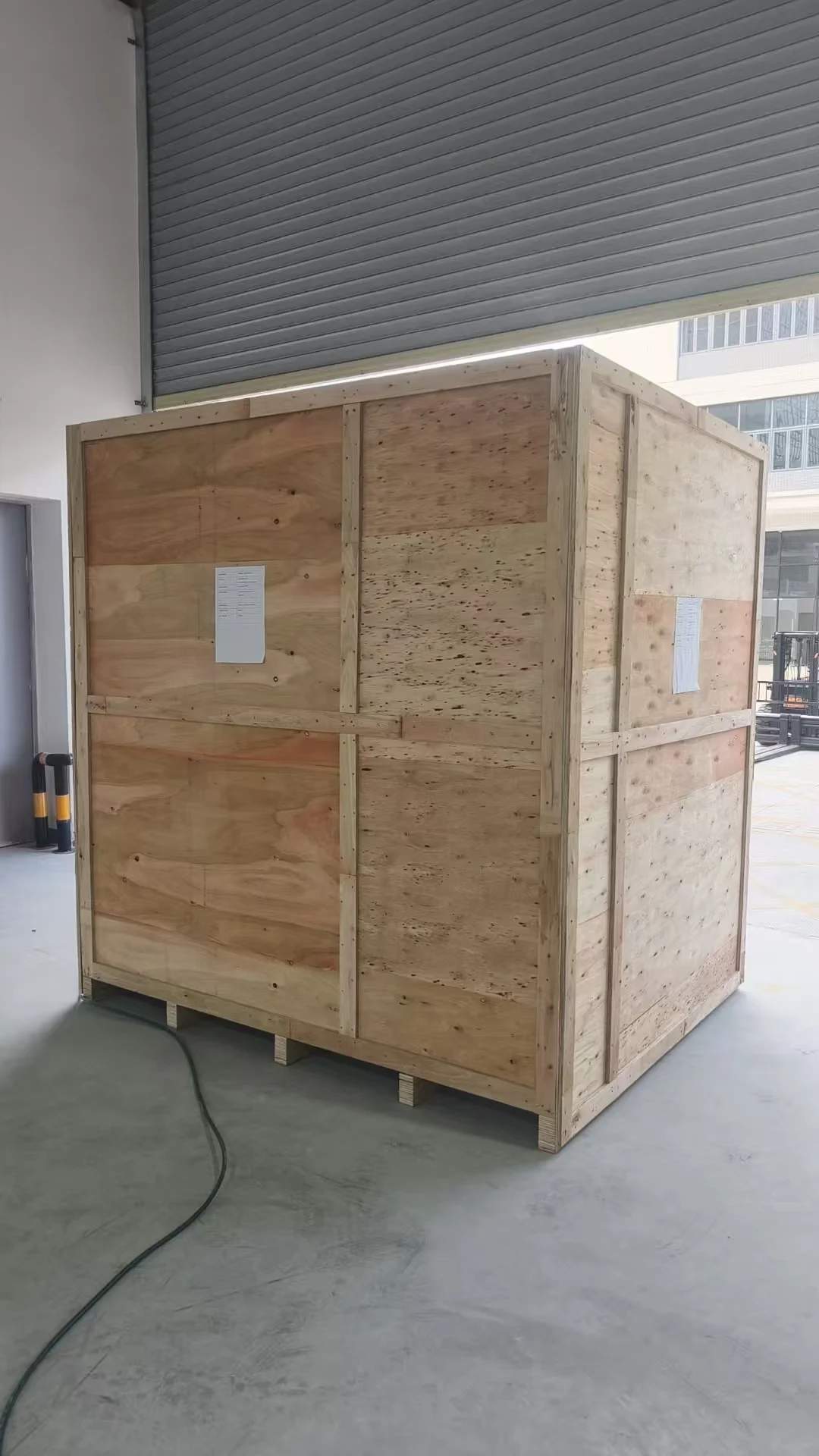
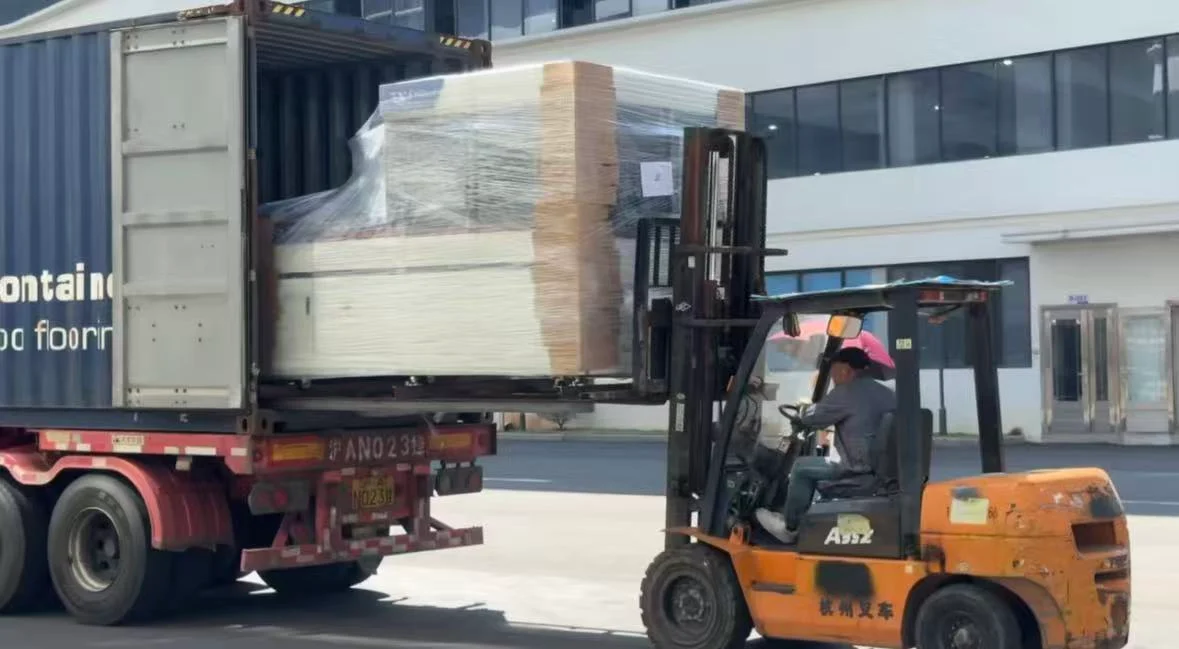
Our sea shipments use wooden crates. The photographs show different stages of dispatch: a wrapped machine being handled at the container entrance, a large reinforced crate being moved by forklift, and a closed wooden case ready for transport. The crate separates the equipment from the handling environment and provides protection around the machine.
Packing must suit the equipment inside. When preparing an order, we review the machine dimensions, the protection needed for exposed components and the handling arrangements. Moisture protection and the way the machine is held inside the crate are details to confirm before dispatch, along with any separately packed tooling or accessories.
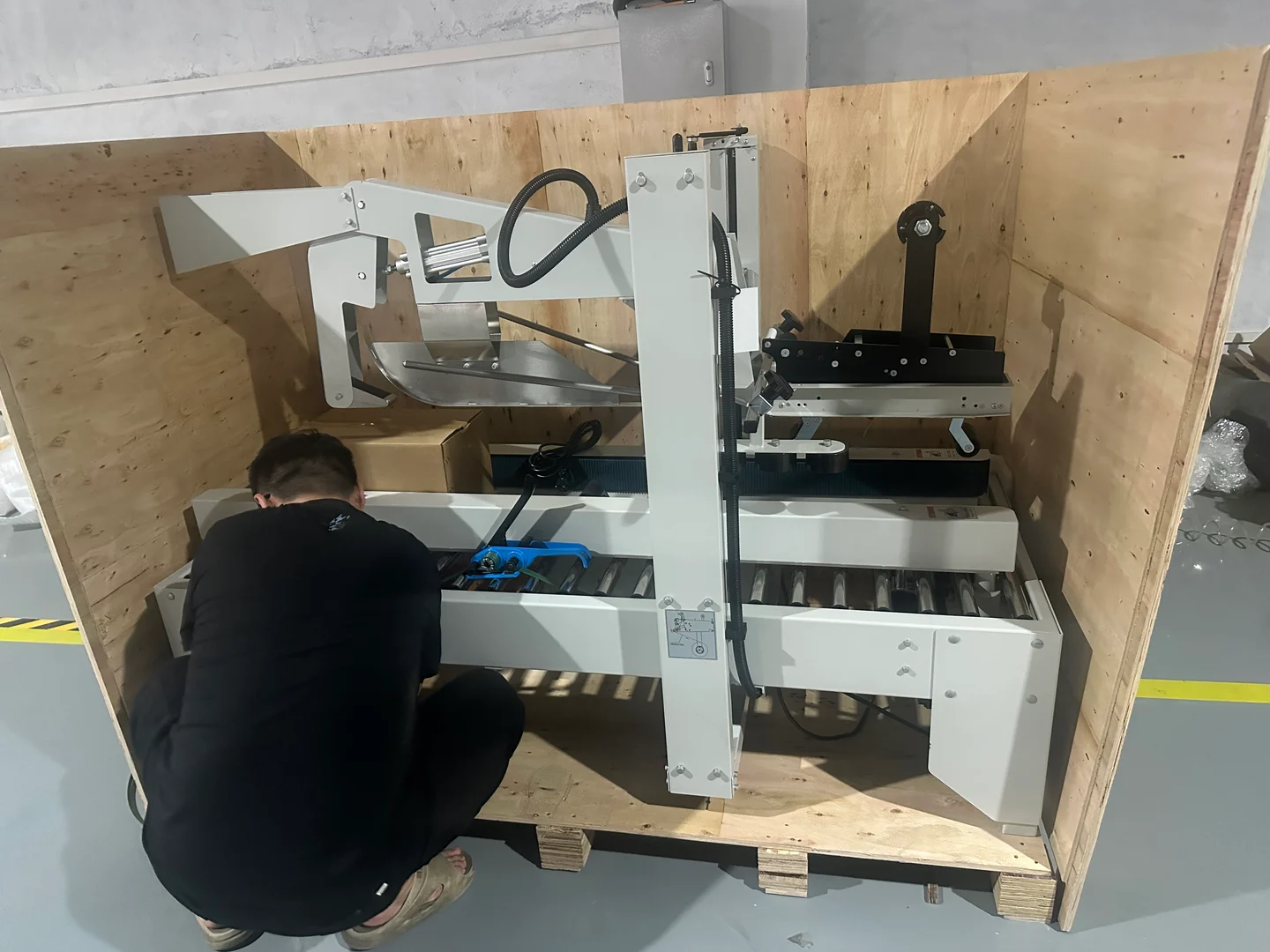
5050 packing: prepare the machine inside the case
This 5050 packing photograph shows a worker preparing the machine inside an open wooden case. The machine frame, roller bed and upper assembly are visible before the remaining case panels are fitted.
Before closing a case, confirm the agreed packing arrangement, the protection around exposed parts and the separately packed accessories. Record the machine and packing-list references with the photographs so the receiving team can identify what is inside each case.
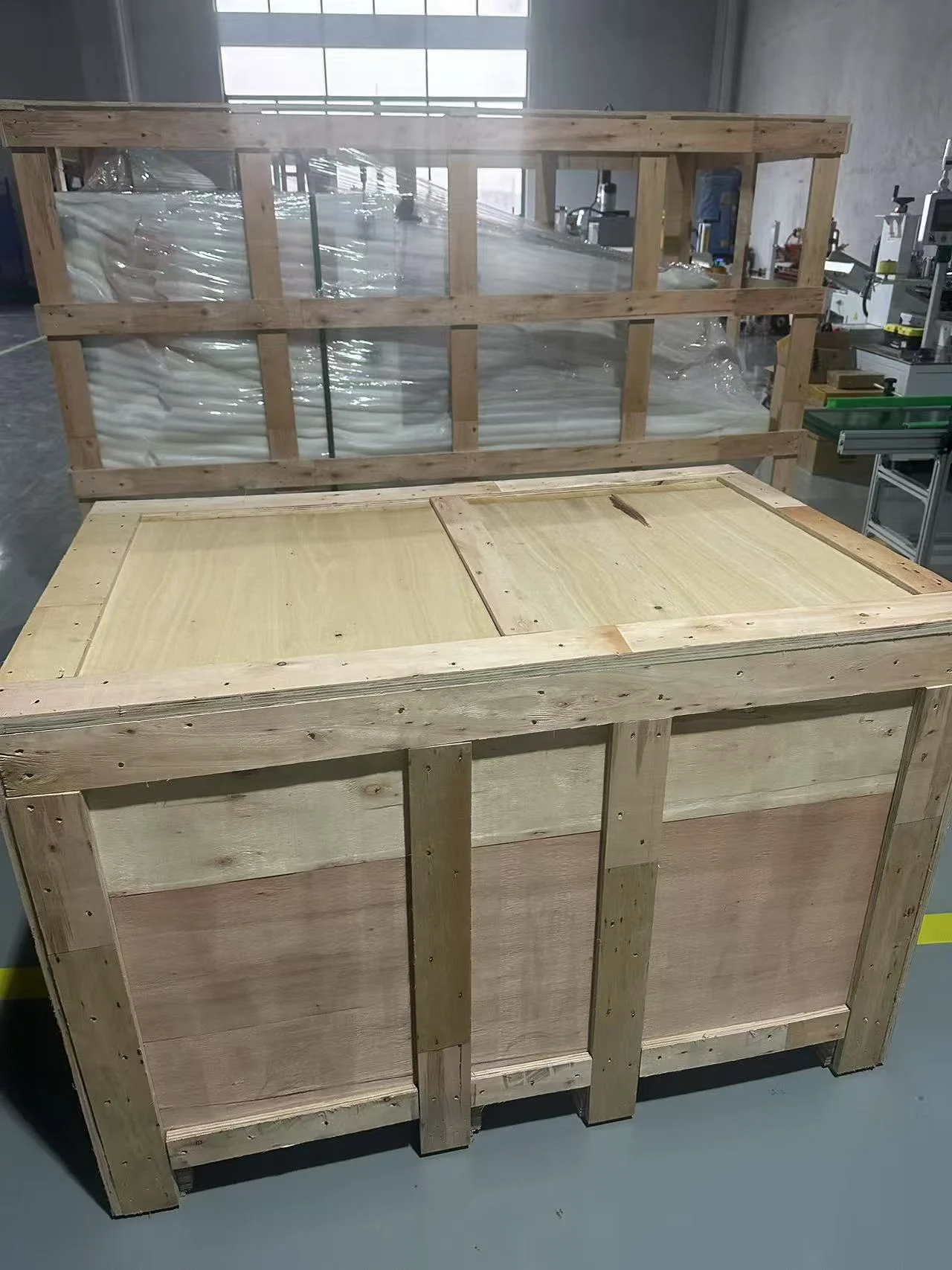
5050 packing: protective wrapping and wooden cases
The second supplied photograph adds another view of the 5050 packing process. A closed wooden case stands in the foreground, with a timber frame and protective wrapping behind it. It shows the packing materials and case construction in the workshop.
For the actual order, confirm the final case count, packed dimensions and weights after packing is complete. Keep the case photographs and packing list together when discussing lifting access, collection and unloading with the forwarder and receiving team.
From the packing area into the container
A packed machine still needs careful handling. These loading photographs show the size of the cases and the space needed to move them into a container. Crate dimensions, lifting access and the container loading arrangement belong in the shipment plan.
Before the shipment leaves, we share packing and loading information with the customer. This gives the receiving team a useful view of what is coming and helps them prepare suitable unloading equipment. The packed dimensions and weights for the actual order should be used when planning collection and delivery.
Regular updates while the shipment is at sea
We keep in touch after dispatch and provide regular updates at intervals agreed with the customer. Updates cover confirmed departure, the shipment’s reported progress and the latest estimated arrival, using information from the forwarder or carrier.
If a sailing or arrival estimate changes, we pass on the revised information when it is confirmed. Where a route includes a transfer, that milestone can be included in the updates too. Customers can then plan customs clearance, unloading and the next stage of installation around the current shipping information.
Prepare for arrival before the vessel reaches port
Tell us the destination port and receiving address when discussing the order. Agree the shipping scope, documents and destination arrangements with Jason Chen. The delivery plan should also account for access at the receiving site and the equipment available to unload the cases.
Keep the packing information to hand when the machine arrives. Check the case condition before opening, then match the delivered equipment and accessories against the packing list. If something needs attention, send the machine reference and clear photographs to our team so we can follow up. Our support continues beyond the loading day.
View the company photo album →
See the French customer’s arrival photos after more than 50 days at sea →
Browse box forming and carton packaging machines →
Review machine specifications and acceptance checks →
Discuss your shipping requirements with Jason Chen →