


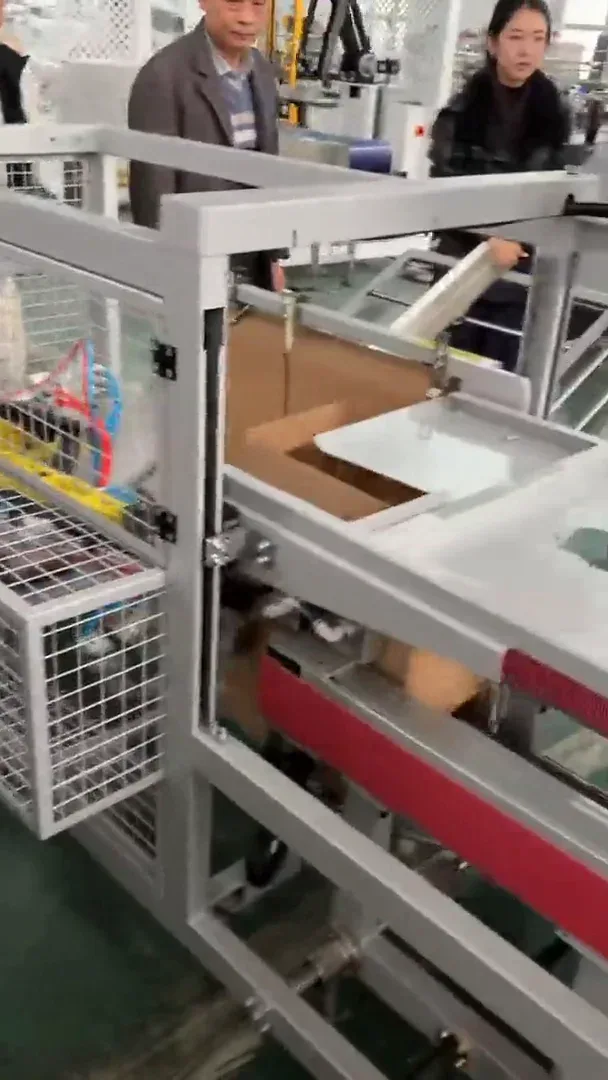
A case erector supports the packing line by delivering empty cases in a condition the next station can use. A rising number of cases that need straightening, resealing or turning can interrupt filling before the erector signals a fault. The most useful maintenance record begins with the empty case at the handoff.
Why the empty-case handoff matters
A case may pass through the machine and still give the loading team extra work. A bottom flap may sit out of position, or the erected opening may no longer stay square during transfer. Stand at the normal inspection location and note when an operator has to touch the case to make it usable. This catches interruptions that will be missed if the line only counts stop alarms.
Keep one accepted empty case, its blank identification and the approved orientation at discharge. Set a new reference when a carton specification changes. That makes it possible to see whether performance has changed while the input has stayed the same.
Which parts of the cycle should you watch?
Blank separation and opening
Note whether one blank is supplied and opened as expected. Log the blank lot and the stage where a failure first becomes visible. Compare the result with a previously accepted blank before attributing the change to the feeding assembly. Changes in warp, crease or stack condition can alter the way the same machine receives a case.
Bottom folding and closure
Inspect the bottom at the normal discharge point. Save an example of an out-of-position flap or an unacceptable tape seam. Record whether cases started arriving out of square before this defect appeared. Keep the closure method and consumable specification with the sample so a technician can reproduce the problem.
Discharge and presentation
Compare the accepted case orientation with the position where it actually reaches the loading team. If cases are square at discharge but turn before loading, investigate the transfer as a separate station. A service visit to the erector alone may not answer a problem introduced between machines.
Match the maintenance plan to the installed equipment
Use the manufacturer's service instructions for inspection intervals and procedures. Quote the machine and fitted assembly when asking for parts. The XD-KX450 is a catalogue example with a listed tape range of 48–70 mm. Confirm the fitted closure equipment and any installed options before using a catalogue entry to identify a spare. Trained staff should perform internal inspection or service following the site's isolation procedure.
Before the next busy run, agree who reviews repeat opening failures, incorrect bottom closure and handling at the transfer. A short handover should include the last accepted blank, the failed sample, the station at which it first changed and any related service work. Check the result at the loading point after maintenance.
If you are still selecting a machine, the case erector jam checks cover the trial stage. If a machine is already installed, send the latest empty-case record and model details to Xunding.