


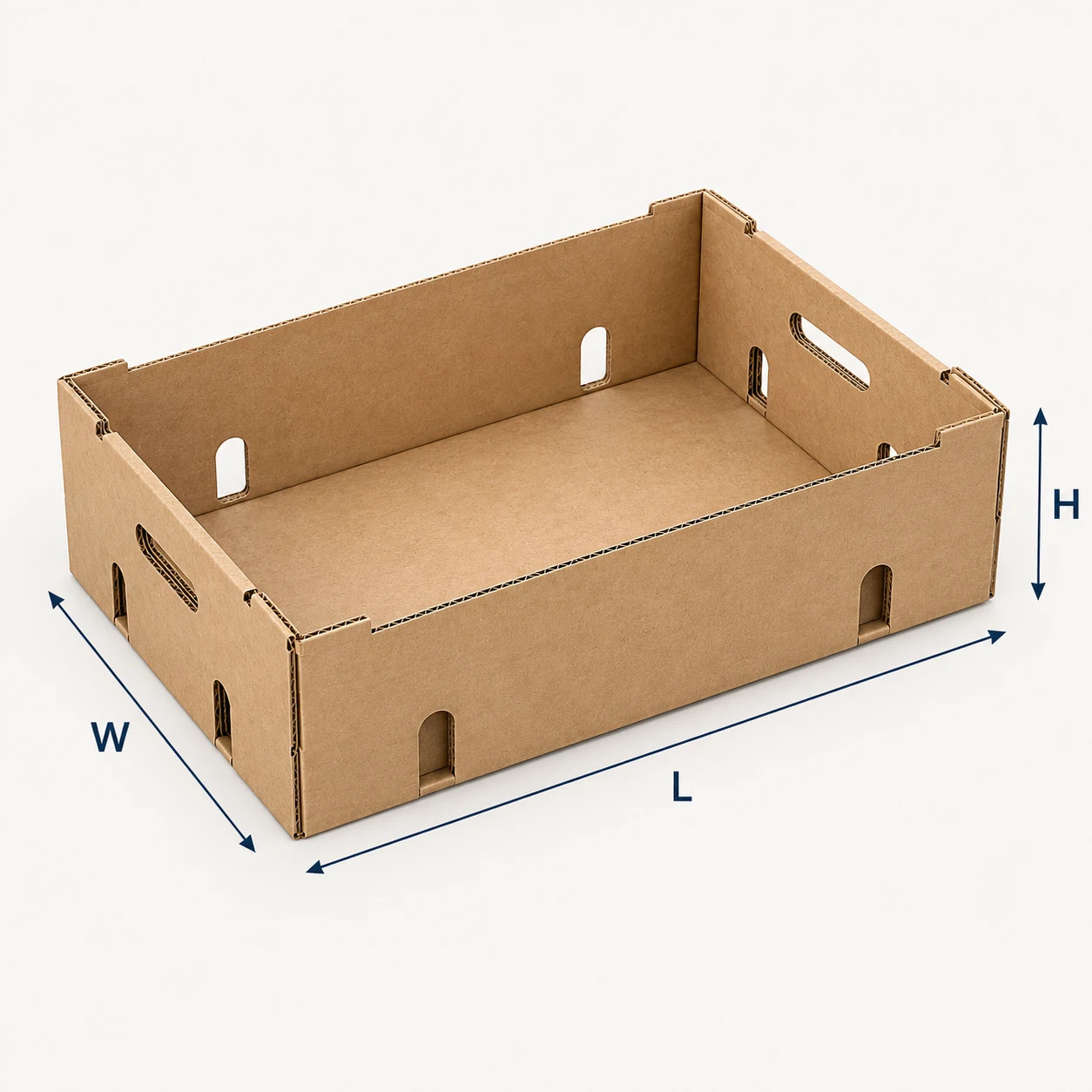
A case erector turns a flat blank into a square carton with its bottom flaps closed. Jams rarely have one cause: they happen where the blank is handed from one stage to the next — most often as it leaves the magazine, or as it enters the forming section. This guide uses those handovers to frame a purchase decision: what to record on the cartons you run, what to ask a supplier to demonstrate, and which evidence is still needed before a configuration is confirmed.
Where a case erector jam can start: the handovers between stages
A knocked-down blank changes shape several times before it leaves a case erector as a square, bottom-sealed case. Each change of position is a point where a blank can arrive slightly differently from the one before it. On a case erector the sequence has four handovers:
- Magazine to separation. Stacks of blanks sit in the magazine, and one blank is lifted or pushed from the stack and released alone.
- Separation to opening. The blank is drawn open and squared, with the side belts or guides holding it so the bottom flaps can be folded.
- Opening to flap fold. The squared case is held in position while the bottom flaps turn in from each side.
- Flap fold to closing. The case passes into the tape or hot-melt section, still under control, and leaves with its bottom sealed.
None of these is a component you can point at. Each is a moment when one part of the machine lets go of the blank and the next takes it. A jam starts as a blank arriving a few millimetres off where the last one sat.
That makes the useful question a narrow one. Ask which handovers the quoted configuration controls, and what happens at each one with the shortest, tallest and most frequently used cartons in your range.
If a machine is jamming right now, this page will not tell you which bolt to turn. It will tell you what to write down, because those four handovers are exactly what turns "it keeps jamming" into a configuration question a supplier has to answer.
Specific adjustments, wear-part replacement and fault clearing belong in the documentation supplied with the installed model.
Record the blank before you compare case erectors
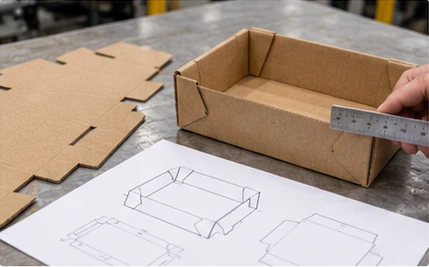
The blank is the input a machine has to work with, so it is the first thing to document. Keep a flat blank from each carton size, the drawing with crease and slot positions, and the formed-box dimensions. Note the board type, the supplier and whether the same specification is used across batches. A photograph of a finished box is useful, but it does not show crease quality or how flat the blanks sit in a stack.
Storage and handling belong in the same record. Corrugated board responds to humidity and to being stored under load; a pallet kept beside a loading door can behave differently from one held in a conditioned store. Note where blanks are held, for how long, and how they are loaded into the magazine. These are observations to supply, not settings to copy from another plant.
If several sizes share one line, list them in the order they actually arrive, including how often the size changes within a shift. A configuration set up for one format answers a different question from one that has to change repeatedly.
| Handover | What to record at that point | Where the record comes from |
|---|---|---|
| Magazine and separation | Powered or gravity magazine, how a single blank is picked up, whether side belts or guides hold the stack, board type and lot | Flat blank, drawing and the storage note |
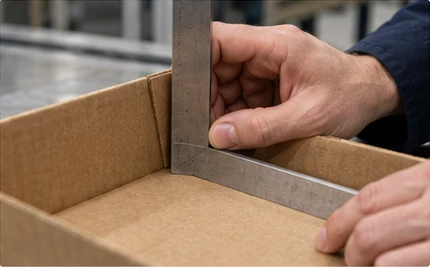
| Opening and squaring | Crease lines and slot positions, the flattest and most bowed blanks in the lot, smallest and largest case in the range | Drawing, samples and formed-box dimensions |
| Flap fold | Bottom flap lengths, how the flaps meet, and the size change between formats | Drawing and a finished box |
| Closing belts | Tape or hot melt, and the order sizes arrive in across a shift | Specification sheet and the size sequence |
Make the trial reproduce the actual run
A trial with one size of clean, flat blank shows that a machine can form that carton. It does not show what happens with the shortest and tallest cases, with a size change between them, or with blanks from a different lot. Send representative blanks from each format, including any that have been stored for a while, and ask for them to be run in the sequence the line uses.
Before the trial starts, agree how output is counted and who writes it down. Note each interruption with the carton involved and the handover where it stopped; that pairing is what makes a stoppage traceable when the machine is back at your site. A rated cycle speed is stated for defined cartons and conditions, and it is not the same measure as accepted cases per shift.
Where the erector feeds a packing and sealing line, state the discharge height, the transfer and what happens downstream when no case arrives. A stoppage elsewhere on the line can look like an erecting fault from the other end.
Use the sample-trial checklist to record which carton stopped and where
Check how output and changeover are verified for box machines
Separate a carton problem from a configuration problem
When a trial stops, record what the blank was doing at that moment. A blank that arrives warped, two blanks presented together, an incompletely opened case and a case that twists on its way to the closing belts point to different questions. Grouping all of them as a single jam removes the detail needed to decide whether the answer lies in the cartons, the size range or the quoted configuration.
For the machine side, ask which parts of the sequence the quotation covers: how blanks are fed and separated, how the case is held square while the bottom flaps fold, and how the bottom is closed. Confirm the closing method — tape or hot melt — against the carton and the site. Written configuration details are more useful than a general assurance that a model does not jam.
For Xunding equipment, XD-KX450 is the catalogue starting point for erecting shipping cartons, while XD-FX5050 and XDZG5050 sit at the sealing stage. These are catalogue references, not a confirmation that any blank or size range will run unchanged; the configuration has to be checked against the samples and the written trial record.
Questions to settle before ordering
Does a higher rated speed make jams less likely?
No direct conclusion follows from the rated figure. A cycle speed is quoted for defined cartons and conditions. Ask for accepted, bottom-sealed cases per shift with your own blanks and size sequence, including the time spent clearing stoppages.
Should the trial use empty or filled cartons?
A case erector forms empty cartons, so the erection trial uses empty blanks. State separately how the formed case transfers to packing and sealing, because a downstream stop can interrupt the erector. Filled-carton checks belong to the closing stage and the finished-box inspection.
Can a jam log from an existing line replace a sample trial?
It helps describe the current problem, but it does not test the new configuration. Use the log to select which cartons and sequences to reproduce, then record the new trial separately with the same counting rules.
What if the same line runs several carton sizes?
List each size and the order in which sizes arrive. Ask which adjustments are needed between formats, whether change parts are involved, and have the trial run the smallest and largest cases with a size change in between.
Final Thoughts
Jams are easiest to understand at the handovers, where the blank is fed, opened, squared, folded and closed. Record the cartons you actually run, ask a supplier to reproduce their size sequence, and count accepted cases rather than relying on a rated figure. That record gives both sides a concrete basis for agreeing the configuration — and makes clear which questions still need samples, a trial or the machine documentation to answer.
Send carton samples and line requirements for a scoped quotation
Catalogue models to discuss
These models are starting points for an enquiry. Confirm the configuration against your blank and sample.
- XD-KX450 · Automatic carton erecting machine
Automatic opening and erecting equipment for shipping cartons. Confirm the carton blank and tape-sealing requirements for your packing line.
Which Way Should a Printed Carton Face at the Case Erector?
A case can leave the erector square, taped and upside down as far as the artwork is concerned. The bars on a scanner label may also face away from the next station. Check the final orientation with a real printed blank before freezing the layout.
Label four reference points
Identify the printed top, the manufacturer's joint, the leading panel and the magazine loading side. Mark a spare blank on an area clear of the pick-up points. Fold it into a case by hand and place it on the proposed discharge arrow. Photograph the blank and the standing case together so the supplier can reproduce the orientation.
Check the next station’s view
At the trial, follow the marked panel to the packing point and on to the label reader. If it arrives on the far side, identify the first transfer that changes its direction. Agree a magazine loading diagram for the operator and keep a signed finished case. If the next print run reverses the panel layout, repeat this check before using the old diagram.
What should travel with the reorder?
Attach the approved flat-blank photo with the print revision, the packer's view of the upright case and the line's travel arrow. A photograph of the front panel alone can be reproduced with the carton turned the wrong way. The three views give the converter a repeatable loading reference.