
APPLES / PACKAGING APPLICATION
Apple carton forming around the real box design
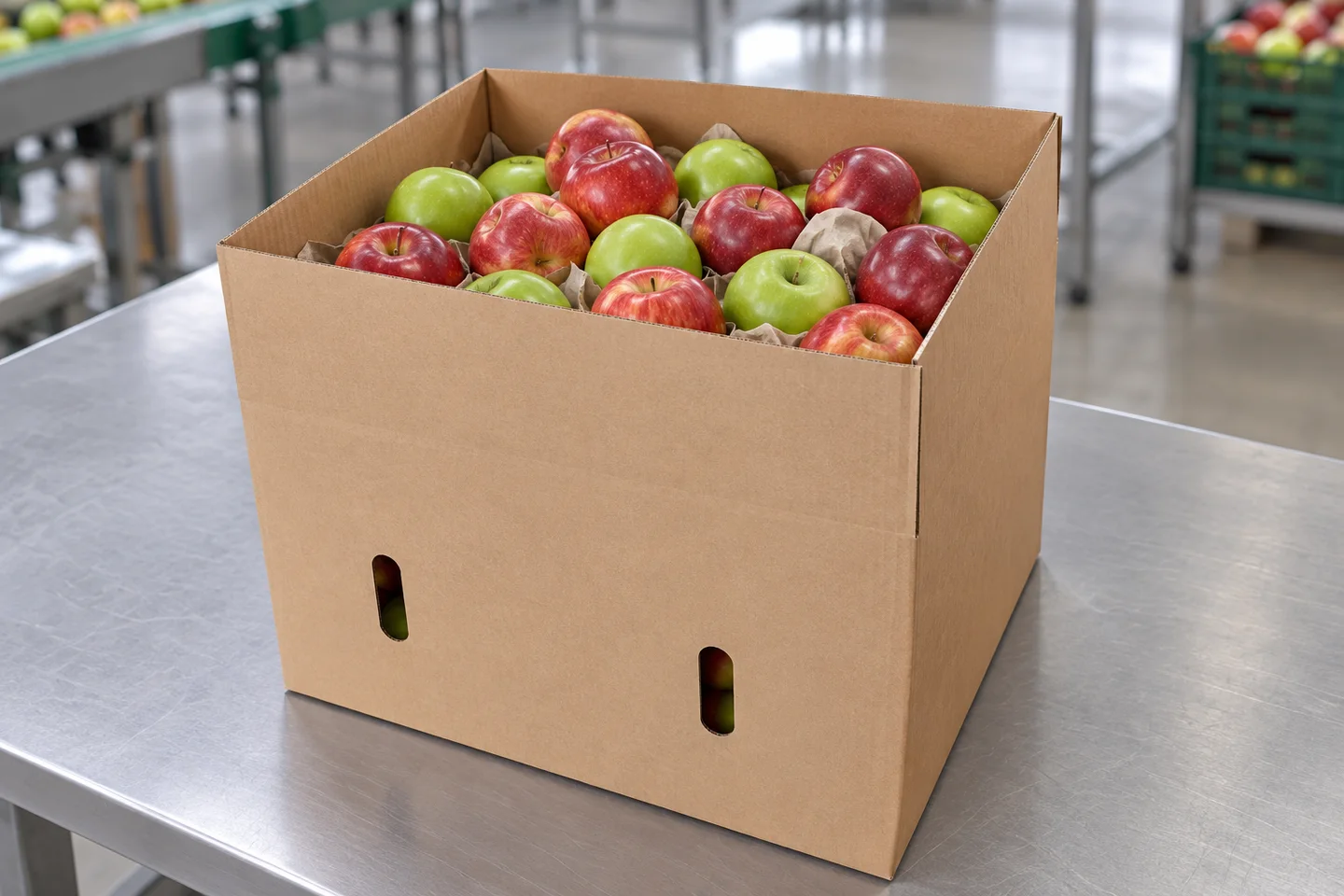
The apple carton shown here is a deep, open corrugated box with elongated ventilation slots and folded panel overlaps. That construction is the starting point for the application. Xunding reviews automatic feeding, gluing and forming around the actual apple blank, rather than choosing a machine from the fruit name alone. The supplied workshop video and two real sample photographs show the carton family; the configuration table describes the proposed operating and dimensional range.
THE REAL CORRUGATED STRUCTURE
Actual box samples
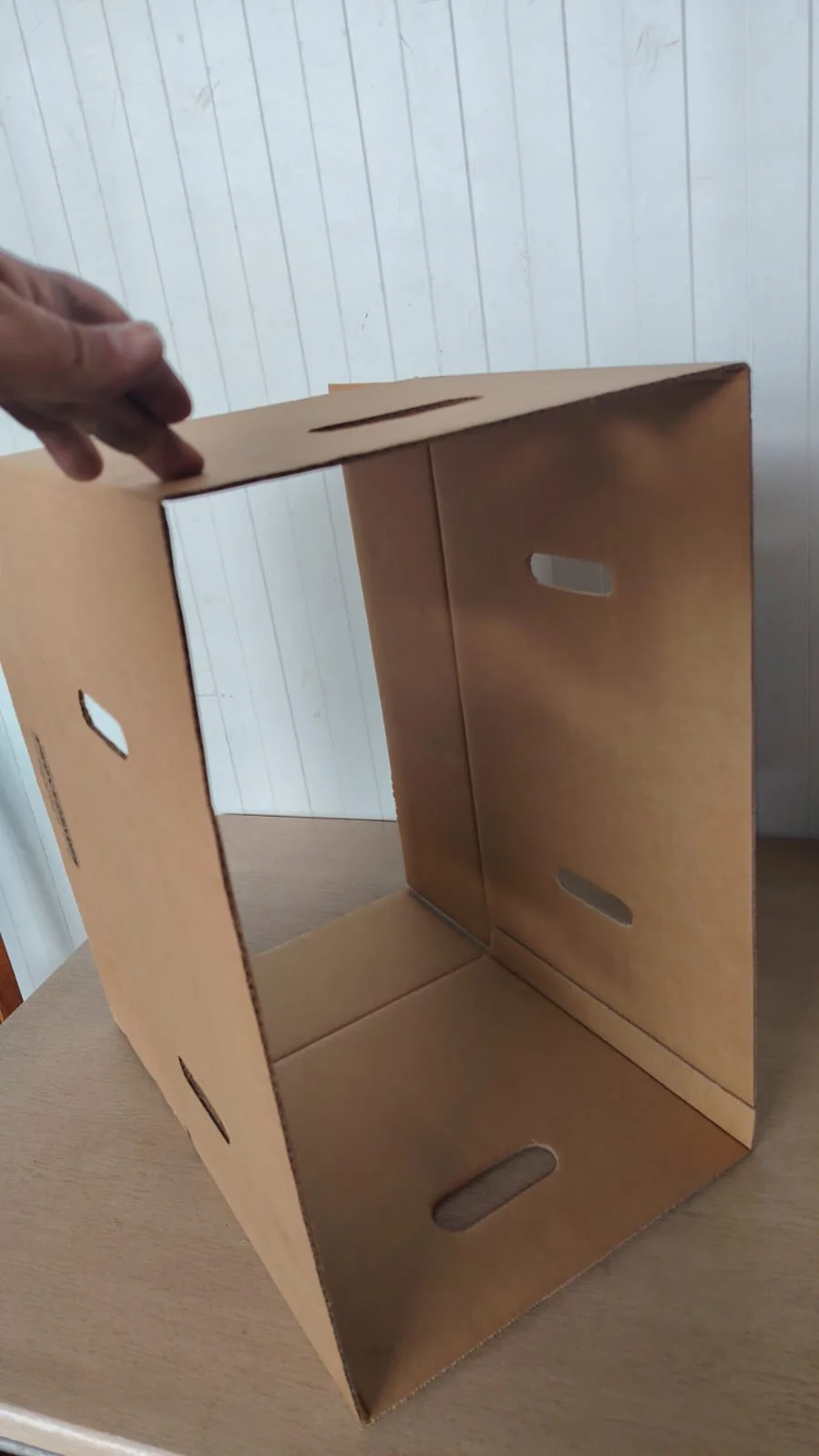
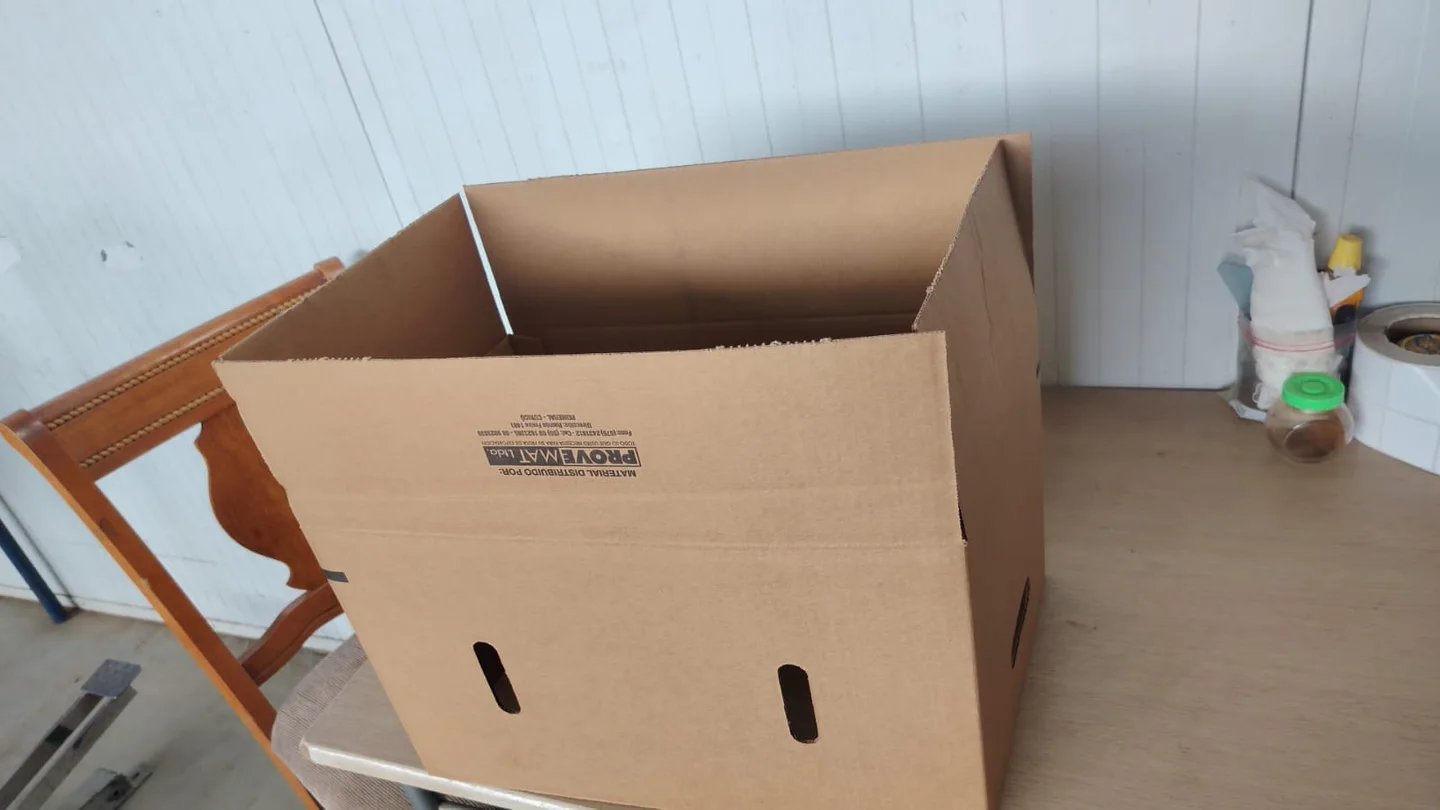
A deep apple box with elongated ventilation slots
The sample photographs show high rectangular walls, narrow elongated ventilation slots and folded overlaps inside the carton. One view holds the box on its side so the wall arrangement can be seen; the other shows the deep carton standing upright. These details distinguish it from a shallow corner-supported fruit tray. The opening positions, fold lines and joining surfaces should be transferred to the blank drawing. A machine selection based only on an external length and width would leave these structural requirements unresolved.
Prepare a finished empty apple carton and its flat blank for the review. Show the underside and the inner joins, then identify any insert, separator or cover that will be used after forming. Dimensions should state whether they are measured inside or outside the walls. If the printed production version differs from the plain sample, check that the cut pattern and folds remain the same. The application is defined by how the corrugated pieces form and meet, including the base construction that supports the completed box.
What the supplied forming video demonstrates
The workshop footage shows a machine processing deep cartons, followed by an operator inspecting a formed box and a view of the resulting samples. The trimmed clip retains the wider equipment view and the box inspection so the relationship between the machine and carton is visible. It is a demonstration of the carton-forming operation. The fruit picture at the top of this page is an illustration; the workshop footage and box photographs are the real materials supplied for this apple application.
For a production review, use that same sequence as a starting point: follow the blank entering the machine, inspect the folds at discharge and check the completed carton. Record the board used and the machine settings for the agreed sample. If several box sizes will be produced, repeat the inspection after each adjustment. The video is useful for understanding the type of operation, while a trial on your own die-cut blanks establishes the relevant box range and the working output for the proposed equipment.
Feeding and joining the apple carton
The deep-carton configuration uses vacuum bottom feeding, automatic hot-melt application and a continuous forming sequence. Servo control and photoelectric tracking coordinate the blank, with a PLC and touchscreen interface supporting operation. The specified arrangement moves blanks through multiple processing positions with chain-indexed transport. In the apple box review, the important points are how the tall panels are supported, how the overlaps are brought together and how the formed carton leaves the machine without losing its intended rectangular shape.
Glue application needs to follow the actual joint arrangement. Mark the bonding surfaces and the elongated slots on the blank drawing so the forming review can consider both. Inspect the finished joint and the fold directly, including any area hidden inside the carton. Printed or coated board should be represented in the test material when it is part of production. Consistent blank preparation, the intended adhesive and tooling matched to the crease pattern provide a concrete basis for the equipment acceptance discussion.
A defined range for deep apple cartons
The proposed apple application lists a finished length range of 200–550 mm, width of 200–400 mm and height of 150–350 mm. Cardboard thickness is 1.5–3 mm, and the reference output range is 20–30 boxes per minute. These are the values for the supplied deep-box configuration. Compare your box with all of them and with the blank construction. Dimensions that fall within the table are useful for an initial inquiry but do not establish compatibility without reviewing the complete drawing.
If your apple cartons use thicker board, a different base or added corner sections, include those details before treating this arrangement as suitable. The Xunding range also includes fruit tray forming, three-piece fruit box machinery and production-line options. Those categories address different packaging constructions. The application page connects the packing requirement to that existing range without creating a separate model name. The final proposal should describe the selected machine, the confirmed board and box designs, and the output agreed for the supplied trial blanks.
Box collection, packing and any later closing step
Describe how empty apple cartons will move from the forming station to the packing positions. The collection method may be manual or part of a planned conveying arrangement, and the required handover height should be included in the layout. Allow space for operators to inspect cartons and replenish blanks. If boxes will be temporarily grouped before packing, show that area as well. A useful layout follows both materials: flat cardboard arriving at the machine and formed cartons leaving for the packing team.
The apple forming operation should be specified separately from fruit loading, inserting separators and closing the completed package. A lid may be a separately formed component; a carton closed with conventional flaps may require a different closing process. Include the intended finished pack in the brief so the correct operations can be discussed in order. This helps avoid asking one forming configuration to perform a later step that is outside its proposed scope, and makes the role of any additional equipment clear.
Installation and sample acceptance for an apple project
The reference dimensions are 3650 × 984 × 1870 mm and the stated net weight is approximately 1380 kg. Electrical supply is 380 V, 50 Hz, three-phase, with 2.5 kW quoted total power. Air consumption is 280 litres per minute at 0.6–0.7 MPa. Supply these installation details alongside the box samples, including the site voltage, available air and access around the planned machine position. The working area needs to include blank storage, carton collection and access to adjustment points.
For acceptance, agree the carton dimensions, folds, joining areas and orientation that will be inspected during the trial. State the required output and the board batch used to assess it. If you plan to alternate apple and another produce carton, list both designs and the tooling included for each. Requirements for the filled pack and pallet should be checked with the actual packed product separately. Xunding can review the forming configuration around the empty carton and connect that result to your wider packing-line plan.
APPLICATION CONFIGURATION
Configuration reference
These figures describe the proposed application configuration. Confirm the complete blank, production cardboard, tooling, working output and site utilities with Xunding for your project.
| Configuration output range | 20–30 boxes/min |
|---|---|
| Cardboard thickness | 1.5–3 mm |
| Finished box length | 200–550 mm |
| Finished box width | 200–400 mm |
| Finished box height | 150–350 mm |
| Electrical supply | 380 V / 50 Hz, three-phase |
| Quoted total power | 2.5 kW |
| Compressed air consumption | 280 L/min |
| Air pressure | 0.6–0.7 MPa |
| Blank stack height | 500 mm |
| Machine dimensions (L × W × H) | 3650 × 984 × 1870 mm |
| Net weight | Approx. 1380 kg |
Explore the equipment categories
Bring your box drawing and sample to the category that matches its construction.
Fruit tray forming Three-piece fruit boxes Fruit box production linesPLAN YOUR APPLES PACKING PROJECT
Start with your actual box
Send the flat blank drawing, a finished sample, cardboard thickness, required boxes per minute and your packing-line layout. We will review the forming configuration around your application.
Send your packaging requirementFROM THE FRUIT TO THE BOX
Explore fruit packing applications
See the carton structure, forming process and configuration for each application, with real samples and production footage where available.
Cherry box forming for Chile’s packing season
Explore cherry carton forming for Chile: ventilated box samples, automatic feeding, gluing and stacking, configuration ranges and related fruit box designs.
Read the application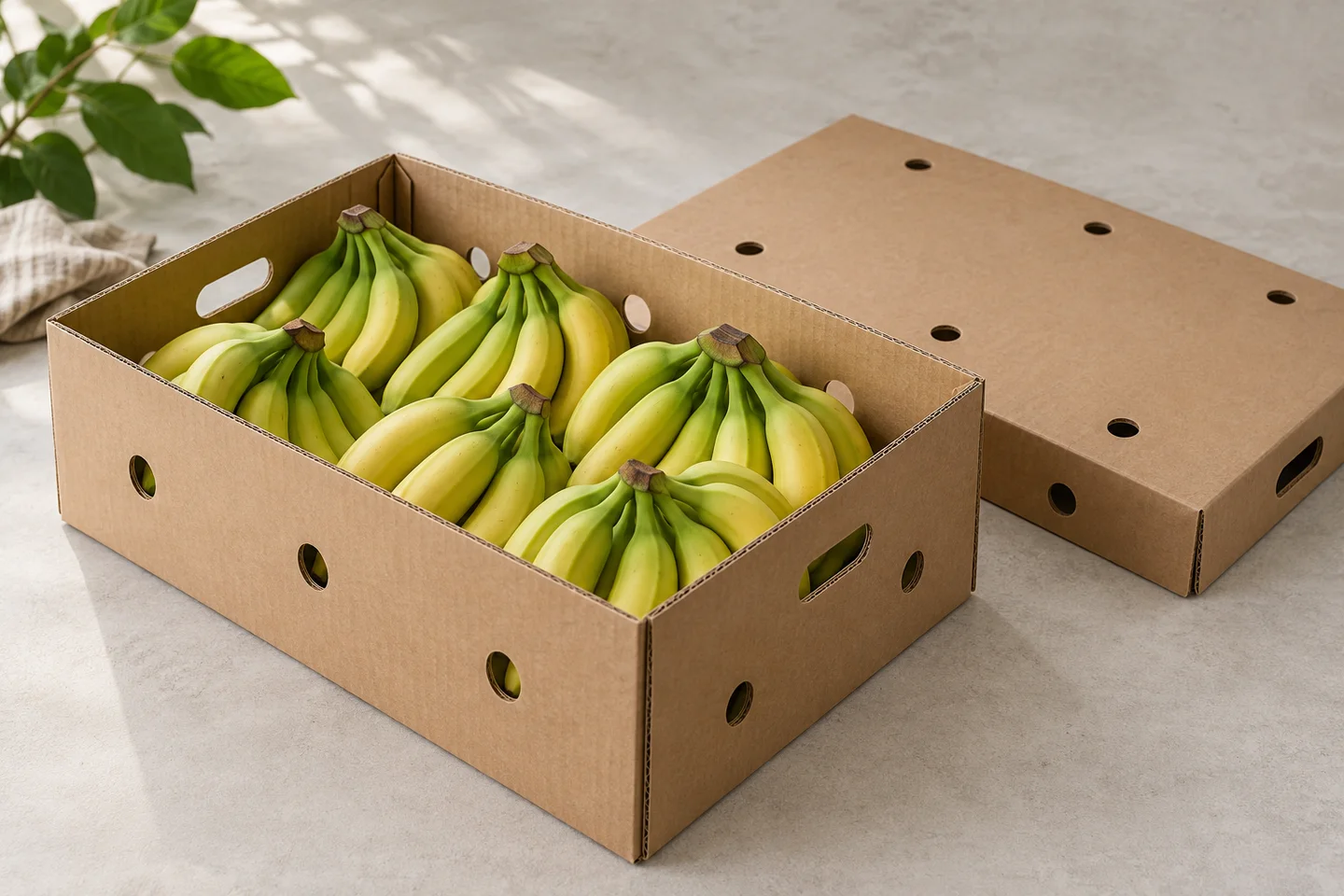
Forming deep cartons for banana packing
Plan banana box forming around deep corrugated cartons: vacuum feeding, hot-melt joining, size and board ranges, sample checks and related box structures.
Read the application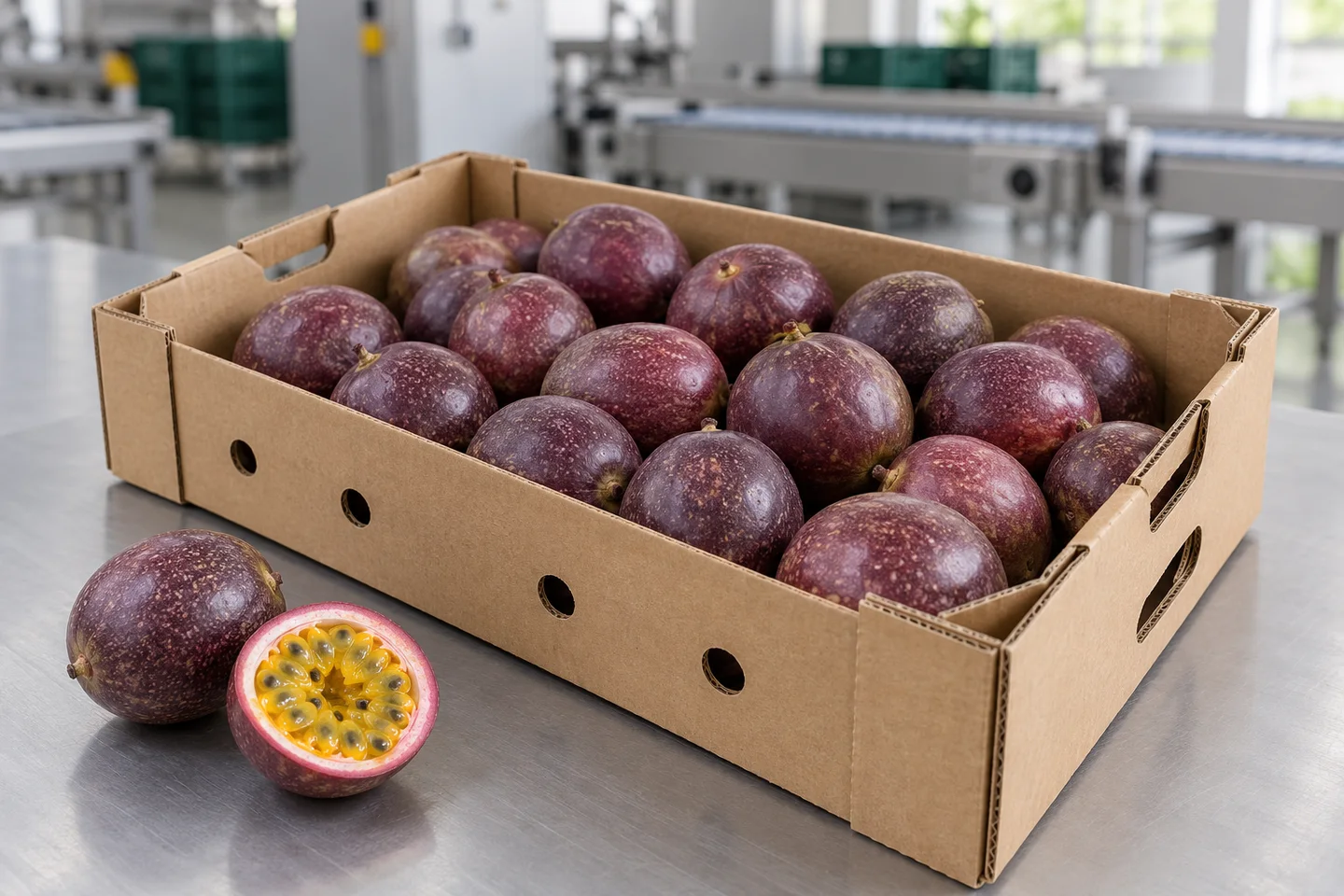
Passion fruit tray forming, from blank to stack
See real passion-fruit carton forming, discharge and stacking footage, with a Siemens-based configuration, board and box ranges, and related produce tray styles.
Read the applicationFruit images are AI illustrations. Real box samples and supplied production videos are labelled within each article.