
CHERRIES / PACKAGING APPLICATION
Cherry box forming for Chile’s packing season
A cherry packing operation needs formed cartons ready when the packing team needs them. Xunding supplies automatic cardboard feeding, gluing, folding and forming equipment for this stage of the line. We have a high market share in Chile’s cherry-packaging equipment market. Start with the actual cherry box: its ventilation openings, folded edges, printed panels and finished dimensions establish the forming sequence. The real samples and Chile production footage below show the box structure behind this application.
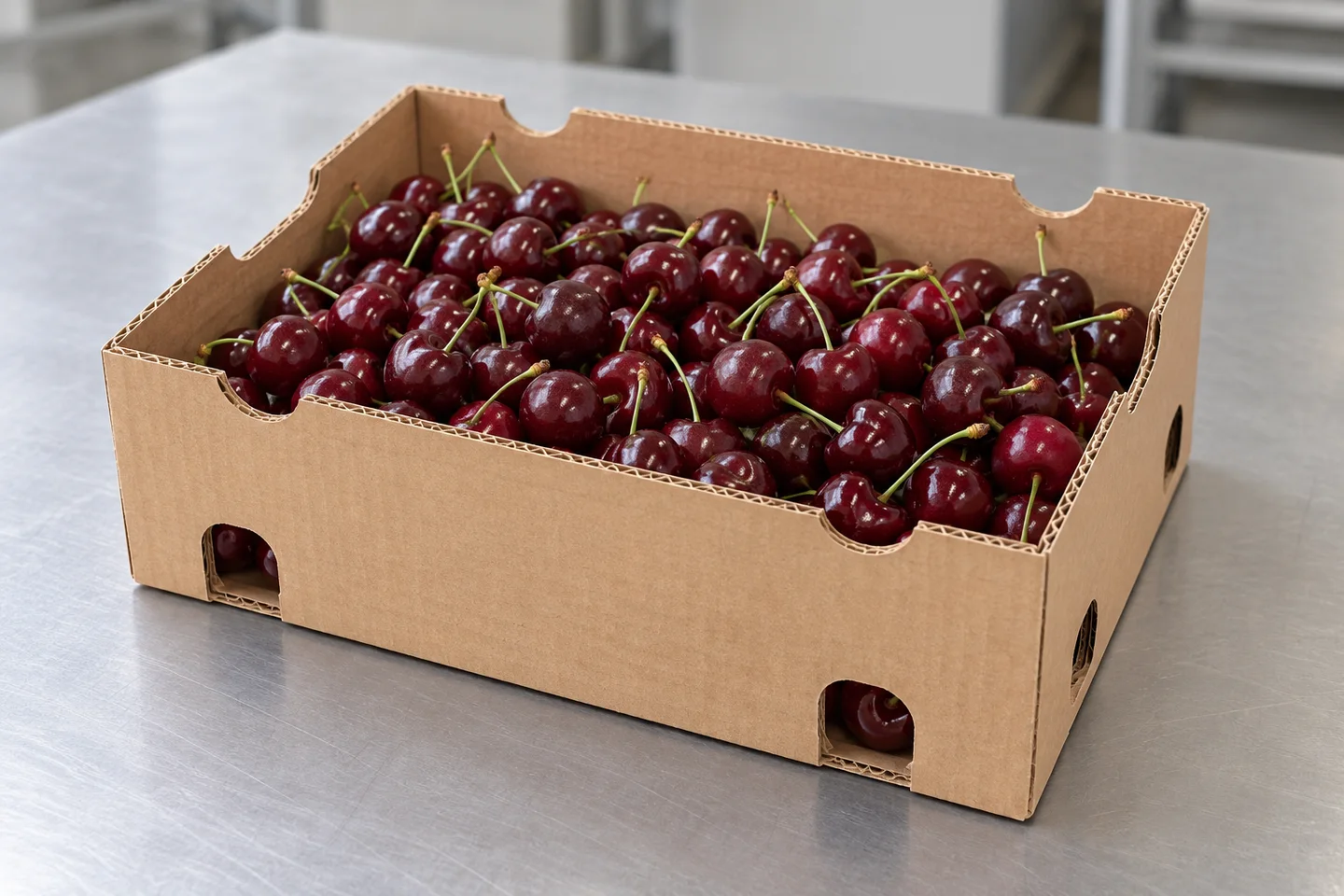
THE REAL CORRUGATED STRUCTURE
Actual box samples
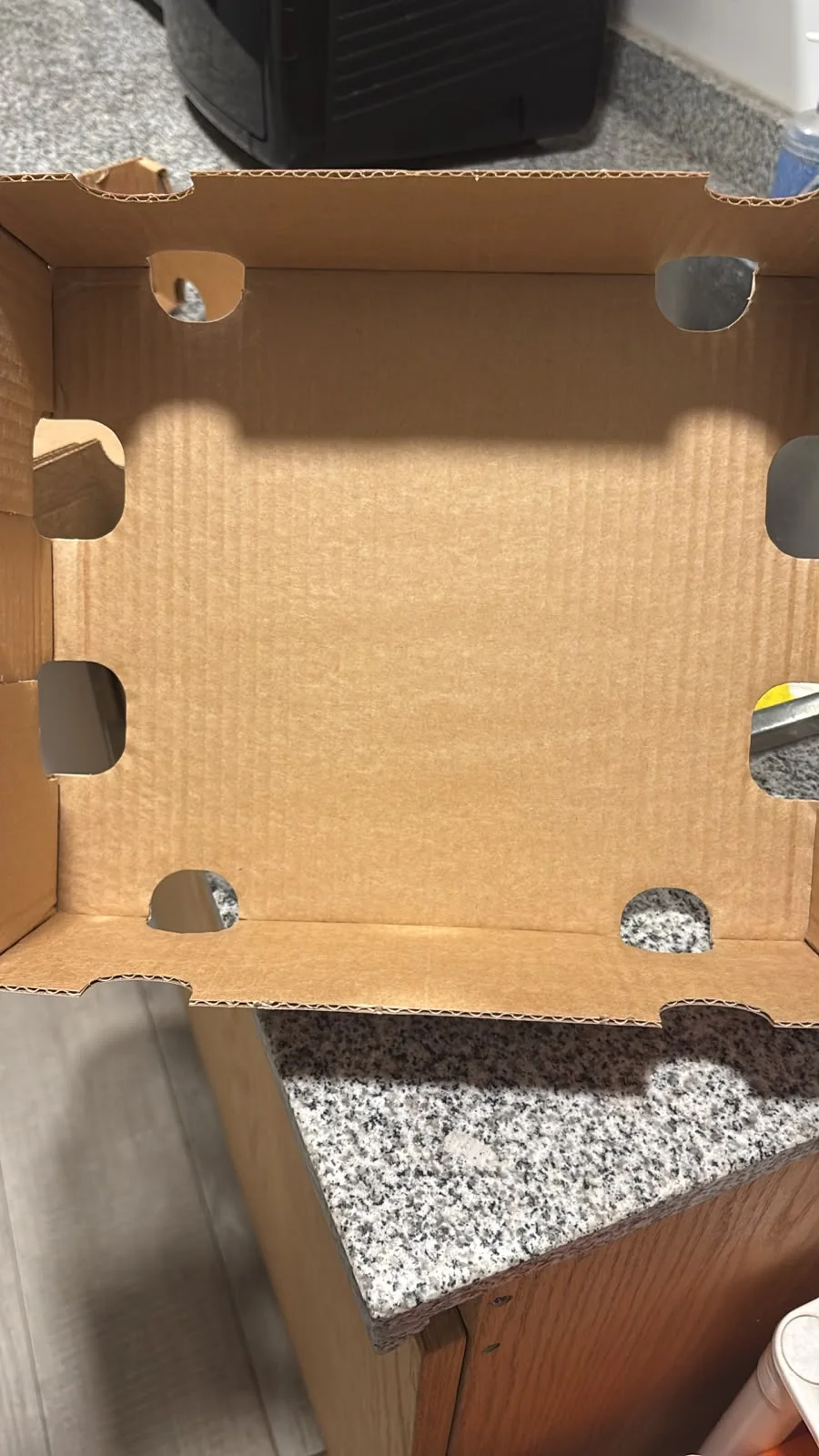
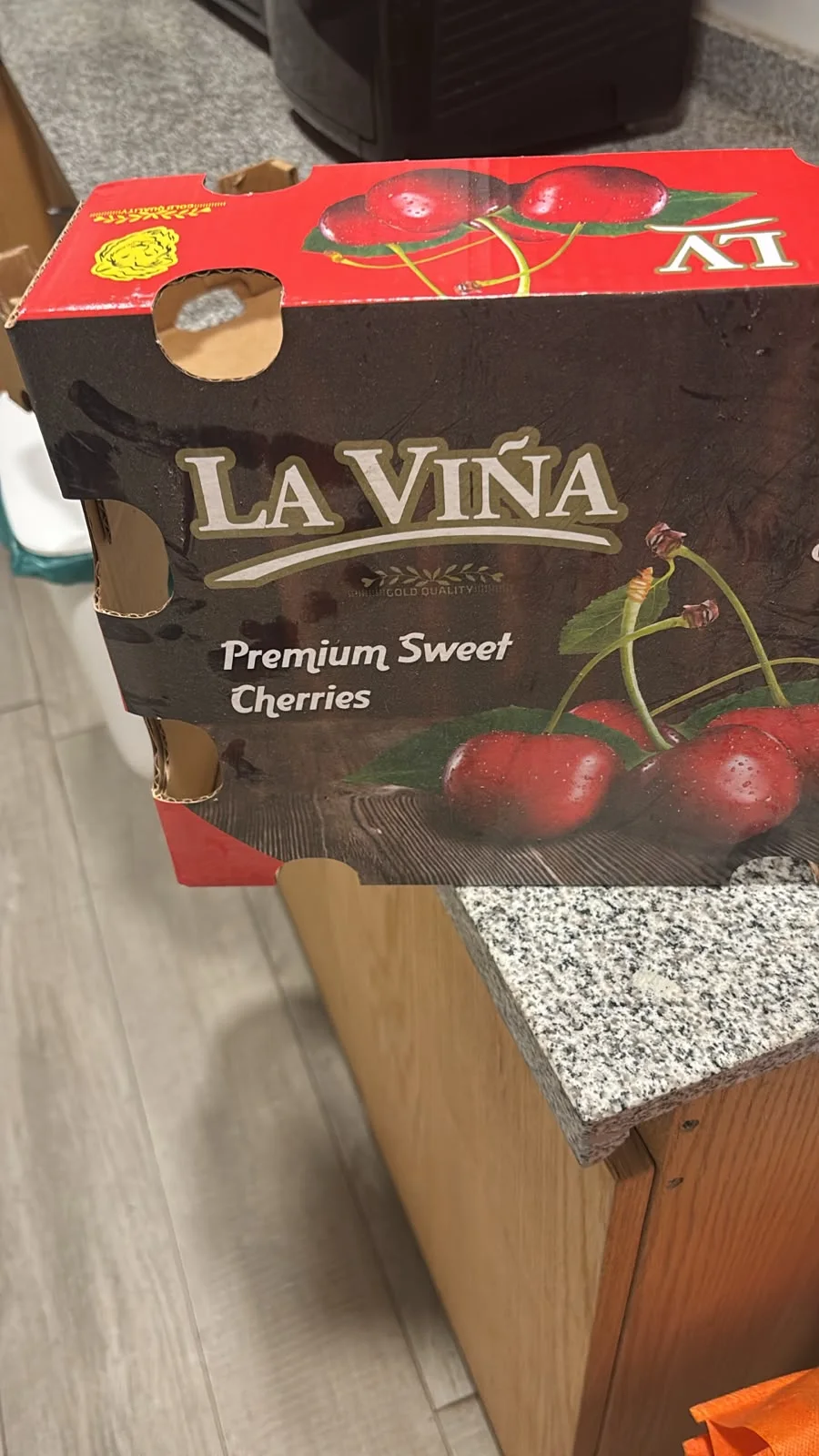
Begin with the cherry carton, inside and outside
The supplied cherry sample has an open rectangular body, printed outer surfaces and rounded ventilation openings positioned around the folds between its base and walls. Semicircular notches also appear along the upper edges. These details matter when the blank is pulled into the forming station: a cut-out near a crease changes the available support area, while a printed exterior establishes which face must remain outside. A photograph of the print alone would miss much of the information needed to prepare tooling.
Our application review therefore uses the empty box as well as the flat die-cut blank. Show the inner corners, the underside and any overlap used to join the walls. Record the finished length, width and wall height, and distinguish usable internal dimensions from external dimensions. If a liner, insert or lid will be added later, include that part in the packing brief. Box forming prepares the corrugated carton; the later fruit loading and closing arrangement should be described as separate steps.
Automatic feeding, glue application and folding
The cherry configuration uses bottom-draw vacuum feeding to separate a flat blank from the stack and advance it into the processing section. A motion controller and photoelectric tracking coordinate its movement. Fibre-optic positioning and servo-controlled front and rear glue application form part of the specified arrangement. The aim is to place adhesive on the designed overlap while keeping the blank aligned with its folding points. The tooling must still be prepared around the supplied board and the actual die-cut pattern.
A folding-knife function supports the edge-folding sequence before the carton is discharged. For this cherry box, the review should identify which walls rise first, where the overlaps meet and which openings must remain clear. During sample testing, inspect the joint from the inside and outside, rather than judging only the appearance of the print. The specification includes automatic fault diagnosis, air-source monitoring and a touchscreen interface, giving operators information about the forming process and the conditions that need attention.
From the forming station to the packing floor
Feeding, forming, conveying and stacking are described as one continuous equipment sequence. A practical line plan should show where empty cartons leave the machine and how they reach the packing positions. If cartons are collected in stacks, agree the stack height and the operator’s collection point. If they are delivered to another conveyor, specify the transfer height and direction. These decisions help place the machine around the existing packing floor, including space for new blank stacks and access to the gluing system.
The supplied Chile footage follows formed cherry cartons at the discharge area and shows a finished sample being inspected. It is a useful view of the real box, including its internal folds and printed outside. It does not establish a complete fruit filling or sealing line. For a new project, we can discuss the carton-forming stage alongside your existing sorting, filling and closing operations, so the equipment proposal states exactly where the automatic sequence starts and where the packing team takes over.
A configuration for the proposed board and box range
The reference configuration specifies cardboard from 2.5 to 7 mm thick, an output range of 20–50 boxes per minute and finished heights from 60 to 250 mm. These values provide a starting point for a cherry carton inquiry. They do not mean every box at every size will run at the upper speed. The combined blank dimensions, board stiffness, crease quality, adhesive and folding sequence should be reviewed together. Supply production board for the trial instead of relying on a different demonstration material.
The stated electrical arrangement is 380 V, 50 Hz, three-phase and four-wire. Approximate total power is 12 kW, with 7.5 kW stated for normal operation. The glue tank is 8 litres, and compressed air is specified at 380 litres per minute and 0.6–0.7 MPa. Share the installation supply and air capacity early. The table below describes this application configuration; it does not replace the individual specifications of the existing product models listed elsewhere in the Xunding catalogue.
Changeovers during a cherry packing programme
A cherry business may need different printed cartons or sizes within one packing programme. Prepare a list of each box rather than assuming a change of artwork is the only difference. Compare the crease pattern, wall height, glue overlap and position of the ventilation holes. Two cartons that look similar when filled can require different forming adjustments. The specified quick mould-change arrangement is relevant to this discussion, but the tooling and settings required for each design must be included in the proposed scope.
For a useful changeover trial, provide enough blanks of both designs to inspect the finished result before and after adjustment. Agree which dimensions will be measured, how the glue joints will be checked and how the cartons will be collected. The review should also consider where operators store the alternative tooling and board. This turns the changeover conversation into a concrete working procedure for the packing site, rather than a general promise about how quickly every future box can be introduced.
Chile experience and a clear project brief
Chile is an important market for Xunding’s cherry carton forming equipment, and our high market share reflects the role of this application in our business. The production video provided for this page gives a direct look at machinery and cartons in a Chile cherry production setting. For your own project, the relevant question is how closely your blank, board and line arrangement match the proposed configuration. Send those details so the equipment discussion can focus on your operation and its actual packing requirements.
A complete cherry brief includes the box drawing, a finished empty sample, cardboard thickness, desired cartons per minute and the layout around the packing stations. Add the number of sizes, shift pattern, collection method and site electrical supply. Identify whether you require formed boxes only or a broader conveying and stacking arrangement. Xunding can then relate the application to the current fruit tray forming and fruit box production-line categories, with the final machine selection and acceptance conditions agreed for your particular carton.
APPLICATION CONFIGURATION
Configuration reference
These figures describe the proposed application configuration. Confirm the complete blank, production cardboard, tooling, working output and site utilities with Xunding for your project.
| Configuration output range | 20–50 boxes/min |
|---|---|
| Cardboard thickness | 2.5–7 mm |
| Finished box length | 180–650 mm |
| Finished box width | 180–470 mm |
| Finished box height | 60–250 mm |
| Flat blank dimension A | 370–1000 mm |
| Flat blank dimension B | 500–1100 mm |
| Electrical supply | 380 V / 50 Hz, three-phase, four-wire |
| Power | Approx. 12 kW total; 7.5 kW normal running |
| Hot-melt tank | 8 L |
| Compressed air consumption | 380 L/min |
| Air pressure | 0.6–0.7 MPa |
| Machine dimensions (L × W × H) | 2800 × 1750 × 2100 mm |
| Net weight | Approx. 1600 kg |
Explore the equipment categories
Bring your box drawing and sample to the category that matches its construction.
Fruit tray forming Three-piece fruit boxes Fruit box production linesPLAN YOUR CHERRIES PACKING PROJECT
Start with your actual box
Send the flat blank drawing, a finished sample, cardboard thickness, required boxes per minute and your packing-line layout. We will review the forming configuration around your application.
Send your packaging requirementFROM THE FRUIT TO THE BOX
Explore fruit packing applications
See the carton structure, forming process and configuration for each application, with real samples and production footage where available.
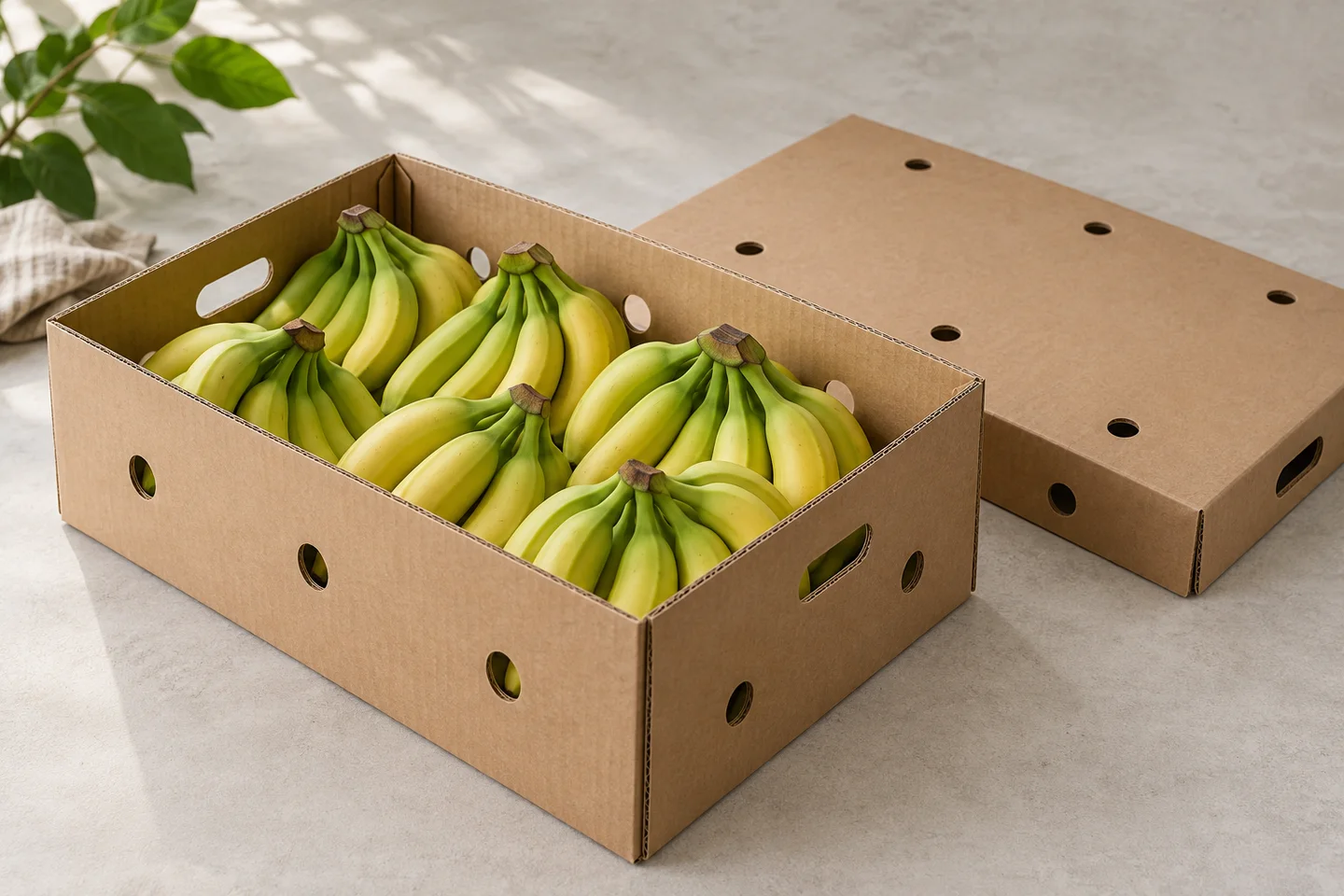
Forming deep cartons for banana packing
Plan banana box forming around deep corrugated cartons: vacuum feeding, hot-melt joining, size and board ranges, sample checks and related box structures.
Read the application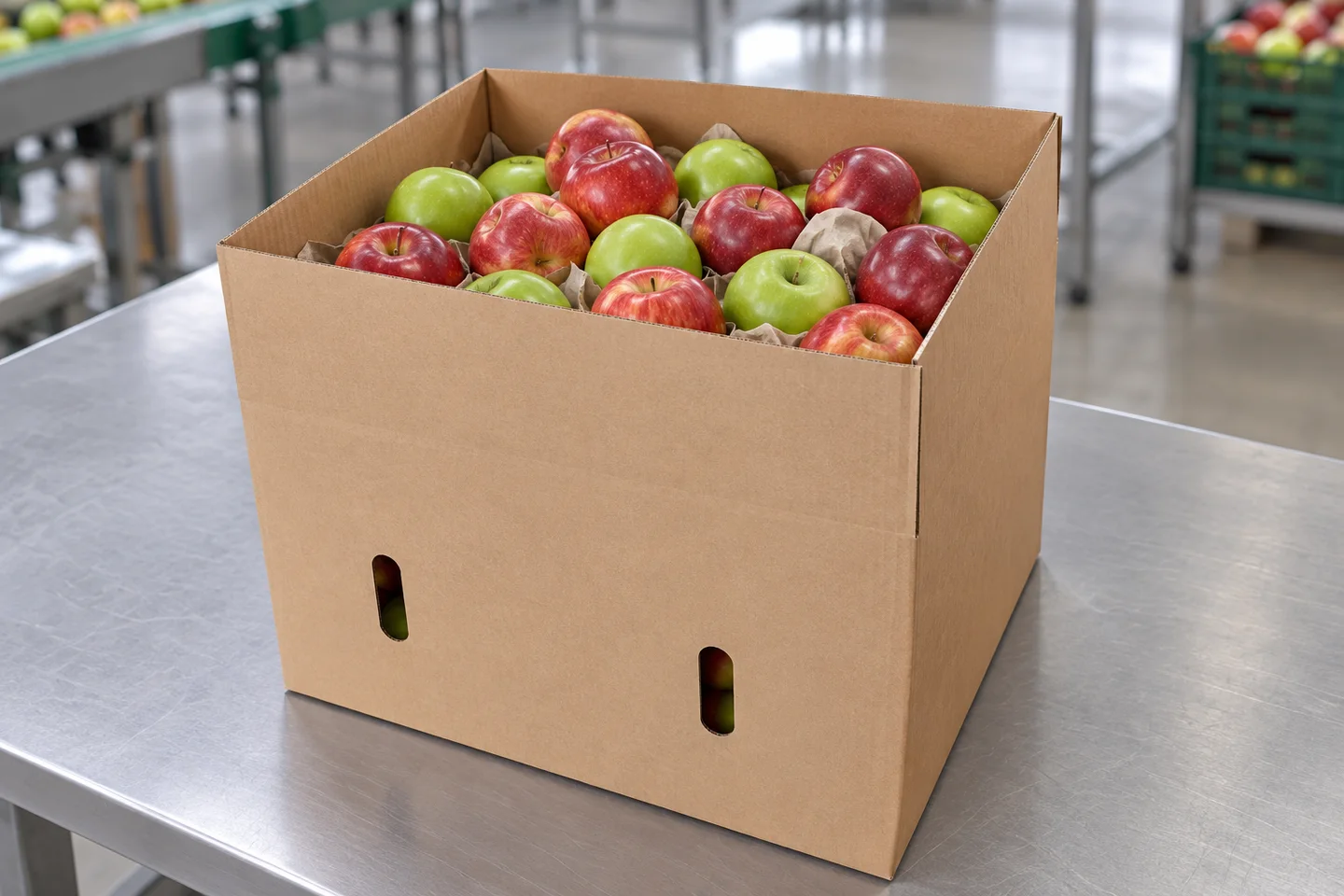
Apple carton forming around the real box design
Explore deep apple carton forming with real box photos and workshop video: elongated ventilation slots, automatic feeding, glue joining and configuration ranges.
Read the application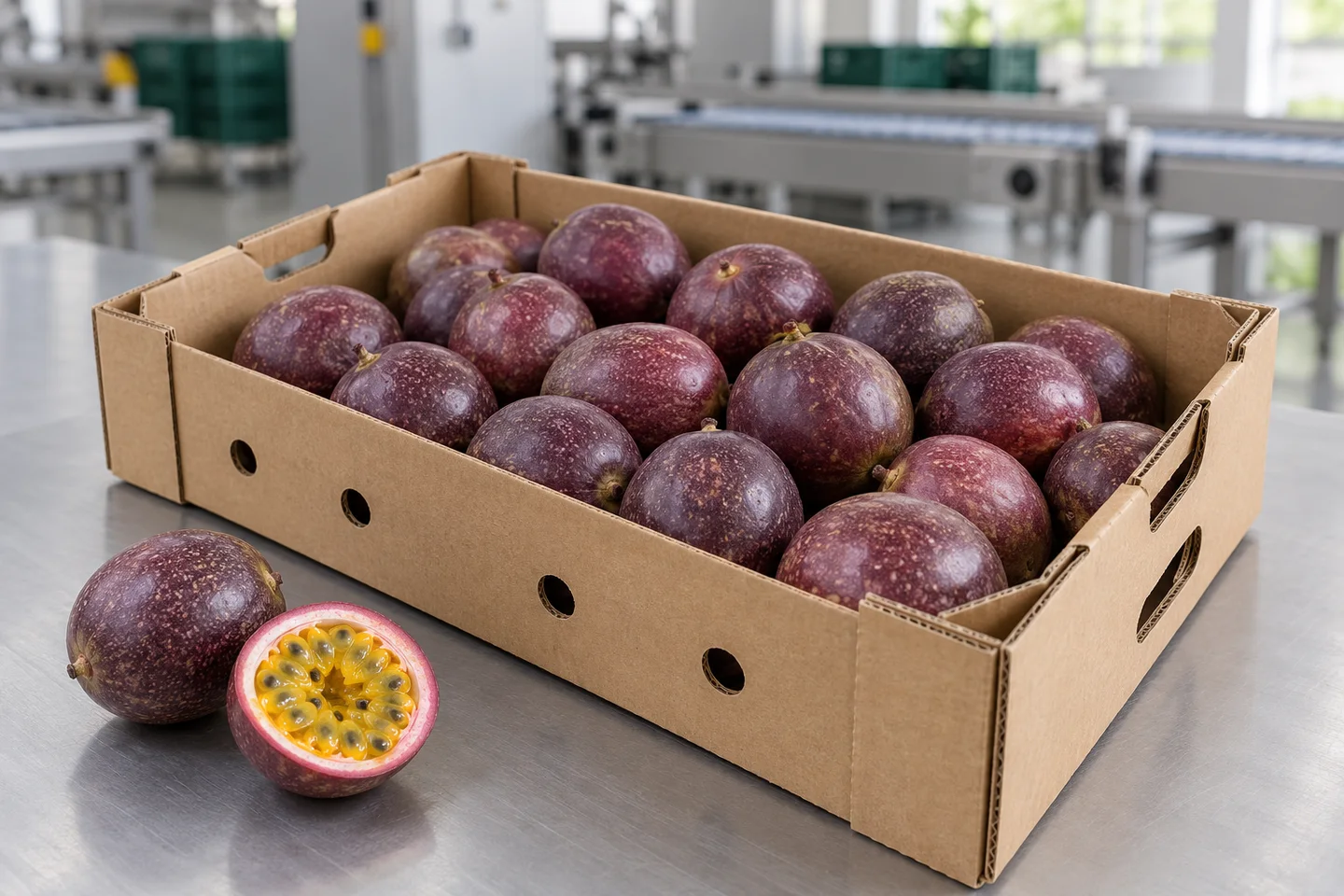
Passion fruit tray forming, from blank to stack
See real passion-fruit carton forming, discharge and stacking footage, with a Siemens-based configuration, board and box ranges, and related produce tray styles.
Read the applicationFruit images are AI illustrations. Real box samples and supplied production videos are labelled within each article.