
PASSION FRUIT / PACKAGING APPLICATION
Passion fruit tray forming, from blank to stack
The supplied video follows passion-fruit printed cartons through forming, discharge and stacking. It gives this application a real box and a visible working sequence. Xunding reviews the flat blank, folded corners, board and collection arrangement together when preparing a fruit tray forming proposal. The Siemens-based reference configuration below describes the proposed controls and utilities; the footage demonstrates the mechanical carton process. Start with your own passion-fruit box to define the tooling and output for the project.
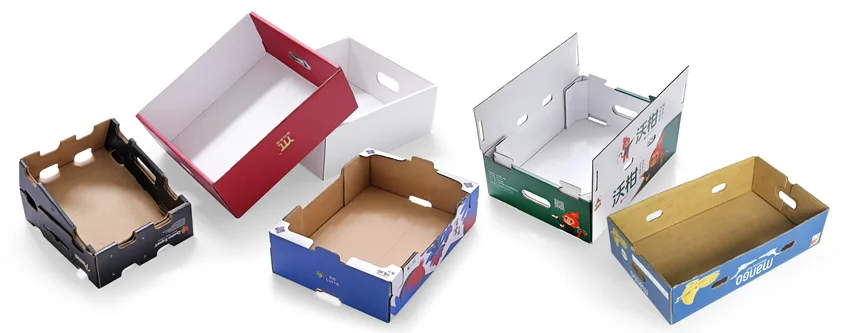
THE REAL CORRUGATED STRUCTURE
Actual box samples
A passion-fruit carton that can be seen in operation
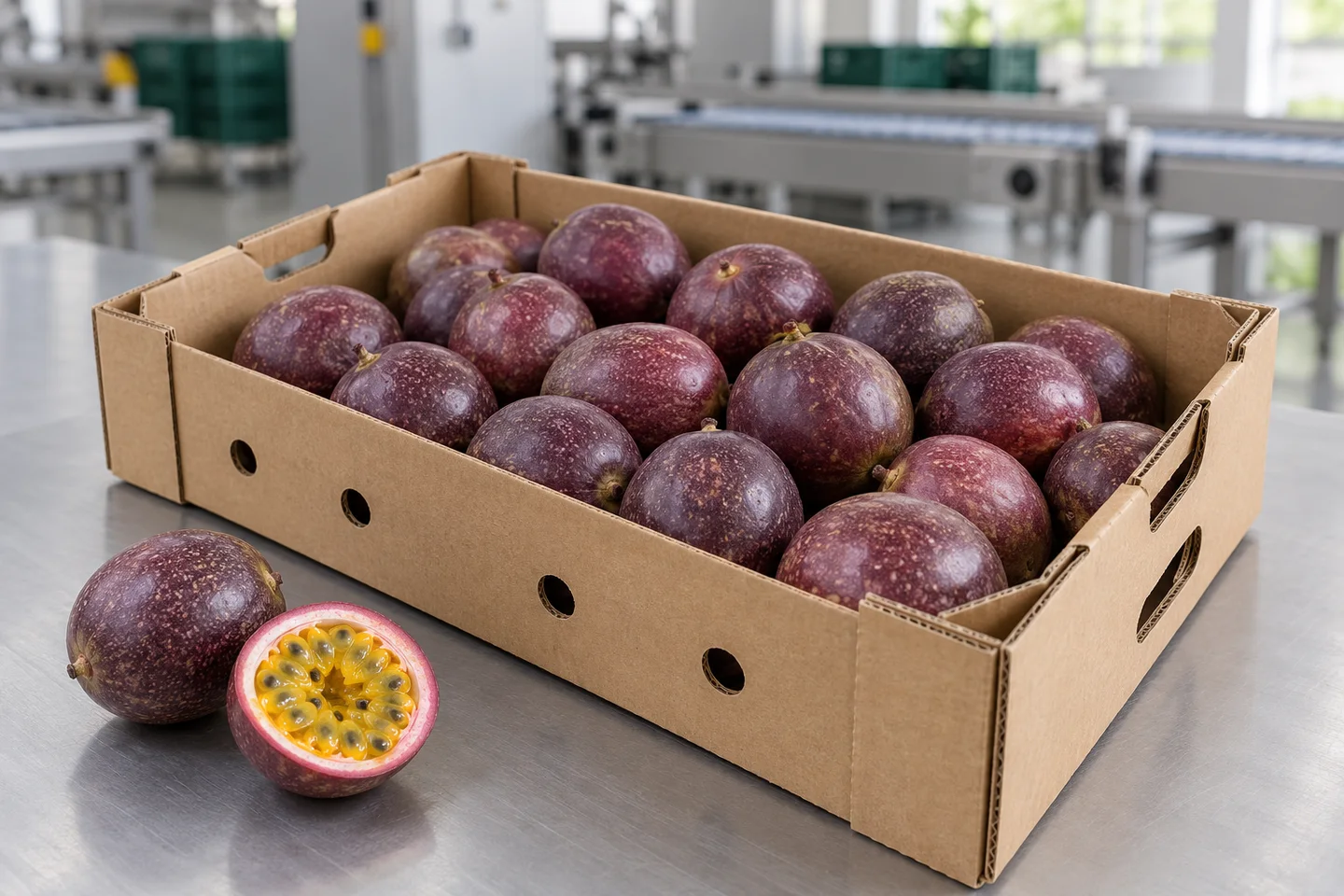
The real footage shows open corrugated cartons printed for passion fruit. The camera follows the forming area before moving to the outfeed and stacker, so the blank-to-box operation and the collection of finished cartons can be understood together. This is the packaging operation covered by the application: making the empty cardboard tray that the packing team will use. The fruit photograph is an illustration, while the machine scenes and sample box collection are genuine materials supplied for the project.
To relate that demonstration to your own passion-fruit pack, send the flat die-cut drawing and an empty assembled carton. Include inside views of the corners and underside, and identify the printed face. Record the length, width and wall height, distinguishing internal from external measurements. If the pack uses cushioning, an insert or a separate cover, show those parts too. They help explain the completed package, while the corrugated blank determines how the forming equipment feeds, folds and joins the box itself.
From vacuum feeding to a formed produce tray
The reference arrangement uses bottom-draw vacuum feeding to separate board from a stack and advance the blank into the processing section. Servo-controlled front and rear glue application, fibre-optic positioning and a folding-knife function are included in the specified sequence. The formed carton then moves to conveying and stacking. Review this movement around the actual passion-fruit blank, including the order in which the walls rise, the corner folds and the overlap areas that receive adhesive before the box leaves the forming station.
During the sample trial, follow a blank from feeding to discharge. Check separation from the stack, orientation of the printed side, alignment with the creases and placement of glue on the intended joins. Inspect the empty carton from inside and outside. Openings and folded sections should remain in their intended positions, and the box dimensions should match the agreed sample. Use production cardboard and the intended adhesive so the trial establishes a meaningful result for the particular carton rather than only a demonstration on another material.
See the outfeed and stacking arrangement
The supplied production clip shows passion-fruit cartons leaving the machine and entering a stacker. Keeping these wider views makes the completed carton and its collection point visible together. This part of the process matters when a packing operation needs a steady supply of formed boxes nearby. Define how cartons will be collected, the intended stack height and the route to the packing positions. If operators remove stacks manually, show the available working space and the direction from which they approach the collection point.
Where formed boxes transfer to another conveyor, specify its height, direction and available connection space. A floor plan should include blank storage and replenishment as well as the discharge area. The machine footprint describes the equipment itself; the working layout also needs room for carton collection, adjustments and access to the glue unit. Xunding can discuss the conveying and stacking arrangement alongside the forming configuration so the proposal states how the empty boxes move from the machine to the packing team.
The proposed Siemens-based control package
The application configuration specifies a Siemens motion controller, a 10-inch touchscreen interface, servo drives and motors, together with photoelectric tracking and air-source monitoring. These components describe the proposed control package for the forming sequence. The settings and motion arrangement must be prepared around the blank, glue timing and folding operation. Automatic fault diagnosis and quick mould adjustment also appear in the configuration description. The confirmed project specification should identify the component package, tooling and box designs included in the order.
The mechanical demonstration and the control proposal have separate roles. The footage shows how the passion-fruit cartons form and stack; it is not used to identify every component in the Siemens package. The configuration table and equipment proposal define the intended installation. Keeping that distinction clear allows a customer to use the real scenes to understand the operation while assessing the proposed controls on their stated specification. If your site has particular interface, electrical or integration requirements, include them when discussing the final arrangement.
Box dimensions, board and utility requirements
The reference configuration lists cardboard thickness of 2.5–7 mm and output of 20–50 boxes per minute. Finished box length is 180–650 mm, width is 180–470 mm and height is 50–250 mm. Flat blank dimensions have their own A and B ranges. Compare these values with the complete die-cut drawing, not only the assembled box. Extra corner folds or different overlap areas can change the forming requirement even when the outside dimensions are similar. The working output is confirmed using the intended box and board.
Electrical supply is stated as 380 V, 50 Hz, three-phase and four-wire. Approximate power is 12 kW total, with 8 kW for normal running. The hot-melt tank is 8 litres; air consumption is 380 litres per minute at 0.6–0.7 MPa. Machine dimensions are 2950 × 1820 × 2500 mm, with approximate net weight of 1600 kg. Share the site supply and air capacity before the proposal is finalised, along with a floor plan showing access, blank storage and the intended carton collection method.
Multiple passion-fruit formats and related fruit boxes
If you plan several passion-fruit packs, list each empty box with its drawing, dimensions and board specification. Compare changes to wall depth, ventilation cuts, printed orientation and corner support. The equipment scope should state which tooling and adjustments are included for each agreed design. A useful changeover trial inspects the first cartons after adjustment, measuring the shape and checking joins and discharge. Record the accepted sample and settings so the operator has a defined starting point when that format is produced again.
Other fruit trays may provide useful comparison samples when their construction is similar. Orange, mango or avocado cartons can share an open corrugated tray family, but suitability follows the individual blank and joints. Include any related design in the sample review rather than assuming the fruit print is the only change. Three-piece boxes need a different component-feeding and joining arrangement, while separate covers need their own fit checks. Xunding can connect those requirements to the appropriate existing product category before proposing a configuration.
Prepare a passion-fruit packing project brief
Start with the flat blank drawing, a finished empty carton and production-board samples. Add the required boxes per minute, number of sizes, shift pattern and installation location. Show where formed boxes enter the packing operation and identify any later steps such as adding liners, loading fruit or closing the pack. This makes the forming scope and handover point clear. The proposal can then describe the machine, tooling and conveying or stacking arrangement around the carton and the actual way the packing floor uses it.
Before confirming equipment, agree the trial observations: blank feeding, formed dimensions, fold quality, glue joints and carton collection at the proposed working output. Requirements for the filled pack and pallet should be assessed using the completed package as part of the wider packaging review. The real video gives a practical view of the empty-box sequence; your samples establish the relevant acceptance conditions. Send the brief to Xunding to review fruit tray forming, dedicated three-piece equipment or a broader fruit box production-line arrangement for your project.
APPLICATION CONFIGURATION
Configuration reference
These figures describe the proposed application configuration. Confirm the complete blank, production cardboard, tooling, working output and site utilities with Xunding for your project.
| Configuration output range | 20–50 boxes/min |
|---|---|
| Cardboard thickness | 2.5–7 mm |
| Finished box length | 180–650 mm |
| Finished box width | 180–470 mm |
| Finished box height | 50–250 mm |
| Flat blank dimension A | 370–1000 mm |
| Flat blank dimension B | 500–1100 mm |
| Electrical supply | 380 V / 50 Hz, three-phase, four-wire |
| Power | Approx. 12 kW total; 8 kW normal running |
| Hot-melt tank | 8 L |
| Compressed air consumption | 380 L/min |
| Air pressure | 0.6–0.7 MPa |
| Machine dimensions (L × W × H) | 2950 × 1820 × 2500 mm |
| Net weight | Approx. 1600 kg |
Explore the equipment categories
Bring your box drawing and sample to the category that matches its construction.
Fruit tray forming Three-piece fruit boxes Fruit box production linesPLAN YOUR PASSION FRUIT PACKING PROJECT
Start with your actual box
Send the flat blank drawing, a finished sample, cardboard thickness, required boxes per minute and your packing-line layout. We will review the forming configuration around your application.
Send your packaging requirementFROM THE FRUIT TO THE BOX
Explore fruit packing applications
See the carton structure, forming process and configuration for each application, with real samples and production footage where available.
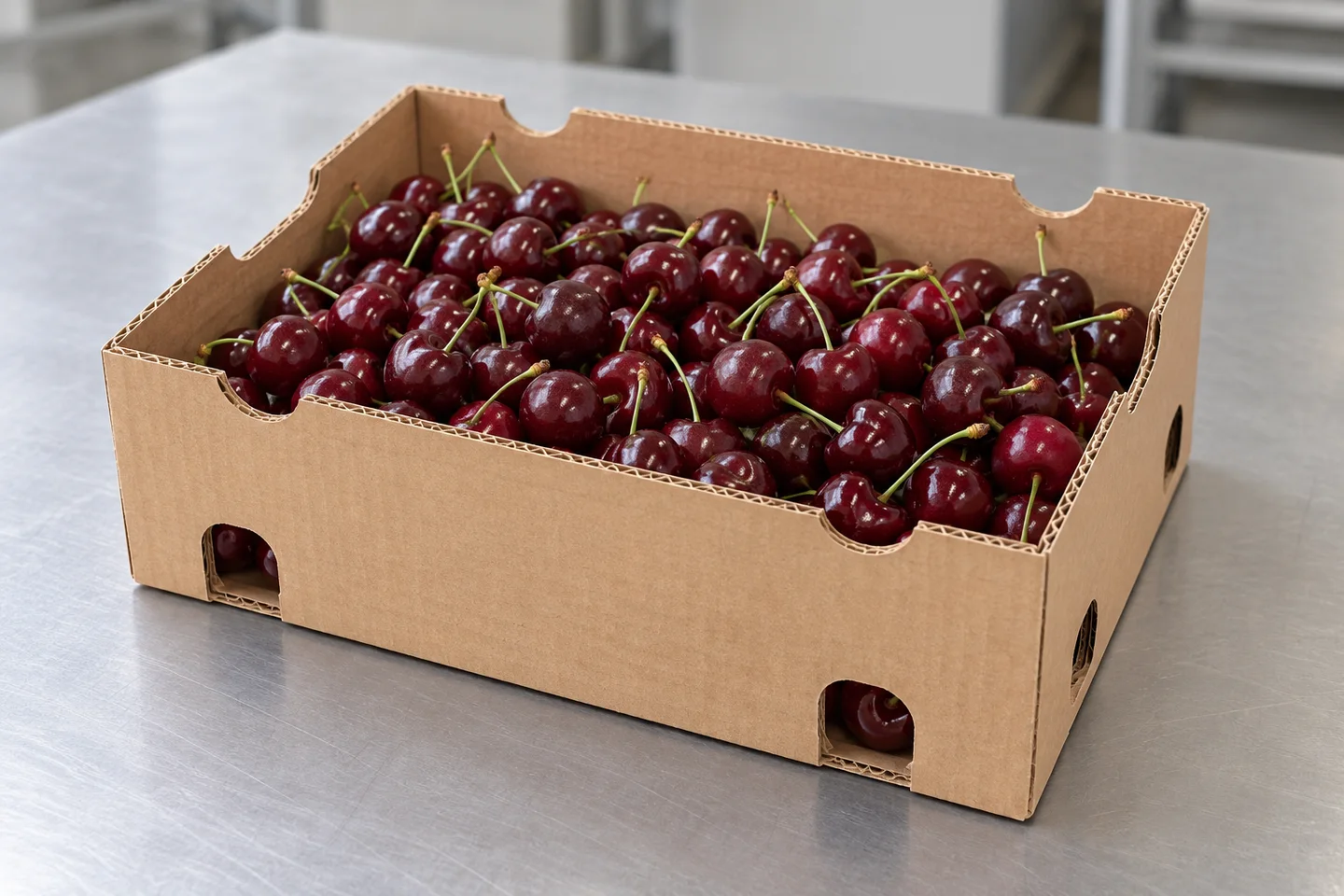
Cherry box forming for Chile’s packing season
Explore cherry carton forming for Chile: ventilated box samples, automatic feeding, gluing and stacking, configuration ranges and related fruit box designs.
Read the application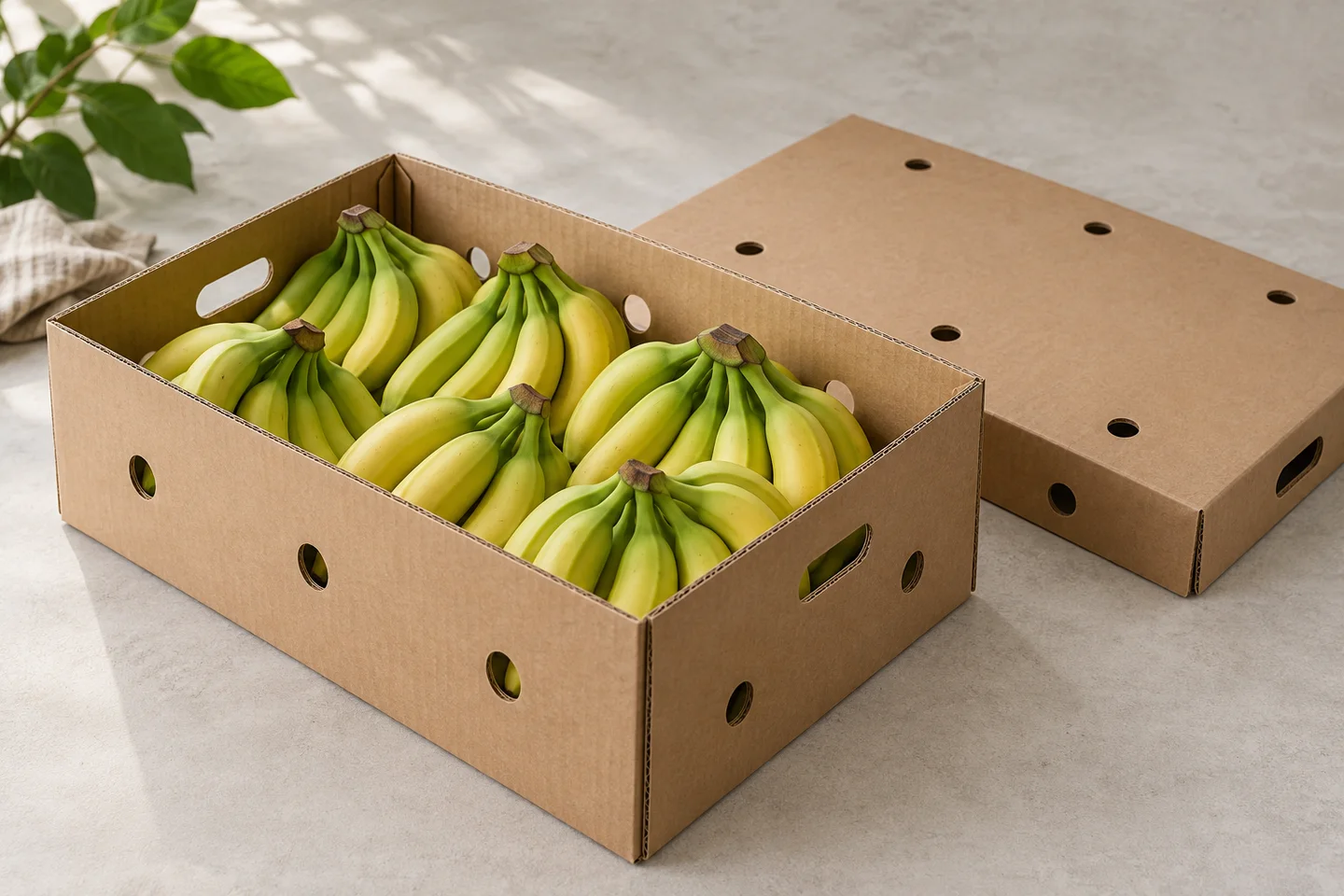
Forming deep cartons for banana packing
Plan banana box forming around deep corrugated cartons: vacuum feeding, hot-melt joining, size and board ranges, sample checks and related box structures.
Read the application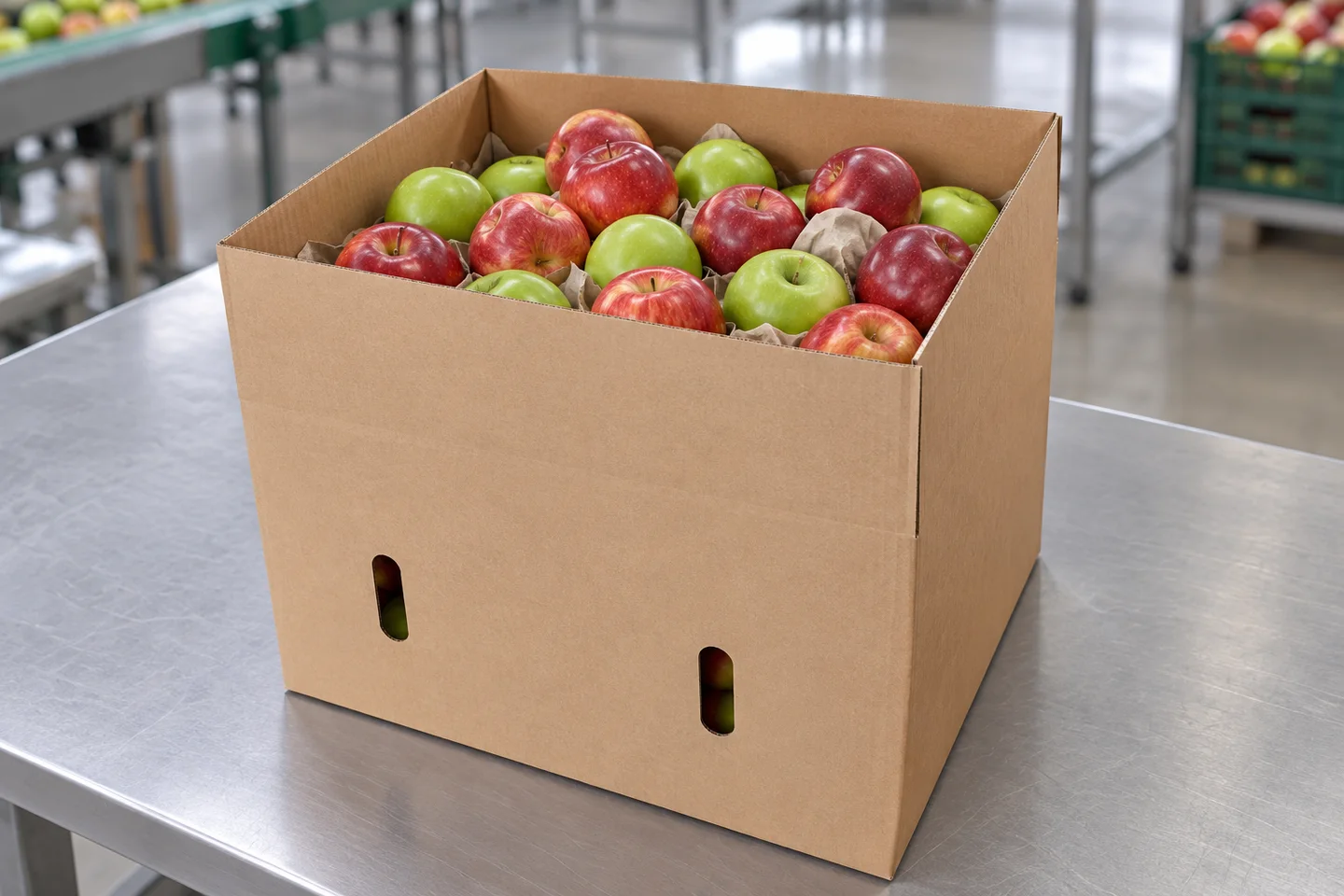
Apple carton forming around the real box design
Explore deep apple carton forming with real box photos and workshop video: elongated ventilation slots, automatic feeding, glue joining and configuration ranges.
Read the applicationFruit images are AI illustrations. Real box samples and supplied production videos are labelled within each article.