
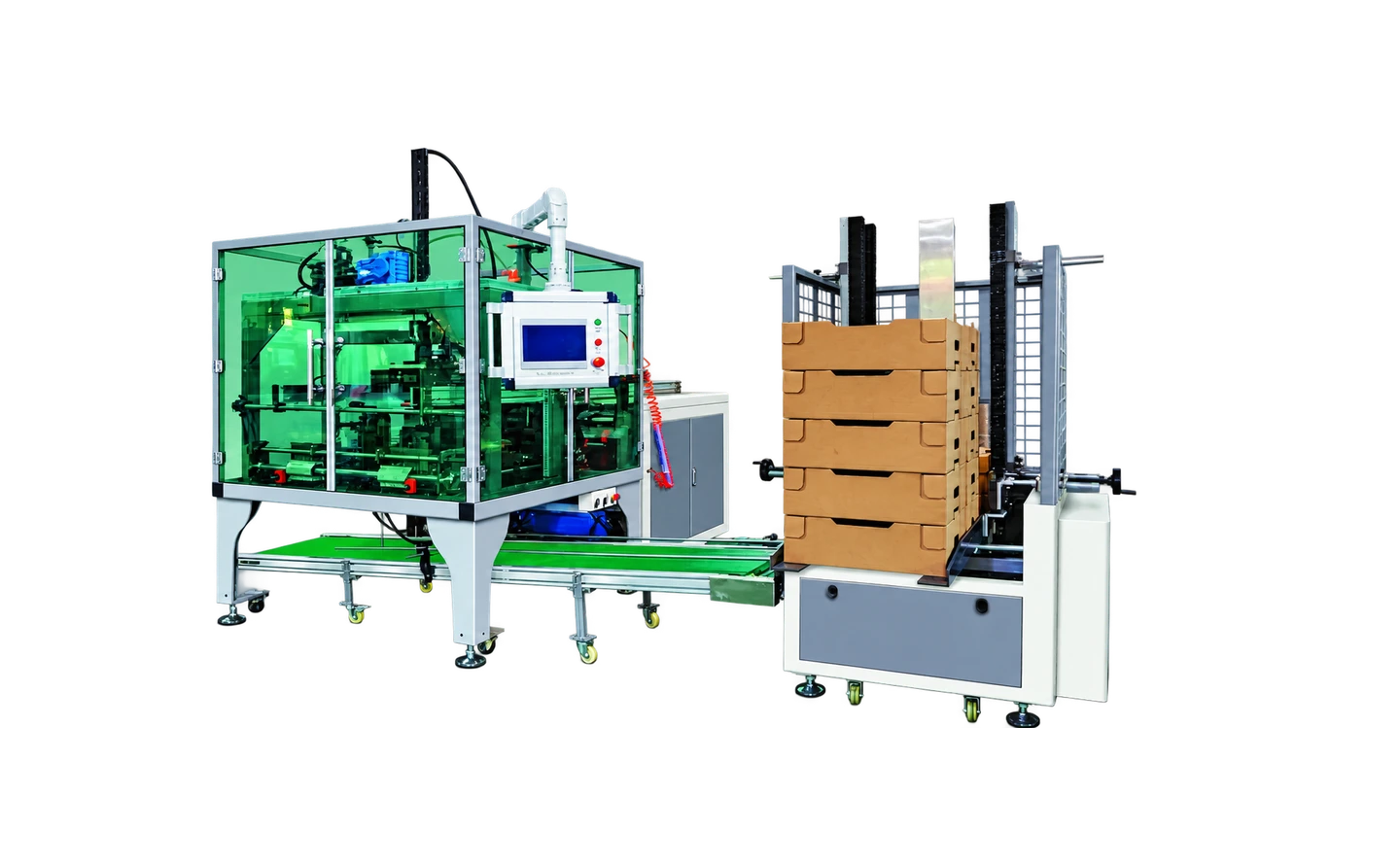
When two box forming machine quotations arrive, the purchase prices are easy to compare. The harder question is what each proposed setup will cost to produce the boxes your packing operation can actually use. A cost per 1,000 accepted boxes brings investment, operating expenses and usable output into one comparison. Start with your own box design and production requirement, then use the method below to put each option on the same basis.
Begin with the same box, output requirement and cost scope
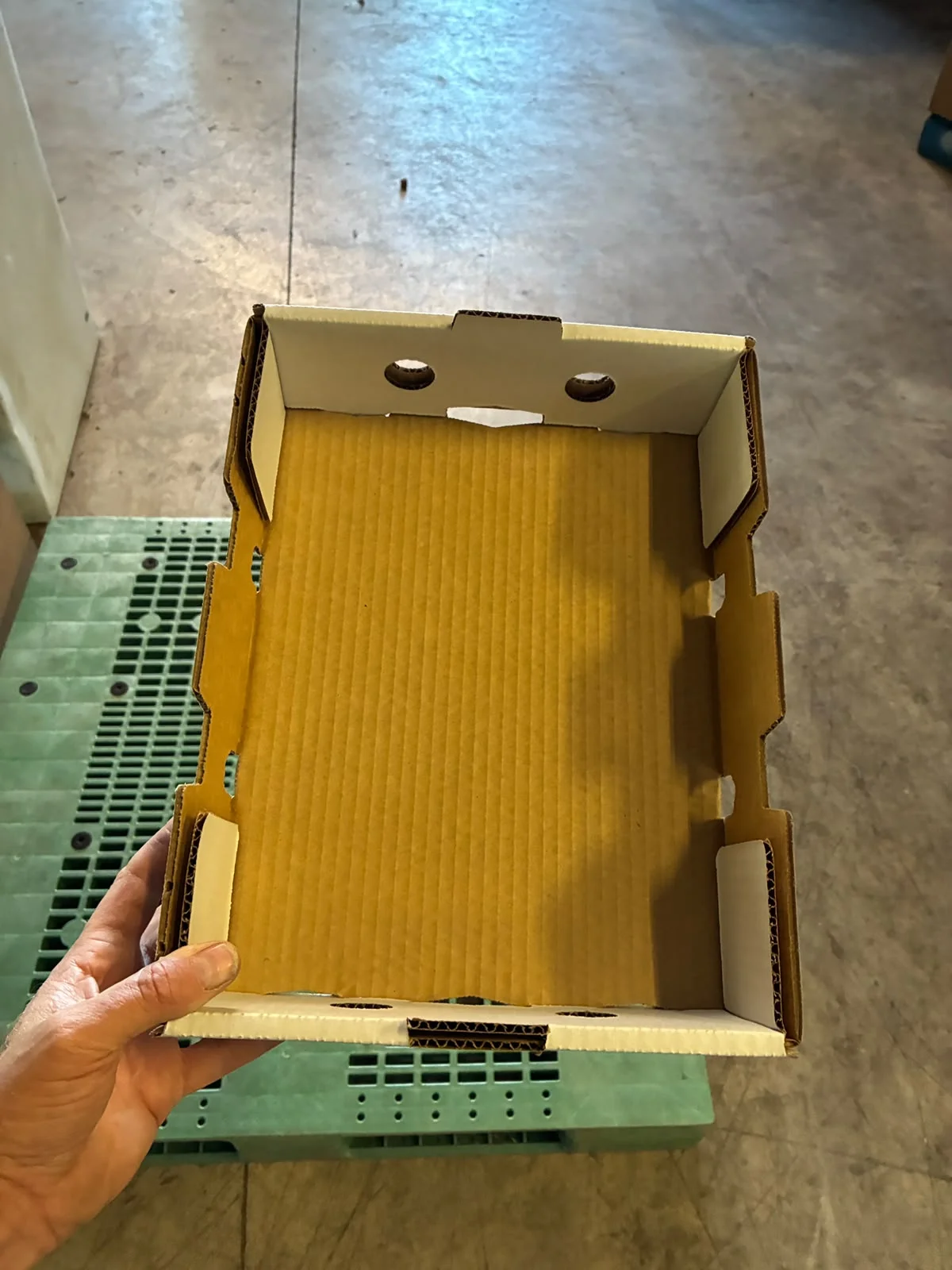
Define the finished box before comparing machines: its structure, dimensions, board, joints and quality requirements. A single-piece fruit tray, a three-piece box and a lidded mailer need different forming reviews. A lower-priced setup is only relevant if its quoted configuration can produce your intended packaging.
Choose one comparison period, such as a year, and one currency. Record operating hours, shifts, the mix of box formats and the number of accepted boxes required. For seasonal fruit packing, use the actual working season and the full year’s associated expenses rather than assuming continuous production throughout the year.
Decide whether the result includes purchased die-cut blanks. Including them gives a fuller box-production cost; excluding them gives a forming or conversion cost. Either can be useful, but label the result and apply the same scope to the manual process and every machine option.
Prepare the box photos, dimensions and daily output for model selection
Use a cost-per-1,000 formula with matching periods
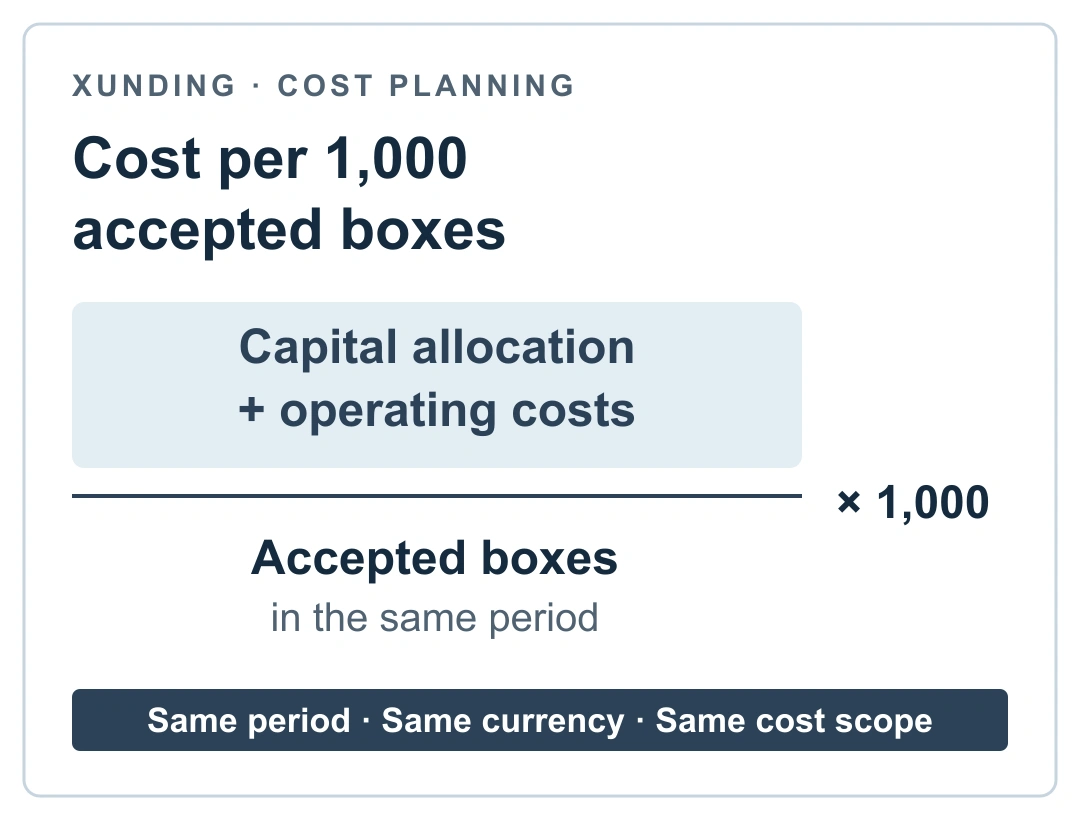
Cost per 1,000 accepted boxes = (capital allocation for the period + operating costs for the period) ÷ accepted boxes in the period × 1,000.
Capital allocation is the share of the installed investment you choose to assign to that period for planning. Document the allocation method and use it consistently. Do not add the full machine purchase price to an annual capital allocation that already includes it. Keep the initial cash investment visible in a separate row.
Operating costs can include labour, purchased blanks, adhesive, utilities, maintenance and spares. Both the numerator and the accepted-box count must cover the same period. An annual cost divided by one month’s output would give a misleading result.
Collect the costs that change the quotation comparison
Ask what is included in the quoted equipment scope. Tooling for several box formats, feeding and outfeed arrangements, packing, freight, site preparation, installation and training may need separate entries. Use the agreed quote and your own local estimates to build the installed-investment figure.
For operating expenses, measure the whole task. Include replenishing blanks, collecting boxes, changing formats, checking samples and cleaning where those duties apply. Count only expenses within the agreed scope and avoid charging the same labour or material twice.
| Cost input | What to record |
|---|---|
| Installed investment | Quoted equipment and tooling plus agreed delivery, installation and site costs; kept separate from period operating costs |
| Capital allocation | The documented share of installed investment assigned to the comparison period |
| Labour | Paid time for forming, replenishment, box collection, checks, changeovers and other included tasks |
| Purchased blanks | All blanks consumed in the period, including rejected and setup blanks, if material is in scope |
| Adhesive and utilities | Measured or estimated consumption and your local purchase or utility rates |
| Maintenance and spares | Planned servicing, replacement parts and other included maintenance expenses |
| Additional agreed expenses | Actual rework, disposal, rentals or outsourced work where applicable; avoid duplicate entries |
Count accepted boxes rather than the speed display
Define an accepted box against your agreed checks: dimensions, squareness, folds, corner alignment, joint condition and visible damage. Keep total boxes produced and accepted boxes as separate counts. A machine running at a displayed speed does not establish how many usable boxes leave the station during a complete shift.
Record working time, setup, replenishment, changeovers and interruptions. For a proposed machine, request a trial using representative blanks and record the conditions alongside the result. A short demonstration is useful evidence about that trial, but it should not automatically become a full-year output forecast.
Scrap and downtime affect the calculation in different ways. Rejected boxes reduce the accepted-output denominator while their material and processing costs remain. Downtime can reduce output while paid time continues. Do not add an arbitrary downtime charge on top unless it represents a separate real expense, such as extra paid overtime.
Use the sample-trial checklist to record accepted output and interruptions
Work through an illustrative annual calculation
The following hypothetical example uses currency units (CU). It is not a Xunding quotation, an operating result or a savings promise. All expenses and output refer to one year; purchased die-cut blanks are included. Replace every value with your own data before using the calculation for a purchase decision.
The capital allocation is an illustrative planning input. It does not establish a machine’s service life or prescribe an accounting depreciation method. The purchased-blank entry includes rejected blanks and setup material, so do not add their purchase cost again as a separate scrap charge.
| Item | Illustrative value | Basis |
|---|---|---|
| Capital allocation | 12,000 | CU per year; assigned share of installed investment |
| Labour | 36,000 | CU per year; all included operating duties |
| Purchased die-cut blanks | 90,000 | CU per year; includes rejects and setup consumption |
| Adhesive | 6,000 | CU per year |
| Utilities | 2,400 | CU per year |
| Maintenance and spares | 7,200 | CU per year |
| Total annual cost | 153,600 | CU per year; sum of the six cost entries |
| Accepted boxes per year | 1,200,000 | Usable boxes meeting the agreed checks |
| Cost per 1,000 accepted boxes | 128 | CU; 153,600 ÷ 1,200,000 × 1,000 |
Check how lower output changes the result
Suppose the same hypothetical annual cost of 153,600 CU is divided by 1,000,000 accepted boxes instead. The result becomes 153.60 CU per 1,000 boxes. This calculation holds total annual cost constant only to show the effect of the denominator; it is not a forecast of actual costs at that output.
In a real plan, blanks, adhesive and some other costs may change with production, while capital allocation and some staffing costs may remain. Recalculate those entries for each scenario. Compare a normal season, a lower-volume season and a peak requirement using documented working hours and cost assumptions.
Compare manual forming and automation on equal terms
Use the same box specification, period, currency and cost scope for both options. Include existing tools or rented equipment in the manual option where applicable. For the machine option, confirm who supplies blanks, handles formed boxes, changes formats and completes quality checks. Automation does not by itself establish a particular reduction in staffing.
Compare whether each option can meet the required quantity within the available hours before comparing unit costs. A manual process producing fewer boxes and a machine producing more boxes do not answer the same production requirement. Where overtime or outsourced work is needed to meet the target, show those expenses explicitly.
Keep projected output, measured trial output and actual operating results clearly identified. Evaluate initial cash requirements alongside the cost per 1,000 boxes: an option with a lower projected unit cost can still require more cash at the start.
Download the blank box forming cost comparison sheet (CSV)
Review the mould-changeover process when planning several box formats
Prepare a cost discussion with Xunding
Send a photograph of the formed box and its flat blank or die-cut drawing, finished dimensions, board specification and required boxes per day. Add available working hours, seasonal peaks, the formats you run and the installation country. A layout or short description of the current workflow helps identify feeding and outfeed requirements.
Use the blank comparison sheet to record your local labour and material costs. It is an editable planning record with calculation instructions, rather than a prefilled price list or automatic calculator. Jason Chen can discuss the model and quotation scope for your box; your own production and local-cost data complete the comparison.
Explore fruit tray forming machines
Send your box design and production requirement to Jason Chen