


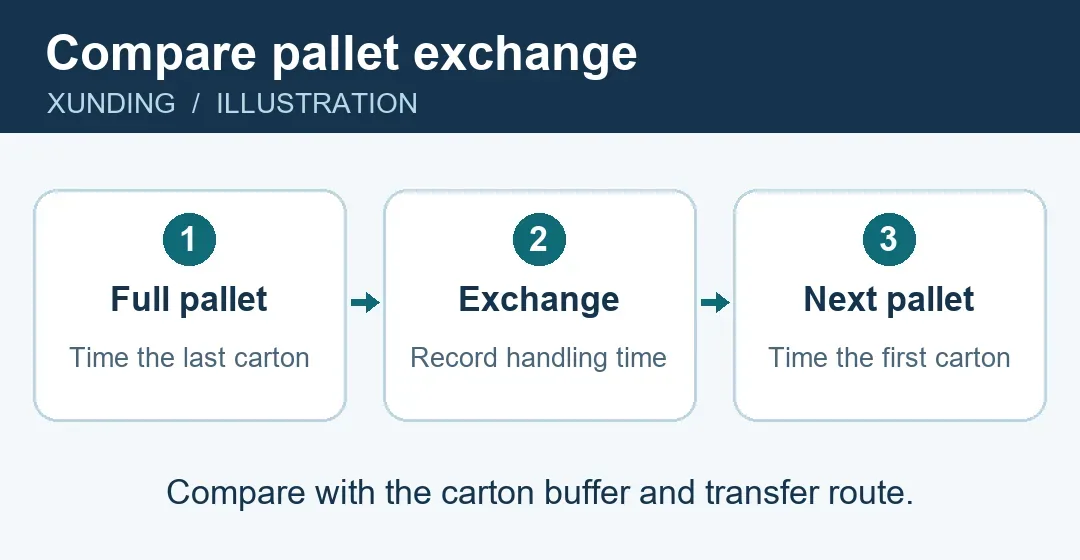
A palletizer can meet its picking target while an empty pallet is in place and still back up the line at every exchange. Compare single and dual pallet positions by measuring the interval from the last carton on a full pallet to the first carton on the next one. Use that interval, the upstream carton buffer and the actual transfer route to decide what the extra position would buy you.
What happens at one position?
A full pallet leaves the working position before the next empty one is placed there. Include the time for confirming safe access, removing the completed pallet and getting the next pallet correctly located. When cartons keep arriving, check the usable conveyor accumulation during that gap and what the line does when it fills. A buffer should count places the actual packed cases can occupy.
What does a second position change?
A second position can be evaluated as a place to prepare the next pallet. Ask whether the proposed robot, controls and protective layout support the required sequence. Check the farthest placement on both pallets and draw both full-pallet exit paths. If the same aisle is blocked while the operator transfers a pallet, extra positions alone may leave the original delay in place.
Put numbers against the bottleneck
For illustration, six cartons a minute arriving through a 90-second exchange means nine cartons need somewhere to go if arrivals are even. Compare that volume with available accumulation and any pauses the line can accept. Repeat the test across several exchanges. Record how long the upstream sealer waits and when the next pallet becomes available to the wrapper.
Include the second pallet in the downstream test
Run the full pallet through the normal route to the wrapper or dispatch staging position. Time the unloading and compare it with the time until the next full pallet needs the same route. Ask who signals that the path is free and where a pallet waits if the wrapper is busy. This matters even when the robot can continue stacking at the second position. A useful trial makes the extra position prove that it reduces the interruption at the sealer, rather than simply moving the queue to the exit aisle.
Ask for a transfer layout and a timed trial
Send the pallet sizes, layer pattern, loaded weight, arrival rate and exchange route. Start with the palletizing systems range and map the downstream route using the sealing-to-wrapping application. Ask for a drawing that shows the exchange steps and a trial report with accepted cartons and elapsed time including the exchange.