


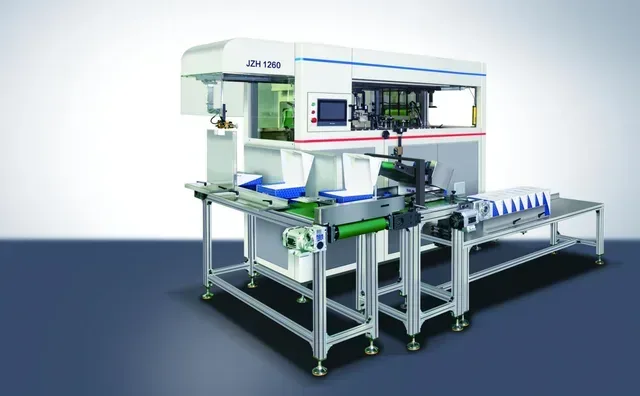
A lid and base can both match their drawings and still fit poorly when pieces from different batches meet. Start with finished parts, mark the measuring points and cross-pair each lid with bases from more than one run. This shows whether the problem follows one component, accumulates across both or appears only at a particular corner of the box.
Define dimensions on the formed parts
Measure the inside of the lid and the outside of the base where the parts actually pass one another. Agree the height at which both measurements are taken. A corner fold or an overlapping layer can create a local high point, so also check the four corners. If the drawing gives the flat blank size, record that separately. It cannot replace a measurement at the part of the finished box that controls fit.
Draw a small pairing grid
Take lids and bases from the early and later portions of the same run, and from another run if available. Label them on the underside before mixing them. Test the original pairs and then swap the lids between the sets. Record whether the lid seats fully, tightens at a corner, rocks or comes off during normal handling. Use the same closing direction and method for all pairs.
Use the pattern to isolate the fault
If one lid binds on several bases, examine that lid first. If several lids bind on one base, start with the base and check its corner build-up. A fault that only appears in one cross-pair warrants measuring both parts again while keeping their original orientation. Repeat the combination after normal collection or stacking if parts are stored before pairing. Storage can expose shape changes that are easy to miss at machine discharge.
Keep a clear record when the limits are close
Use the same measuring tool without squeezing the board. Note the lid depth where it meets the base and compare it with the insertion depth on the accepted sample. A lid may start easily and tighten only near the bottom of its travel. Write the position at which it binds instead of recording only pass or fail. This helps separate width, taper and local corner interference.
Add fit acceptance to the equipment trial
Include the lid and base drawings, representative board and at least one marked accepted pair. Agree how to classify a tight fit, a loose fit and incomplete seating. The shoe and lid-and-base machine range shows candidates for each box structure. Ask for recorded pairings across trial batches alongside formed dimensions and usable output.