


A turntable wrapper brings each pallet to a fixed station and rotates it. A mobile wrapper travels around a pallet where it stands. The difference changes the routes taken by both the load and the operator before and after wrapping. Compare those routes on the warehouse plan, then trial the same pallet with each arrangement. The easier option depends on the load, the floor and the way dispatch is organised.
How does a turntable wrapper fit the flow?
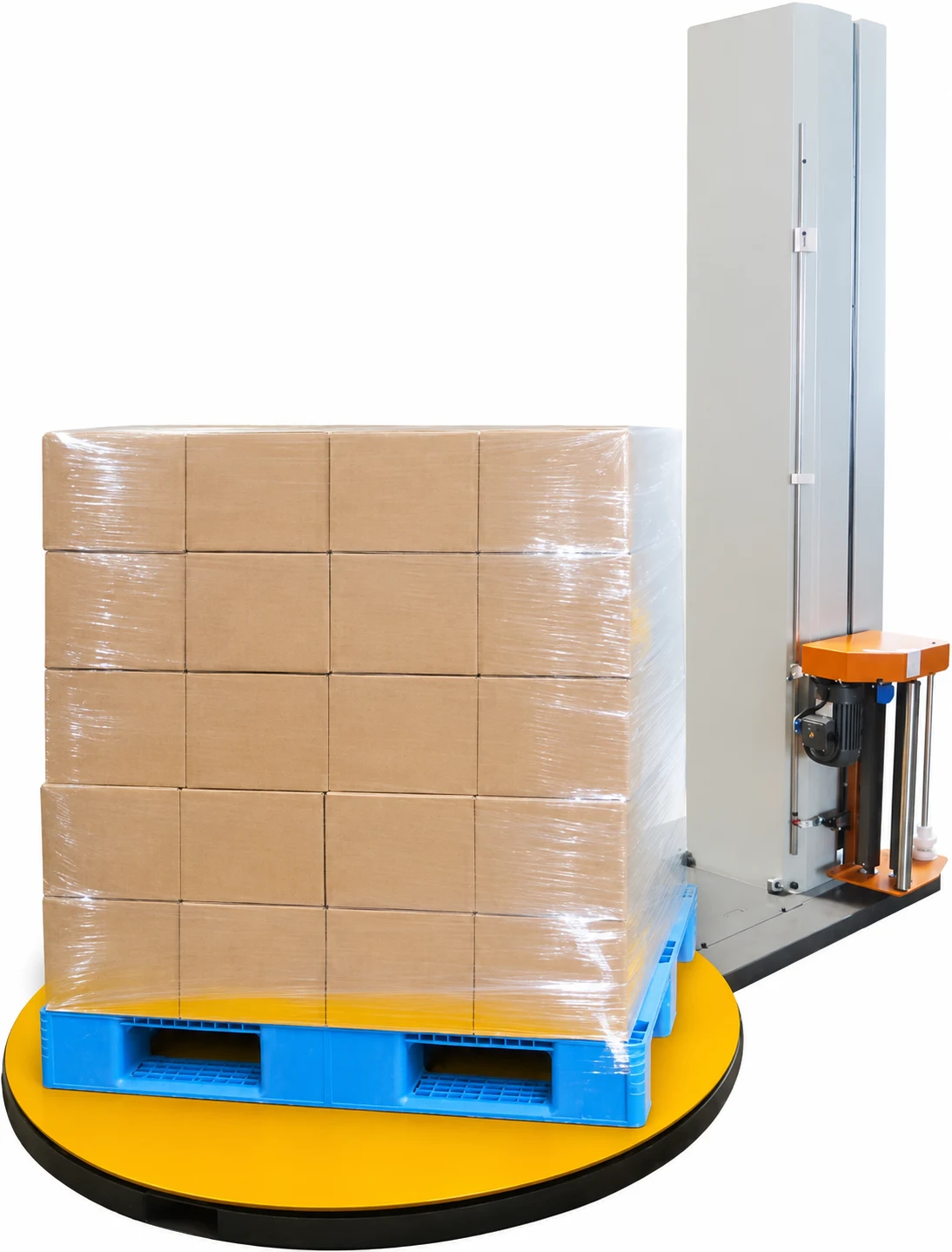
A pallet enters a fixed station, is centred on the turntable and leaves by the agreed handling route. This arrangement is easy to lay out when pallets already converge at one dispatch point. Check the available approach and pickup sides, the handling equipment and where the finished pallet waits. Include turning space for the forklift or pallet truck in the station drawing.
Review the TP1650F-L pre-stretch turntable wrapper as one fixed-station candidate. Start with the loaded pallet dimensions, weight and centre of gravity. Check stability during the proposed motion with the actual load and agreed film settings. Include loading and pickup time in the comparison.
How does a mobile wrapper change the route?
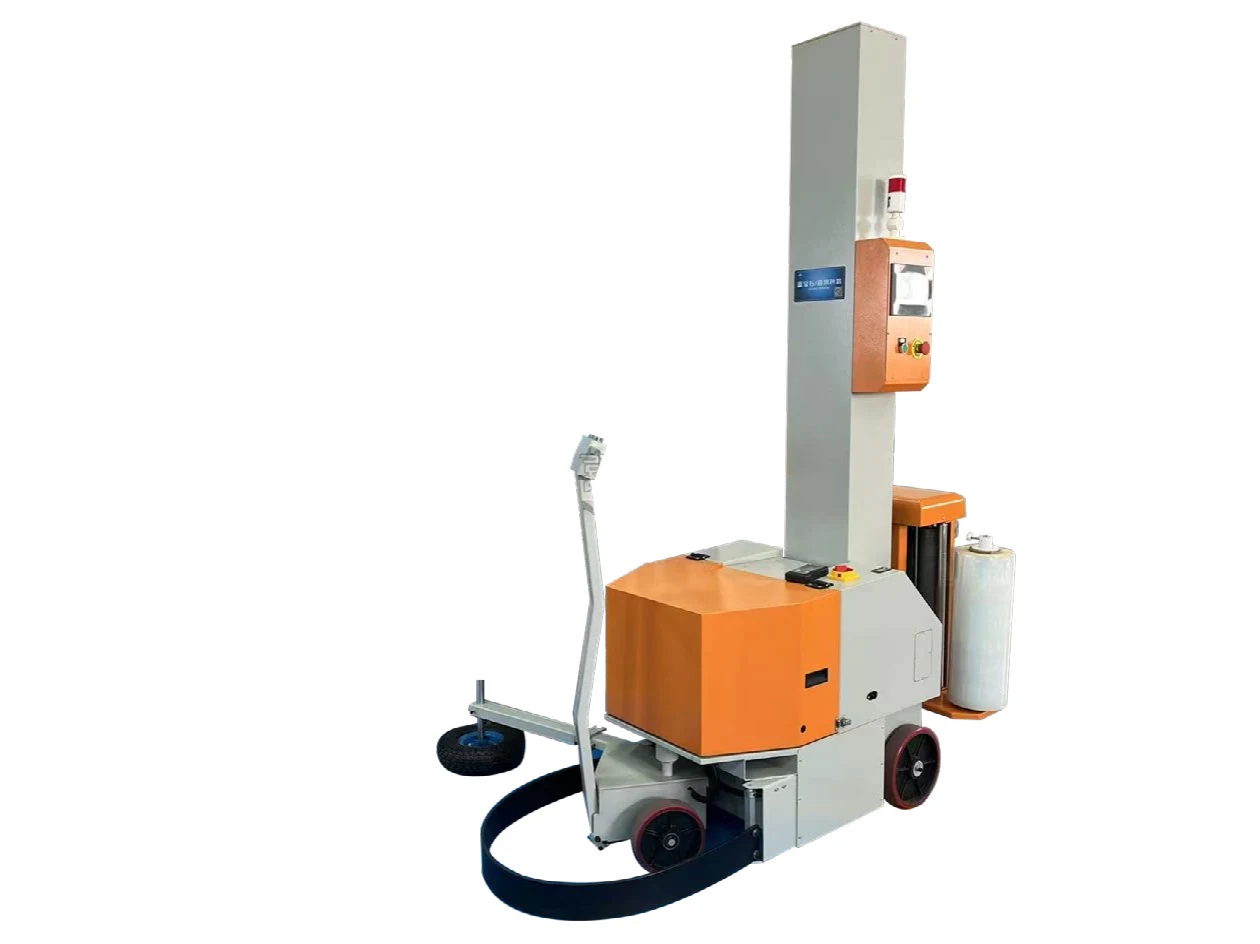
In a mobile arrangement the pallet remains stationary while the wrapping equipment moves around it. That can reduce the need to move a partly prepared load to a central station. Put the travel envelope on the floor plan for the actual pallet and its overhang. Check the floor at joints and thresholds, then plan how people and other vehicles are separated from the working area.
The mobile pallet wrapping configuration is a candidate when loads can be staged in suitable positions. Ask how the proposed unit is moved between positions and where it will be parked or charged, as applicable. Confirm the allowed travel surface and operating clearance with the supplier.
Compare a full dispatch cycle
Pick one ordinary load and one awkward load. Record staging, handling, wrapping, release and pickup from the same start and finish points. Compare where you needed to move other stock, pause another task or correct a loose film tail. Check the wrapped load after it has travelled through the planned dispatch route.
A fixed station is often easier to feed when dispatch has a single, repeatable path. A mobile wrapper is worth trialling when suitable clear bays are already distributed around the warehouse. The layout, together with a test on your least stable load, gives you a firmer basis for selection than a cycle time on its own.
Consider the awkward load first
A soft or tall load can shift during movement to a fixed station or during rotation. A mobile unit leaves the pallet in place for wrapping, but it still needs a suitable floor and travel path. Put a representative awkward load in the trial before making the layout decision.
Use photographs from the same sides before and after the pallet goes to dispatch. Record film details, any top support required by the proposed arrangement, and whether the site team had to move another load out of the way. Those observations keep the decision connected to the warehouse you use.