
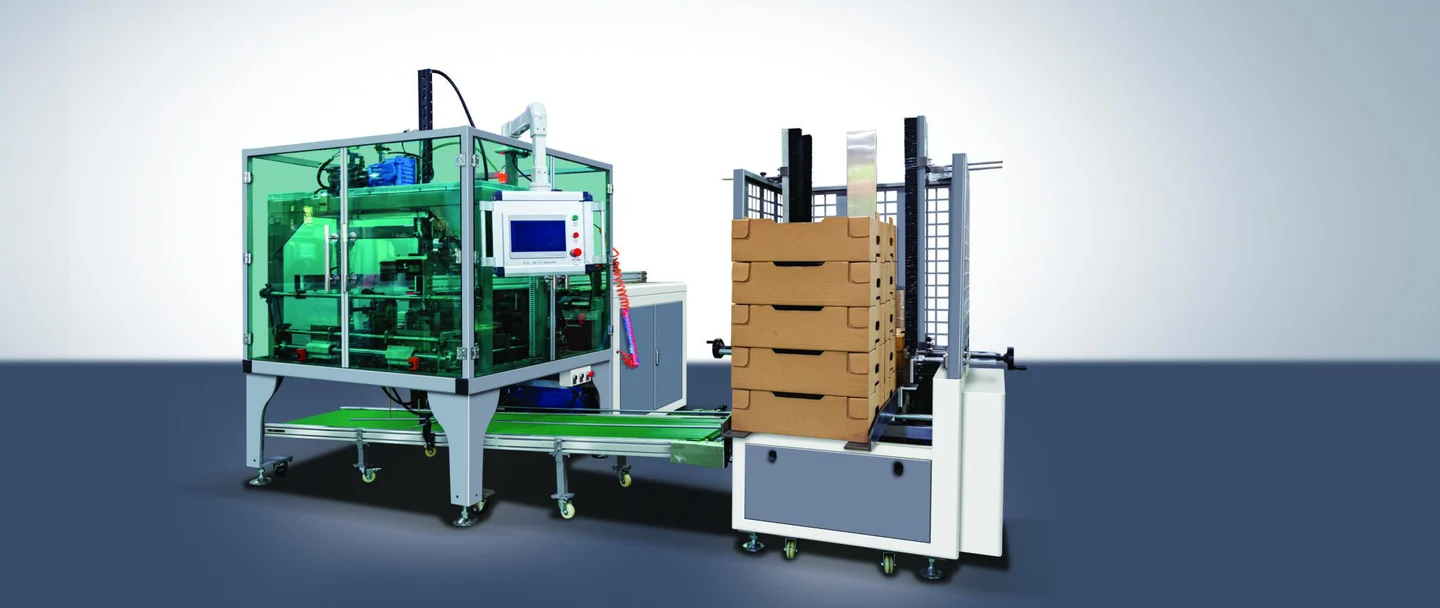
Custom packaging starts with a box designed around the product: its dimensions, weight, presentation and route to the customer. Once that design is ready, the next task is to produce the boxes consistently at the pace your packing operation needs. Custom packaging box making machines can help automate that work, but the right setup depends on the blank, material and forming process. This guide explains how to compare equipment for fruit trays, mailer boxes, hinged-lid boxes and shipping cartons, and how to prepare a useful machine enquiry for Xunding Machinery.
Start with the box design and the production stage
A custom box may begin as a printed sheet, a die-cut blank or several separate cardboard components. Each starting point calls for a different production process. Printing puts the artwork on the board. Cutting and creasing prepare the outline and fold positions. Forming equipment then handles the prepared material to create the intended box structure. Identify which of these operations you want to bring into your own facility before comparing machines.
Xunding’s range focuses on forming prepared cardboard blanks and components, together with carton erecting and tape sealing. For a forming enquiry, send the flat blank drawing and a photograph of the assembled box. If your project also needs printing, die cutting or a system that cuts a new box size directly from board, list that requirement separately. A clear description of the incoming material and desired output gives both sides a practical starting point.
How printing and box forming fit into the production process
Fruit trays: match the machine to the corners and components
Fruit and vegetable packaging often uses an open tray that is ready for packing after its walls and corners have been formed. Look closely at the corner folds, bonding areas and reinforcement in your sample. Also check whether the tray comes from one blank or separate pieces. Two trays with similar outside dimensions can require different feeding and forming arrangements.
The Xunding catalogue includes single-blank fruit-box forming models such as XD-Z03, and the XD-Z04 three-piece fruit box machine. For a configured forming and conveying line, XD-Z05 is another starting point for discussion. Send the drawing for every component and describe how the finished trays should reach the packing station. Ventilation holes, printed areas and stacking features belong in the box design review, so the forming proposal can be checked against the complete tray.
Mailer, shoe and lid-and-base boxes need their own forming review
A mailer box combines a body, lid, tabs and folds in a structure designed for product packing. For clothing, crafts or electronics packaging, show the supplier how the lid closes and where any locking features sit. Printed surfaces and the appearance of the finished corners may matter alongside output. Include photographs with the box open and closed, as well as the flat blank.
Xunding’s mailer range includes XD-09 and XD-Z10, with XD-11 and XD-Z12 listed as configurable assembly lines. Hinged-lid shoe boxes and separate lid-and-base boxes follow different structures again: XD-Z13 is listed for hinged-lid boxes, while XD-Z14 includes hinged-lid and lid-and-base applications. For a separate lid and base, supply both drawings and explain how the two parts need to fit together. A sample review should establish the suitable configuration before the order is finalized.
Shipping cartons: define erecting, filling and sealing separately
For shipping-carton automation, describe the packing sequence from the flat carton to dispatch. An erecting machine prepares the carton for filling; a sealing machine handles a later closing operation. Write down which flaps are folded by an operator, where products enter the carton and how the carton travels between stations. This helps identify the equipment needed at each step.
XD-KX450 is Xunding’s automatic carton opening and erecting model. XD-FX5050 is tape-sealing equipment for assembled cartons, and XDZG5050 includes automatic flap folding. Give the carton length, width and height, tape width, required cartons per hour and conveyor arrangement. Include the carton condition at the machine entry point and tell us whether the line runs one size at a time or changes between jobs.
Review board, folds and adhesive as one specification
Material selection affects how the blank feeds, folds and holds its finished shape. Record the board type, actual thickness, printing and any coating, then mark the fold lines and bonding areas on the drawing. For a corrugated design, include the flute information available from your board supplier. Use production material for the sample review so the trial reflects the box you intend to make.
Where the box uses glue, discuss the adhesive system with the bonding surface and joint design. The catalogue describes hot-melt gluing on certain Xunding models; the proposed arrangement still needs to be assessed for your blank. Agree what a satisfactory joint looks like and which handling or load checks are needed for the intended use. A finished tray photograph can help explain the structure, while a sample made from your own material provides a stronger basis for acceptance.
Compare usable output and complete changeover time
Begin with the number of acceptable boxes your packing operation needs per hour and per shift. Include peak periods, the number of different designs and the expected order size for each design. A long run of one tray and several short mailer-box jobs create different demands, even when their daily box totals are similar. Catalogue speed is a useful reference; a trial with the intended blank helps establish the output relevant to your operation.
For frequent changes, review tooling access, blank guides, machine settings and the checks needed before restarting. Xunding’s mould-changeover article explains the upper and lower tooling adjustments shown in our demonstration. When comparing changeover times, define whether the timing covers replacing the mould alone or the full process through the first acceptable box. Include material preparation and trial boxes in your shift plan, together with any work needed at the packing and discharge stations.
Plan feeding, discharge and the installation space
A machine needs working space around its listed footprint. Consider how blanks reach the feed area, where operators stand, how finished boxes are collected and how maintenance access is kept clear. Share a floor plan showing doors, columns and nearby packing equipment. For a connected line, mark the direction of flow and the height of the conveyors or packing tables.
Check the electrical supply against the selected model and confirm any compressed-air requirements for the quoted configuration. Also discuss blank storage, adhesive supply where applicable and the handling of finished boxes between forming and packing. These details affect the practical layout and operating cost. For Xunding’s configurable lines, the proposal should identify the included modules, installed power and project layout so you can evaluate the complete setup.
Evaluate cost and material use with your own production data
Compare the current cost of buying assembled boxes or forming them manually with the proposed cost of using prepared blanks and equipment. Include the blanks, adhesive or tape, labour, electricity, compressed air, maintenance, tooling, delivery, installation and training. Work with the expected volume and product mix over a normal year. Seasonal peaks can matter, but a short busy period alone may give an incomplete picture of equipment utilization.
If you currently store assembled boxes, holding flat blanks and forming them near the packing operation may change your storage needs. Measure the pallet quantities and floor space involved in your own workflow. For transport costs, assess the dimensions and protective performance of the finished package. The box design determines its size; a forming machine assembles the specified blank. Packing trials can help you review fit, product movement and material use together.
A practical payback estimate divides the total installed investment by the annual net savings you expect after operating costs. State the assumptions and test them against a lower-volume scenario. Material and shipping savings should come from your own design comparison and operating data. This makes the investment discussion useful for your business rather than relying on a general percentage from another packaging operation.
Agree the trial-box and acceptance checks
Before ordering, agree which blanks and finished samples will be used to review the machine. Check finished dimensions, squareness, corner alignment, lid fit and the condition of glued joints or tape seals, as appropriate to the box. Include the required output and the duration of the demonstration in the acceptance discussion. If several box formats will be run, list the samples and the changeovers to be assessed.
Record the tooling included with the machine, the operating instructions and the documents needed for the quoted configuration and installation destination. Discuss training, spare parts, maintenance access and service arrangements as part of the purchase terms. A clear acceptance plan connects the sales discussion to the boxes your team will actually produce and gives the operator a reference for checking future batches.
Send Xunding a complete custom packaging brief
For an initial recommendation, send Jason Chen the flat blank drawings, finished-box photographs or samples, board specification and required output. Include every planned box size, expected changeover frequency, available floor space, site power supply and installation country. For carton erecting or sealing, add the packing sequence and tape requirements. These details let us review the actual process and narrow the discussion to suitable catalogue models or a configured line.
Xunding Machinery supplies fruit-tray, mailer-box, shoe-box and lid-and-base forming equipment, together with carton erecting and sealing machines. The models below are starting points for your enquiry. Share the box and production requirements first, then ask for a proposal identifying the machine, tooling, included functions and purchase terms for your project.
Catalogue models to discuss
These models are starting points for an enquiry. Confirm the configuration against your blank and sample.
- XD-Z03 · Multifunctional box folding machine
An automatic fruit-box forming setup combining bottom-suction feeding, folding knives, gluing, conveying and stacking.
- XD-Z04 · Three-piece fruit box forming machine
Forms three-piece fruit and vegetable boxes from separate cardboard parts, with automatic feeding and touchscreen mould settings.
- XD-Z10 · Automatic mailer box forming machine
An automatic folding mailer-box machine with chain-positioned motion and continuous feeding for cardboard retail and product packaging.
- XD-Z14 · Hinged-lid & lid-and-base box machine
Automatic forming for integrated hinged-lid boxes and separate lid-and-base boxes, including footwear, clothing and other product packaging.
- XD-KX450 · Automatic carton erecting machine
Automatic opening and erecting equipment for shipping cartons. Confirm the carton blank and tape-sealing requirements for your packing line.
- XDZG5050 · Automatic flap-folding carton sealer
Automatically folds carton flaps and seals shipping cartons with tape. The catalogue lists standard-carton output and adjustable table height.