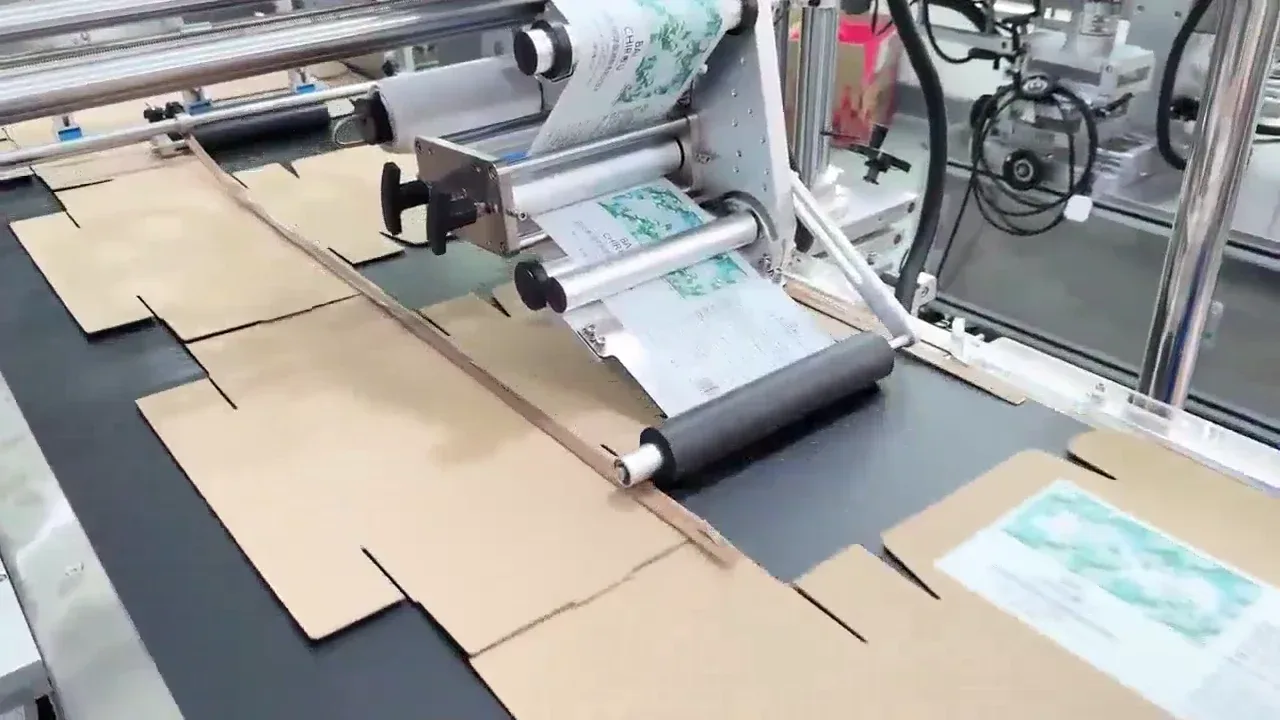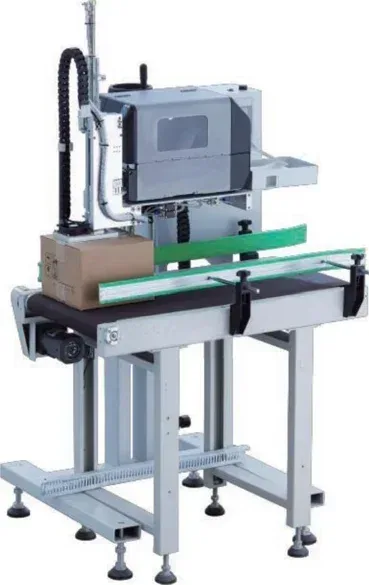
A carton label can land neatly at the applicator and still be hard to read at dispatch. Decide which face the next scanner or operator will see, then check whether that face offers a flat area on every carton in scope. Top and side placement solve different conveyor layouts. Both need a marked sample that shows exactly where the label can sit and which way it should face.
What can you use on the top face?
Top placement keeps the label visible from above if the carton remains upright through the next stations. On a taped case, draw the seam, tape and flap edges on your sample. Check the flat area left on the smallest box and how different case heights change the applicator position. If the approved zone crosses a raised tape edge, test adhesion and scanning on real sealed cartons before accepting it.
When is a side face easier to use?
Choose a side as the candidate when a scanner looks across the conveyor or the carton will be stacked before a manual read. Trace which side stays exposed through curves, guides and any carton turn. Narrow panels, dents and existing print can reduce the usable zone. A wide side on an open sample may be covered by a guide when the filled case reaches the labeller.
Test placement and reading together
Send a drawing marked with label size, orientation and allowed placement window, plus samples of the data and carton surface. Include the shortest and tallest case, the narrowest panel and an ordinary production case. Check position after application, then follow the carton to the actual read point. Record cartons with a label that is present but unreadable separately from cartons with a missing or wrong label.
Mark the zone so it can be checked after a change
On the smallest accepted carton, choose a reference corner that operators and the applicator can identify consistently. Record the label position from two edges, the required label orientation and the allowed window. Then use a second carton size and verify that the job change lands the label in its own approved window. When a scanner reads a test code, check that the decoded identifier matches the carton record. A read with the wrong identifier is a data problem and needs its own line in the trial notes.
The two footage examples show labels applied to different areas of flat blanks before folding. For a flat-blank station, mark the placement on the unfolded drawing. Fold the labelled sample and check which face the label ends up on and whether it can be read at the next station.
Decide what belongs in the quote
Agree who supplies label data and whether a downstream reading station and reject or stop action are in the proposed scope. Include the permitted label zone and the test cartons on the quote, so a change of applicator or conveyor can be reviewed against the same requirements. The packing line modules page shows where identification can sit alongside weighing and transfers.
Where Should the Carton Lot Code Go Before Case Sealing?
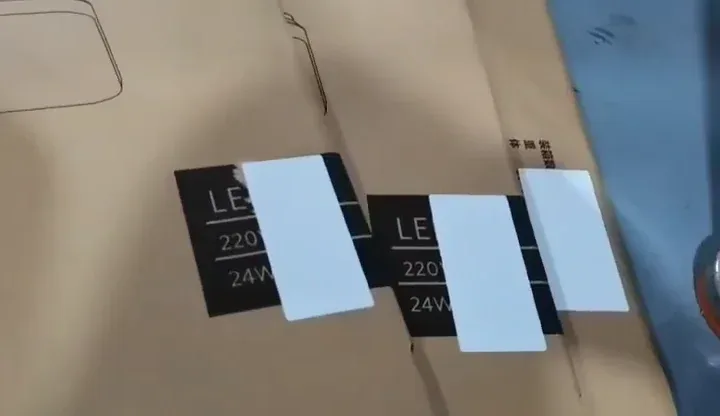
A code can be perfectly legible at the printer and disappear under tape a few seconds later. Decide its position on the finished shipping case, then work backwards to the print station. A flat artwork file alone will not tell you which face is available there.
Map the occupied surface
Seal a sample using the intended tape pattern and mark the actual tape edges, including the tabs folded over the end panels. Add the shipping label and any straps. On a small case the tape tab and the label can leave very little clear board between them. Mark a candidate area on that sample and photograph it from the direction in which dispatch staff will read it.
Prove the position after handling
Run the shortest and tallest cartons in the intended orientation. Keep one sample from start-up and one from normal running. Read the code again after closing, labelling and the usual handling step. Record which face was presented to the printer and which was presented to the reader. A 180-degree turn between them can explain an apparently missing code.
Can the code go on a flap?
Try opening the shipped sample in the way the customer normally opens it. If cutting the tape tears away the printed code, it may serve dispatch but fail a later traceability check. Agree whether the code must survive opening and retain a photograph of the opened case in that condition.