


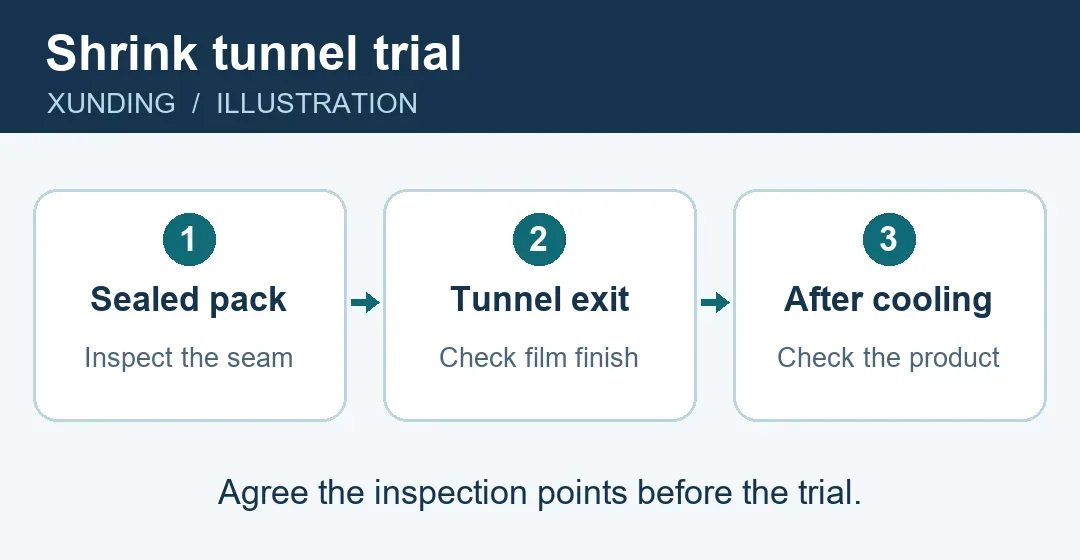
A neat shrink pack can pass a visual check while the product inside has already changed. If a pack contains a heat-sensitive item, set two acceptance criteria before testing: what a good film finish looks like and how you will verify that the product stayed within its permitted conditions. Run the actual item and film together, and check both once the pack has cooled in the normal way.
Describe the pack and its limits
Record the product, primary container, film grade and whether the package is a single unit or a bundle. Add the lowest and tallest formats. Ask the product owner for the permitted conditions and the way to verify them. An adhesive label, a printed sleeve or a soft container may need its own acceptance check. Record any pack that enters warmer or colder than the usual batch.
Follow the pack through sealing and shrinking
Inspect the film seal before the tunnel so a weak seam can be traced to the right step. Then record the supplier’s trial settings, product spacing and passage time. Have the commissioning team choose settings within the approved trial conditions. Keep the sample identification attached to the measurements, and look for changes after the line settles into the output and spacing planned for production.
Check the result after cooling
Inspect the seam, corners, print and outer surface. Check the primary container and product according to the product owner’s acceptance method. Include a representative restart when the production process involves frequent pauses, using the agreed procedure for handling items caught in the stop. Keep failed packs separate and record whether the issue appeared at sealing, immediately after the tunnel or after cooling.
Decide which condition each trial represents
For a simple trial matrix, run the routine pack and the format most sensitive to heat or appearance changes as separate entries. Keep the film and primary package identification with each entry. If the film specification changes between runs, log that change so an improvement can be traced. A photo of the best-looking pack can illustrate the result. The acceptance record should also include failures and the condition that produced them, so both sides know where the proven operating range ends.
Specify what you expect the machine to prove
Send trial samples, film specifications, accepted output target and the two acceptance checks. The packing line modules overview identifies the sealing and shrink stages to include in the scope. Ask for a trial record tied to the proposed equipment. If appearance passes but the product condition fails, keep that format outside the accepted range until another packaging method or a revised trial is agreed.