


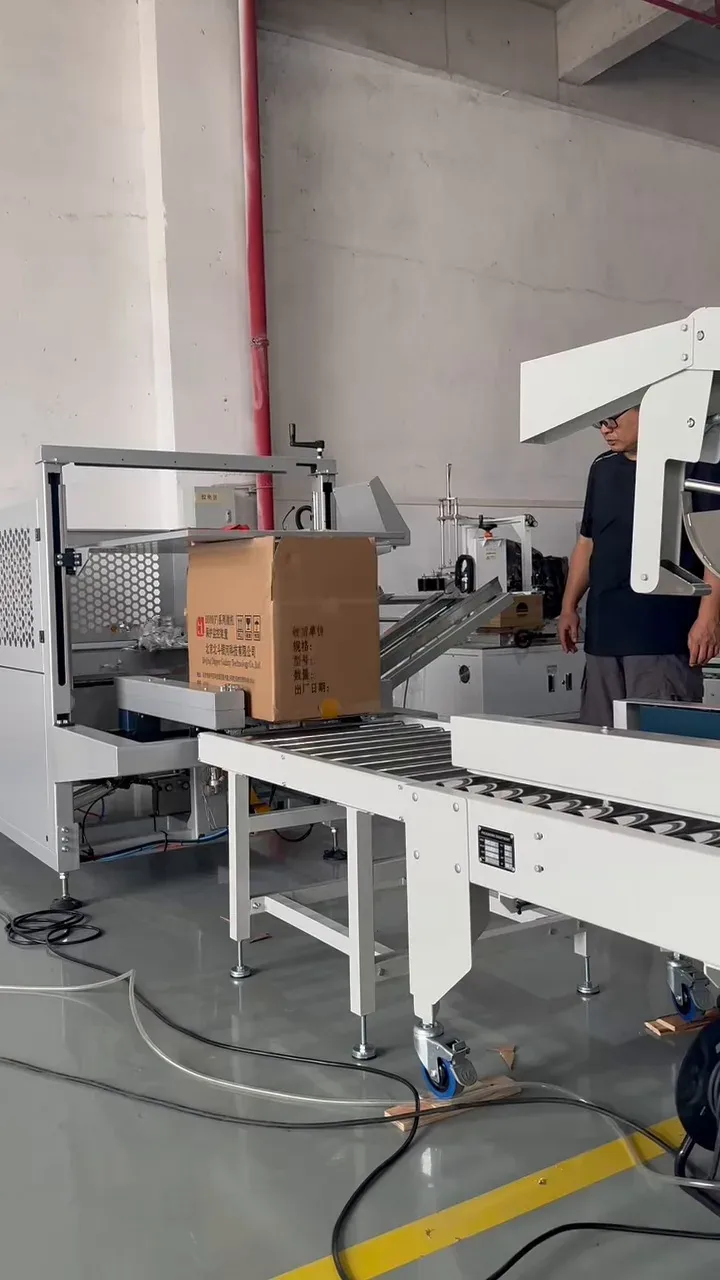
The shortest case on a small box erector can be the most revealing trial sample. Check the folded blank at pick-up, the bottom flaps after closing and the case at the first conveyor handoff. A case that measures within the catalogue range can still tip, turn or hesitate if the transfer gives it too little support in the direction of travel.
Identify the dimension that limits each step
Give the flat, folded blank dimensions and the erected outside dimensions on separate lines of the test sheet. Add an arrow to the photo to show which side leads through the machine. The position of the seams and flap tips matters during pick-up and folding. At discharge, length in the direction of travel determines how much of the case can span the handoff.
Follow the case through three checkpoints
At pick-up, observe whether each blank separates cleanly and enters square. At closing, check the order in which the flaps sit and whether the bottom seal meets the agreed pattern. At transfer, watch the case as its leading edge leaves the first support and its trailing edge enters the next conveyor. A slowdown at that exact point is useful evidence even when the case eventually gets through.
Replicate the downstream conditions
During a machine-only demonstration, empty cases may discharge freely onto a long conveyor. Repeat the check with the proposed guides, transfer heights and the way the packing station receives cases. Include starts after an ordinary pause as well as a continuous run. Record the carton specification, the direction it travelled and the point where any skew first appeared.
Use one row for each limiting carton
A very short case may be wide enough to feed well in the magazine. Test it alongside a separate narrow case if the narrowest footprint belongs to a different SKU. Add columns for carton ID, travel direction, bottom closure and first location of a fault. When the equipment supplier adjusts the proposed guide or transfer, rerun the same carton to establish which change affected the result.
Use the result to narrow the shortlist
Send the flat blank, erected sample and discharge drawing to compare case erector configurations. If cases also stop before discharge, read the case erector jam checks to separate blank-handling problems from the conveyor interface. Put the shortest case and the actual transfer arrangement in the acceptance record.