


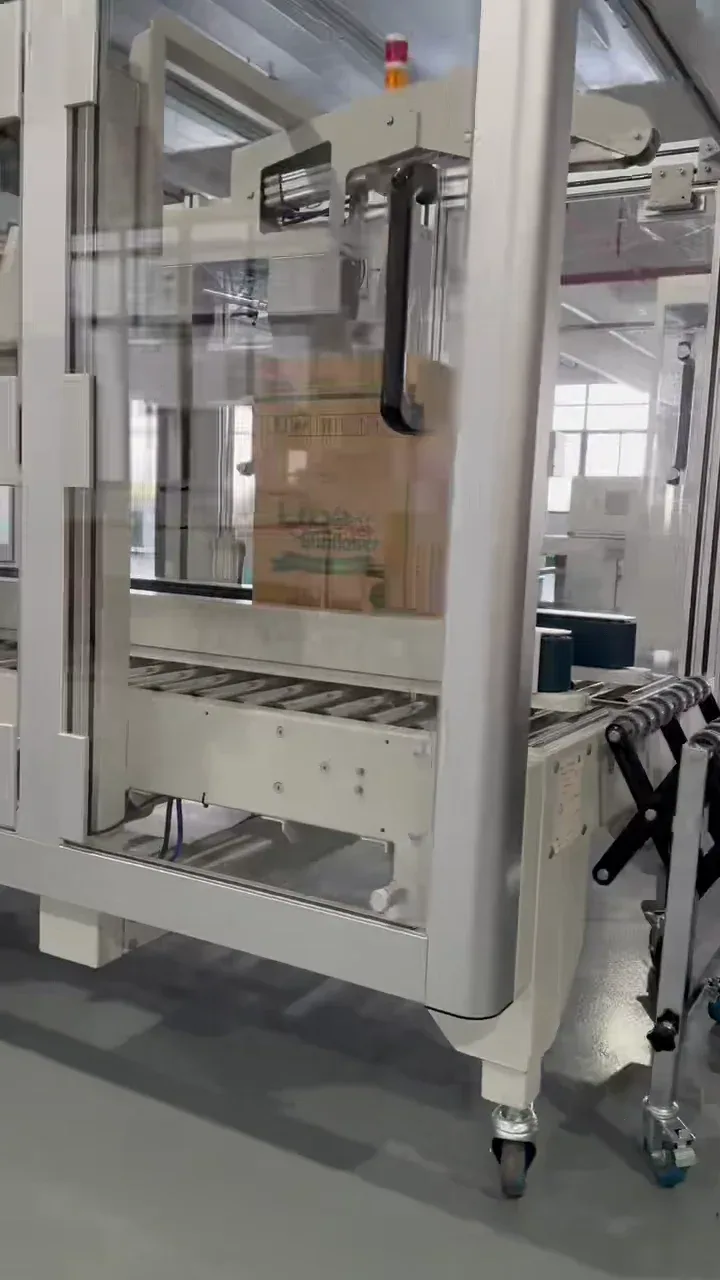
Automatic case sealer speed can mean belt speed, the rate during a smooth run or accepted cases per minute over a complete production window. The third measure is the one to use when balancing a line. Count good cases at discharge, keep ordinary interruptions on the clock and record the carton mix so the number can be compared with another trial.
Read three numbers in the right units
Belt speed is distance per unit time. Case rate also depends on carton length in the running direction, the gap between cases and any folding or positioning cycle. Accepted rate includes work that passes the agreed closure checks. Even with the same belt speed, a long carton with a large spacing requirement can produce fewer cases per minute than a short carton.
Count at the boundary you actually need
Mark one count point just downstream of the sealer so every accepted case crosses it once. Record start and finish time, rejected cases, ordinary pauses and why cases stopped arriving. If the test uses waiting cases to demonstrate a short steady run, describe that condition separately. It helps locate a limit but does not represent a complete wave of orders.
Calculate throughput with an explicit denominator
In an illustrative ten-minute test, suppose 186 cartons leave the station and six are rejected. Accepted throughput is 180 divided by ten, or 18 cases per minute. Report waiting time alongside that rate instead of quietly taking it out of the denominator. A separate running-only result can help determine whether the bottleneck sits in the sealer, upstream packing or downstream handling.
Run the same test before and after a change
To compare configurations, keep the carton sequence, filled weight, observation window and rejection rules the same. If replacing a tape roll is routine, state whether the observation includes it. Report the mix and its dominant case rather than quoting the fastest single SKU as the line rate. The results can then distinguish a genuine speed increase from changing the conditions of the measurement.
Protect the acceptance condition
Agree on tape landing, flap closure and the rejection rules before starting the clock. Use filled cartons and the proposed sequence. Check what drives the interval on the carton sealing configurations you are considering, and carry the same counting method into the output verification record.