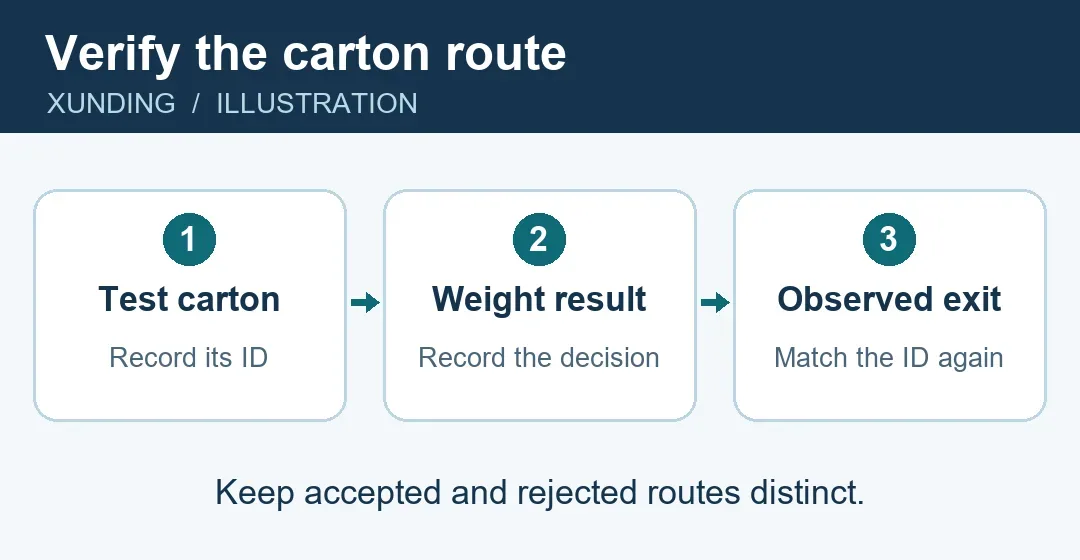
A checkweigher screen can flag an underweight carton while the carton itself keeps travelling towards dispatch. During acceptance, check the measurement and the physical route separately. Mark the test cartons, run them at the agreed spacing, and confirm which carton actually reaches each exit. Ask how the line responds when a reject is called but the carton does not reach the expected point.
Prepare identifiable test cartons
Agree the weighing range, decision limits and reference method with the line owner. Prepare known examples below, within and above the passing band. Add examples near each limit and keep a record of their independently established masses. Mark them so the operator can identify each one after the run, then agree the order and carton spacing expected in normal operation.
Watch the weighing decision and the carton route
Record the measured result and intended route for each marked carton. Watch the real carton through the reject point. Include an underweight or overweight example followed by an acceptable carton at normal spacing. This checks whether the device moves the intended carton and whether its neighbour remains in the accepted stream. Keep the test cartons out of saleable stock.
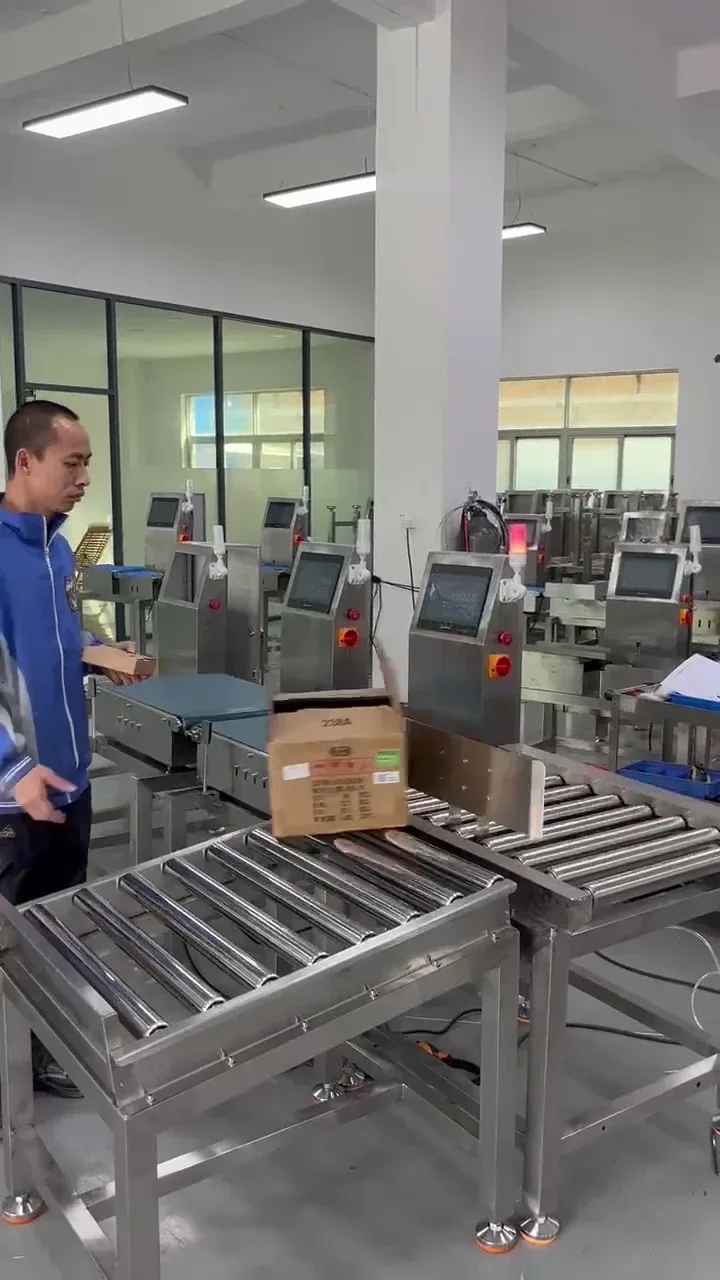
In the demonstration, watch the rejected carton leave the main route for the adjacent roller conveyor. Use that movement as the visual check in your own trial, and match the carton at the reject exit to the ID logged at weighing.
Agree how failures are handled
Ask how the proposed line confirms a reject, for example at a designated exit. Agree what happens if confirmation fails or the reject collection point is unavailable. Have the commissioning team demonstrate the approved response. Put the fault response and reset steps in the acceptance report alongside normal results. Clarify which sensors, controls and collection hardware are included in the quote.
Reconcile the test cartons at the end
Write an expected exit next to each test number before starting. At the end, match that list with the observed accepted and rejected positions. Include a result for a carton that the system flags correctly but sends to the wrong place. Distinguishing that outcome from a weight classification error gives the commissioning team a more specific issue to investigate. Keep a note of which recipe, conveyor speed and belt spacing produced the result so the same scenario can be repeated after a change.
Include reject confirmation in the order
Send carton dimensions and masses, belt speed and spacing, and the layout for the accepted and rejected streams. Review the packing line modules for the weighing and transfer stages. Ask the supplier to list the actual rejection method and the trial evidence needed for sign-off, with each test carton matched to its observed exit.