


A carton can leave a sealer with enough momentum to cross the first few rollers and still stop short of the next station. The question is what will move it once that first push is spent. Start with the lightest loaded case your line actually handles.
What supplies the movement?
A gravity section depends on the layout, available fall and the way the carton base rolls. A powered section supplies movement along its driven area, but can still struggle at an unsupported joint. Try the shortest carton at the transfer. A long case may bridge a gap that catches the leading corner of a short one. Then try a soft-bottomed case carrying its normal contents.
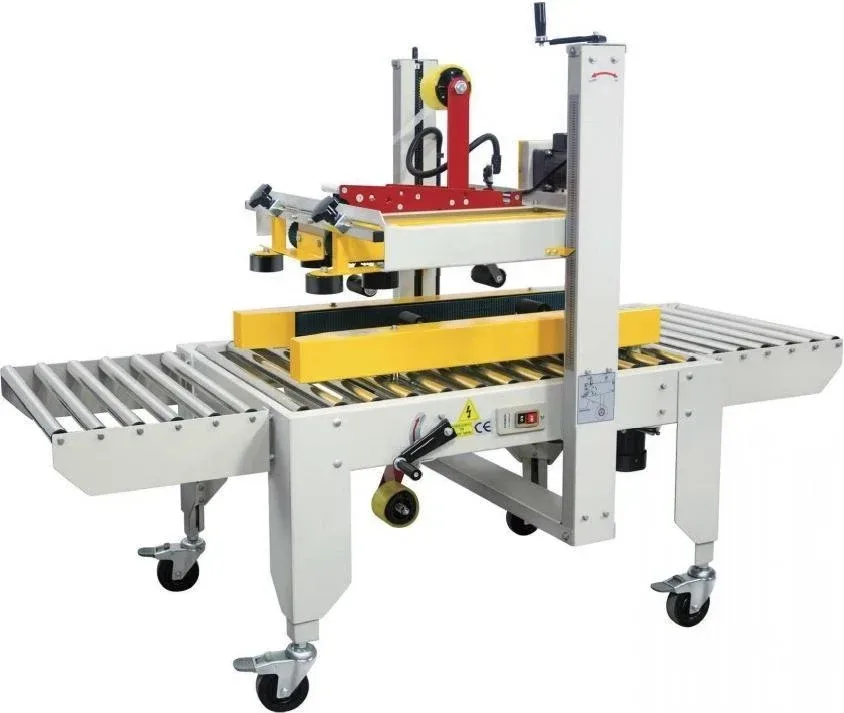
Choose by the stop as well as the start
At the receiving position, watch whether the case stops squarely or bumps the one ahead. Record the handover height and the actual space available for a stop or accumulation section. For a manually unloaded run, check the operator's reach with the largest case present. Give the supplier the discharge and receiving conditions together.
Which test case is most revealing?
Use two extremes rather than choosing a single “worst” case. The light case may stop early on a gravity run; the heavy case may reach the receiver with greater momentum. Record both stopping positions under the intended conditions. A proposal tested with only an empty sample leaves the receiving station unproven.
Case Sealer Integration: What Happens When Discharge Is Blocked?