

In October 2026, weeks of rain and storms damaged extensive cherry growing areas in Chile, and exporters practically stopped buying inputs — boxes, packaging, machinery — while the damage was being counted. Nothing in a datasheet prepares a grower for that. But the season raised a question every fruit region eventually faces: when the harvest itself will not hold still, what should the packaging side of the business look like?
What a storm season actually does to a fruit business
Weather rarely destroys a fruit business evenly. It moves things: a harvest window compresses into fewer weeks, volumes shift between blocks, quality grades split unevenly, and the packing shed runs at full tilt one week and half speed the next.
The 2026 Chilean season is a stark version of a common pattern. When the crop shrinks, the first purchases to stop are inputs — and packaging sits high on that list, because boxes are bought against an expected harvest. When the crop surges instead, the same packaging becomes the bottleneck: box plants run minimum order quantities and lead times, while fruit waits.
Both directions cost money, and neither is about the machine shed. They are about how boxes get bought, stored and used.
Why bought-in boxes amplify the weather’s swing
Most growers and packers still buy boxes formed, printed and stacked. That model has three quiet assumptions: that the harvest volume is roughly known months ahead, that the packing schedule will spread evenly, and that storage space is free.
A storm season breaks all three. Boxes ordered against an expected crop become surplus stock if volumes fall — printed, paid for and occupying a shed. If the picking window compresses, the opposite happens: the stock runs out mid-harvest, rush orders carry rush prices, and fruit waiting for boxes loses the race against the weather anyway. Add the seasonal crew needed to hand-erect boxes at peak, and packaging becomes one of the most weather-exposed cost lines in the operation — not because boxes are expensive, but because their volume must be guessed before the weather is known.
Waiting for a box is not neutral time either. Fruit sitting in a bin at ambient temperature keeps losing firmness and stem quality while the shed looks for packaging, which puts box-forming speed in the same conversation as cooling capacity rather than in a separate equipment discussion. When the harvest window compresses, the hours saved before the cold store are worth more than the hours saved on the payroll.
What forming boxes on demand changes
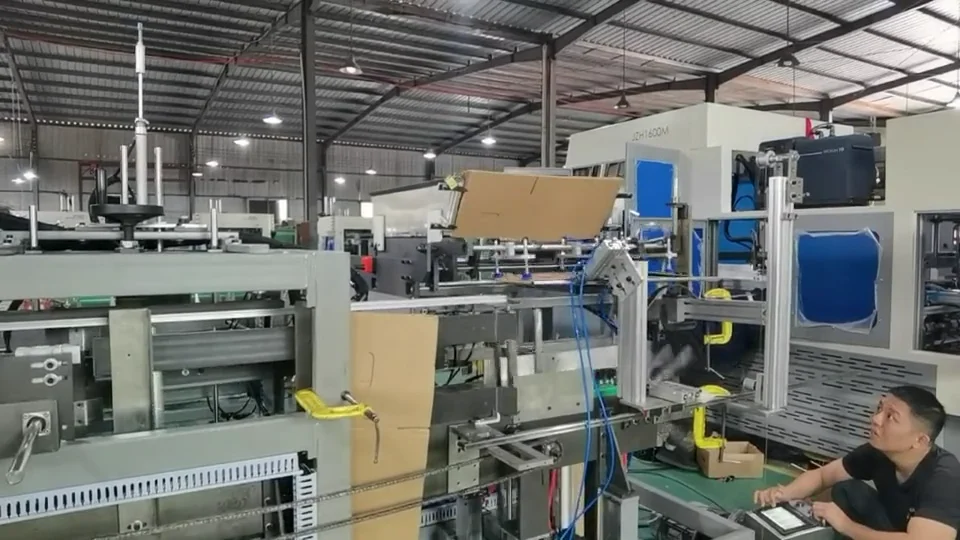
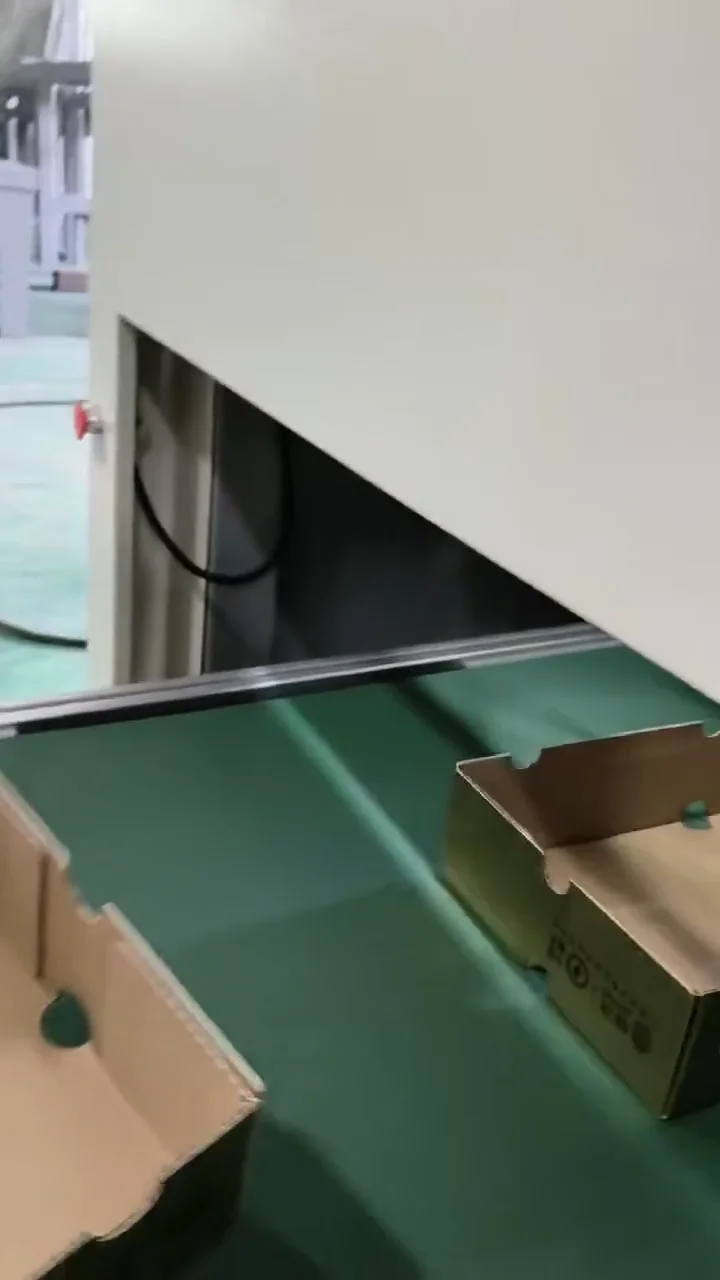
A fruit box or tray forming machine moves the point where packaging is created. Instead of buying formed boxes against a forecast, the operation buys flat blanks — cheaper per unit to store and to freight — and forms each day’s boxes against that day’s harvest.
The effect is easiest to see in the three weather-driven scenarios below. Flat blanks also change the storage arithmetic: a pallet of blanks makes many times the boxes of a pallet of formed ones, which matters in a shed that suddenly has to hold fruit instead of packaging.
| Scenario | With bought-in formed boxes | With on-demand forming |
|---|---|---|
| Crop shrinks after boxes are ordered | Printed surplus occupies storage; capital locked in boxes already formed and printed | Only blanks on hand; unused stock is flat, cheap to hold or carry to next season |
| Picking window compresses | Stock-out mid-harvest; rush orders and freight premiums | Run extra shifts; output follows the fruit, not a delivery calendar |
| Format or size changes between blocks | Change orders, minimum quantities, lead time again | Change tooling; the same machine runs the other format |
The cost lines a forming machine actually touches
Honest accounting matters more than enthusiasm here. A forming machine does not make boxes free; it moves several cost lines at once.
Seasonal erection labour: hand-erecting boxes at peak is overtime priced against a deadline. A machine replaces most of that labour with a supervised process, and one operator can feed a line that would otherwise need several workers.
Box waste and obsolete stock: unused printed boxes from a short season are close to a total loss. Blanks carry far less of that risk, and unprinted or flexo-printed blanks stay usable across seasons.
Storage and freight: blanks are compact; formed boxes are mostly air. Fewer inbound freight movements and less shed space per thousand boxes.
Timing risk: the ability to produce boxes in the exact week they are needed — and to stop without waste — is the insurance value that does not appear on a quotation but shows up in a storm year.
Against these sit real costs: the machine itself, power, adhesive, tooling for each format and maintenance. The economics work when daily volumes and the number of seasons justify them — which is why volume figures, not enthusiasm, should drive the model selection. Enquiries that begin above ten thousand trays a day are typically in territory where the arithmetic works; smaller operations should run the same numbers before deciding.
Flexibility is the part you cannot order later
A machine is a capital decision, but the argument for it in a volatile climate is not only unit cost. It is the set of options it keeps open: run two formats in one day, add a shift when the window shrinks, switch blocks from one tray size to another without renegotiating with a box plant.
Those options are exactly what a storm year consumes. A grower who can adjust packaging output in step with the fruit is exposed to the weather only once — in the orchard — instead of twice, in the orchard and again in the packaging supply chain.
What to prepare before sizing a machine
Send the formats and the volumes before asking for prices. A quotation built on them is comparable between suppliers; one built on a fruit name is not.
| Information to prepare | What it helps decide |
|---|---|
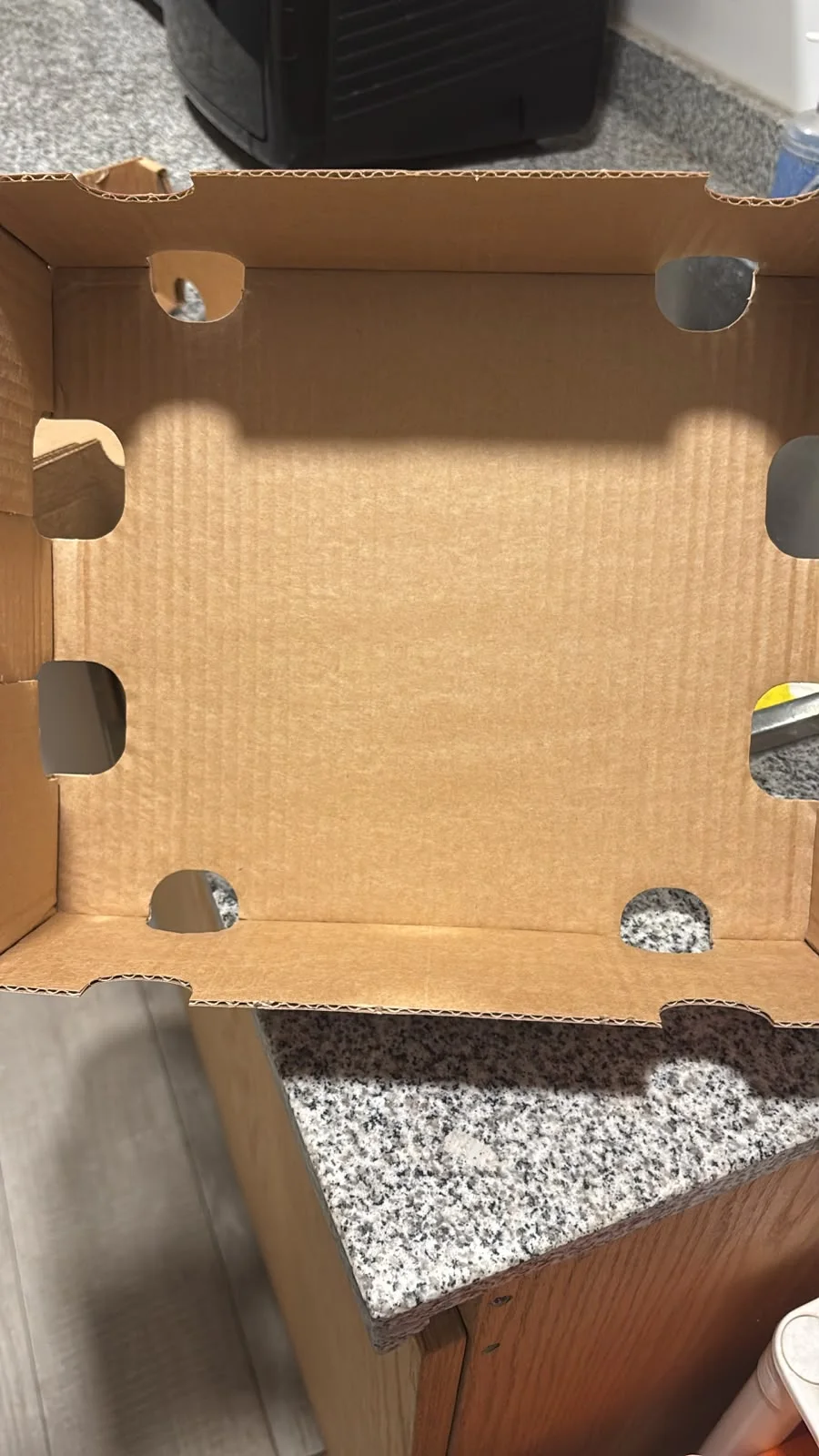
| Formed box and flat blank for each format (photo or dieline) | Folding sequence, ventilation, stacking features |
| Finished dimensions and board grade | Format review and material for trials |
| Daily volume per crop and the realistic harvest window | Machine size and shift planning |
| How often formats change within a season | Changeover provisions and tooling scope |
| A sample box or trial material | What an acceptance test can demonstrate |
Where to start
The forming range covers vented cherry boxes, apple and avocado trays, mailer boxes and lid-and-base sets — the formats that move with the harvest. Compare the structures your crop needs against the catalogue, then plan a sample trial with your own board.
Cherry box structures and forming videos
Explore Xunding fruit tray forming equipment
Run the per-1,000-boxes cost comparison
Can a forming machine protect a harvest from weather damage?
No. It protects the packaging side: output that follows the actual harvest, less surplus stock, less seasonal labour. The orchard remains exposed to the weather either way.
At what volume does a fruit box forming machine pay for itself?
It depends on formats, board and labour rates. The decisive figures are daily boxes per project and the length of the season, not the annual total. Share those and the calculation can be run honestly in both directions.
Can one machine handle several box sizes?
Usually with tooling and changeover, and the review must check every blank design against the machine. State the formats and dimensions first; the answer is per-format, not general.