


An enquiry reached us during the Chilean pre-season — not from a box maker, but from a cherry grower asking about custom 2.5 kg boxes for his own fruit. The conversation covered rain, greenhouses, air freight, packaging ROI and a promise to refer business. This anonymized case follows the grower's logic from orchard to box.
The enquiry that did not start with a machine
An enquiry landed in our WhatsApp during the Chilean pre-season. It opened the way half of our enquiries do — a question about the cost of custom 2.5 kg boxes — but the second sentence caught our attention: what quantity do we ship to Chile, because the boxes are for cherries.
The question was backwards. Usually we are asked how many machines we ship to Chile. This time, the person on the other end seemed to be asking us as if we were the cherry seller. As it turned out, that confusion was the most interesting part of the conversation.
The customer who does not buy cardboard
Most of our customers make boxes for a living — converters, printing houses, packaging distributors. This enquiry was different. After a few exchanges it became clear that the person behind it grows and exports cherries. He does not sell packaging at all. He was asking about a folding machine because he wants his own boxes, his own design, for his own fruit.
“I have worked with generic boxes from Chile, but I am considering a custom design for my company.”
That single sentence describes a quiet shift across the Chilean fruit industry. For decades, a cherry grower's packaging decision was simple: order generic boxes from a local converter, palletize, ship. The box was a cost item, bought at the lowest price per unit. Today, more growers are starting to treat the box the way they treat rootstock, covers or sorting lines — as production equipment.
A season that split Chile in two
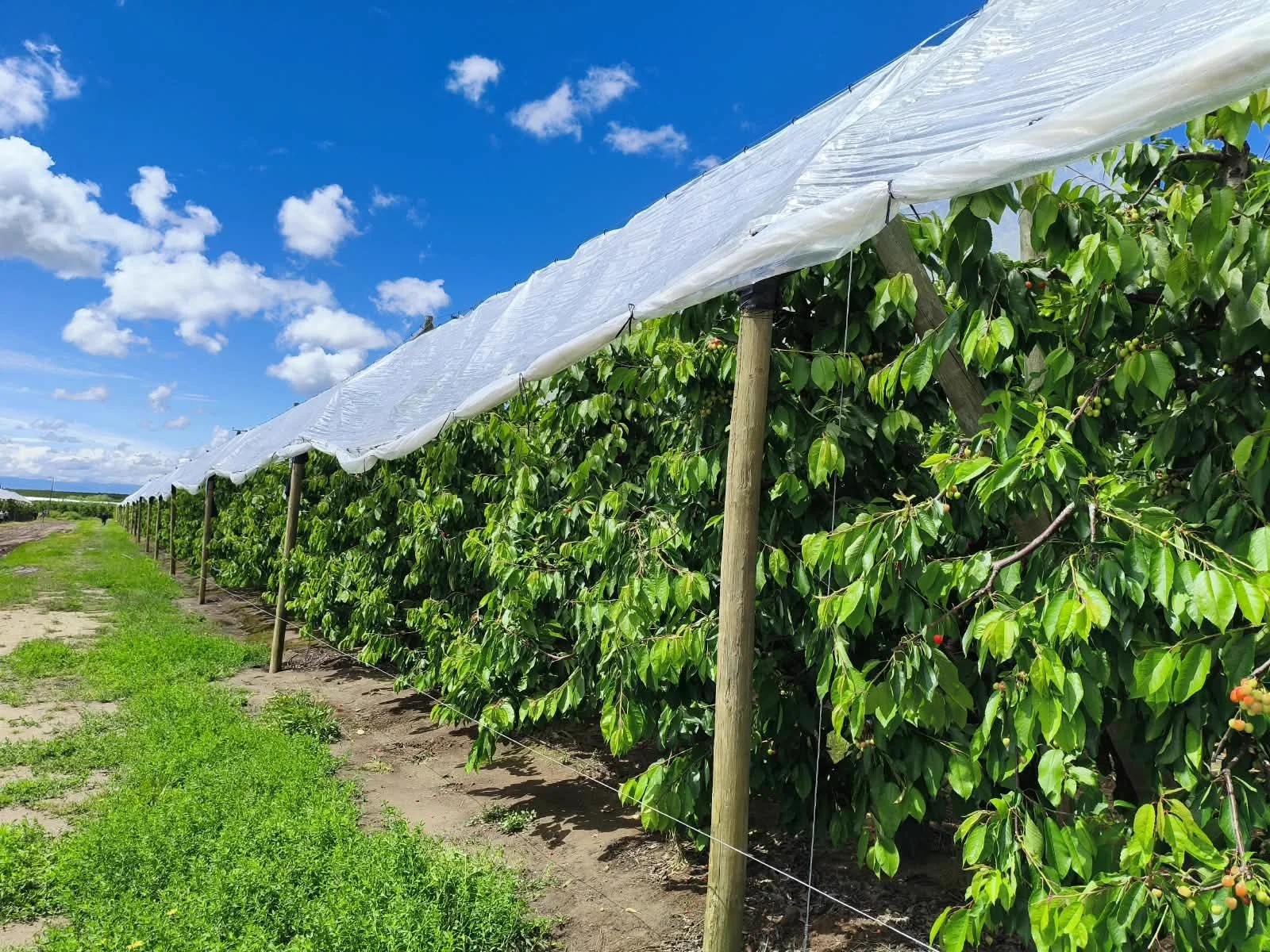
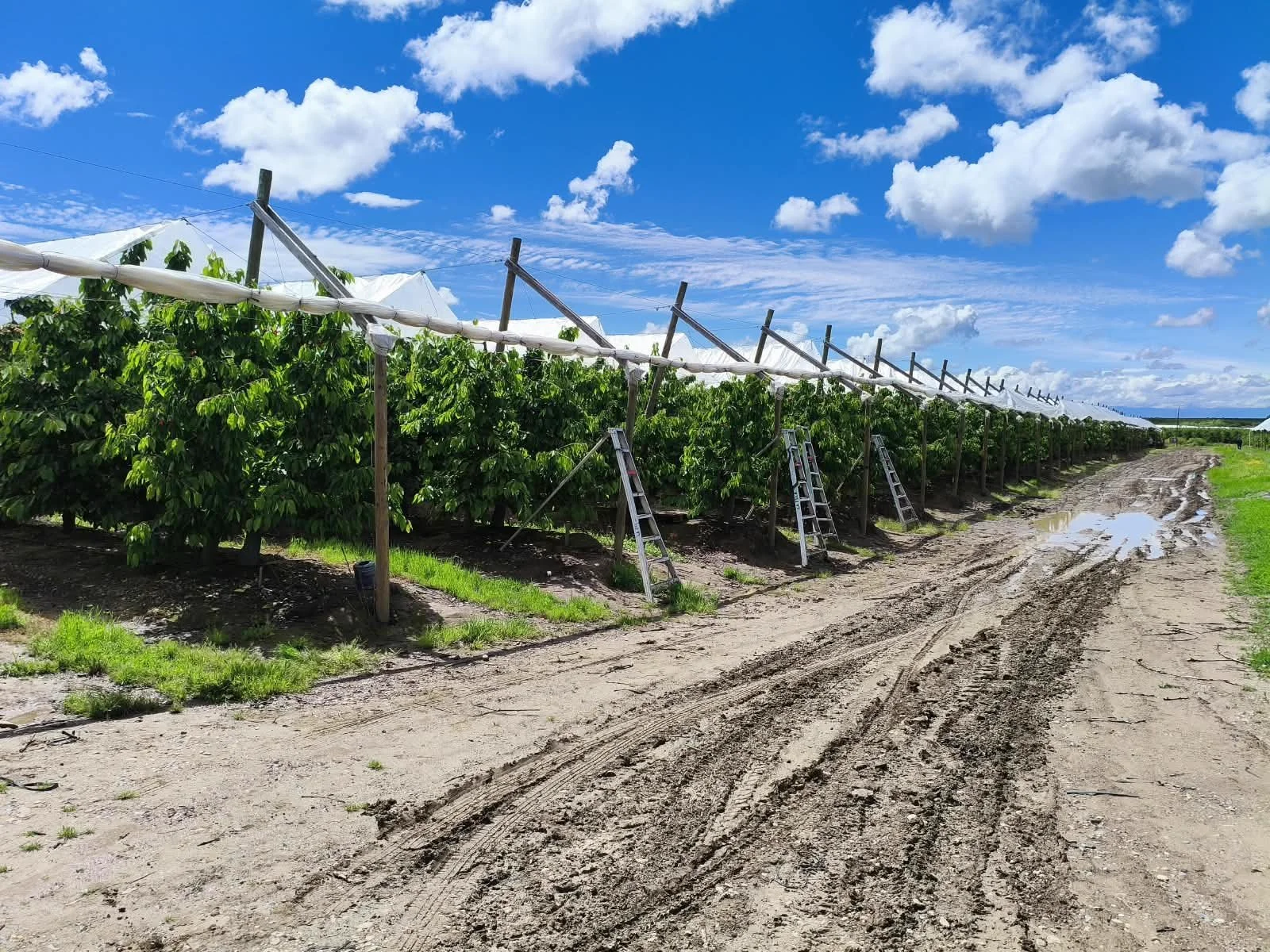
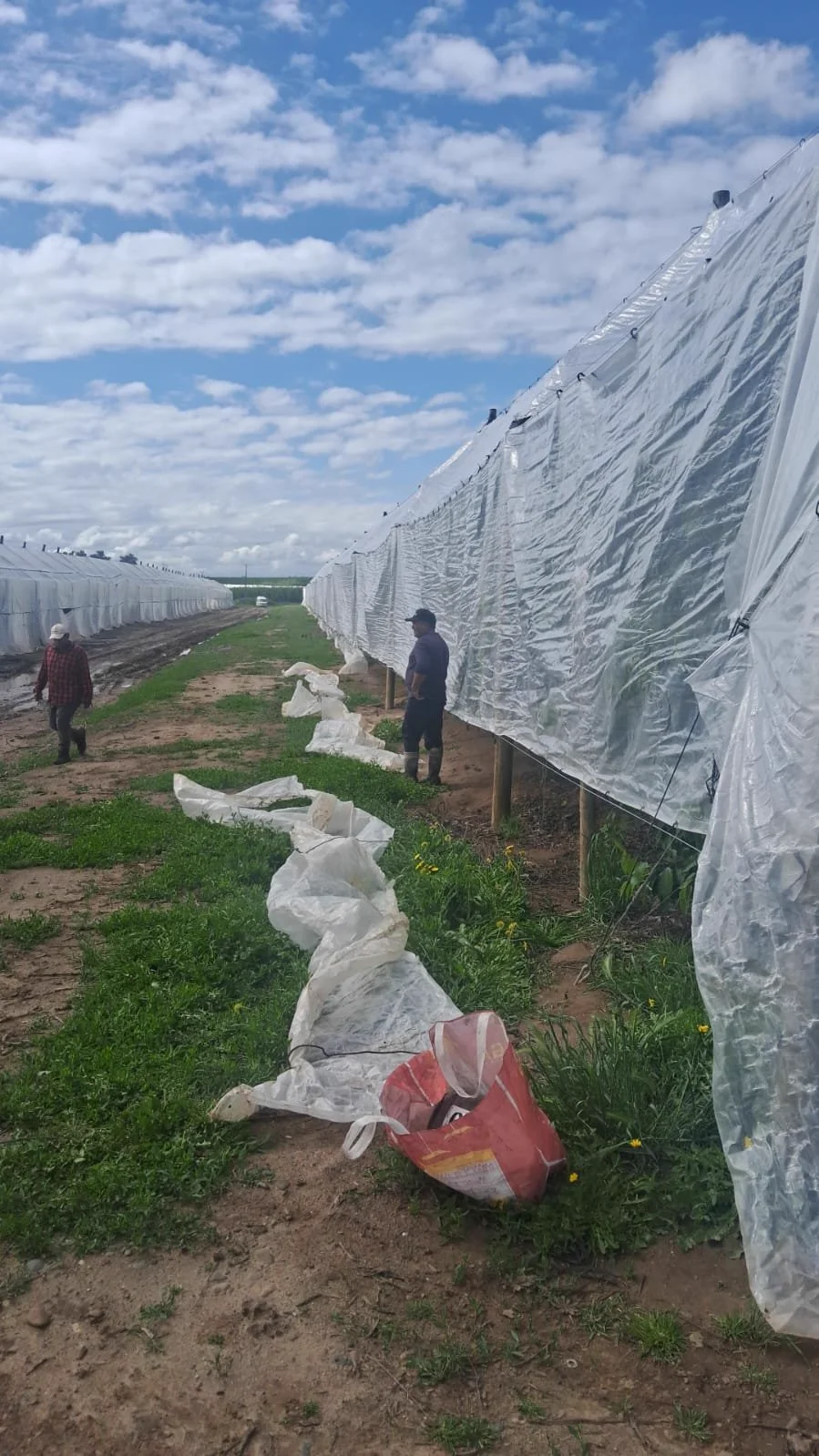
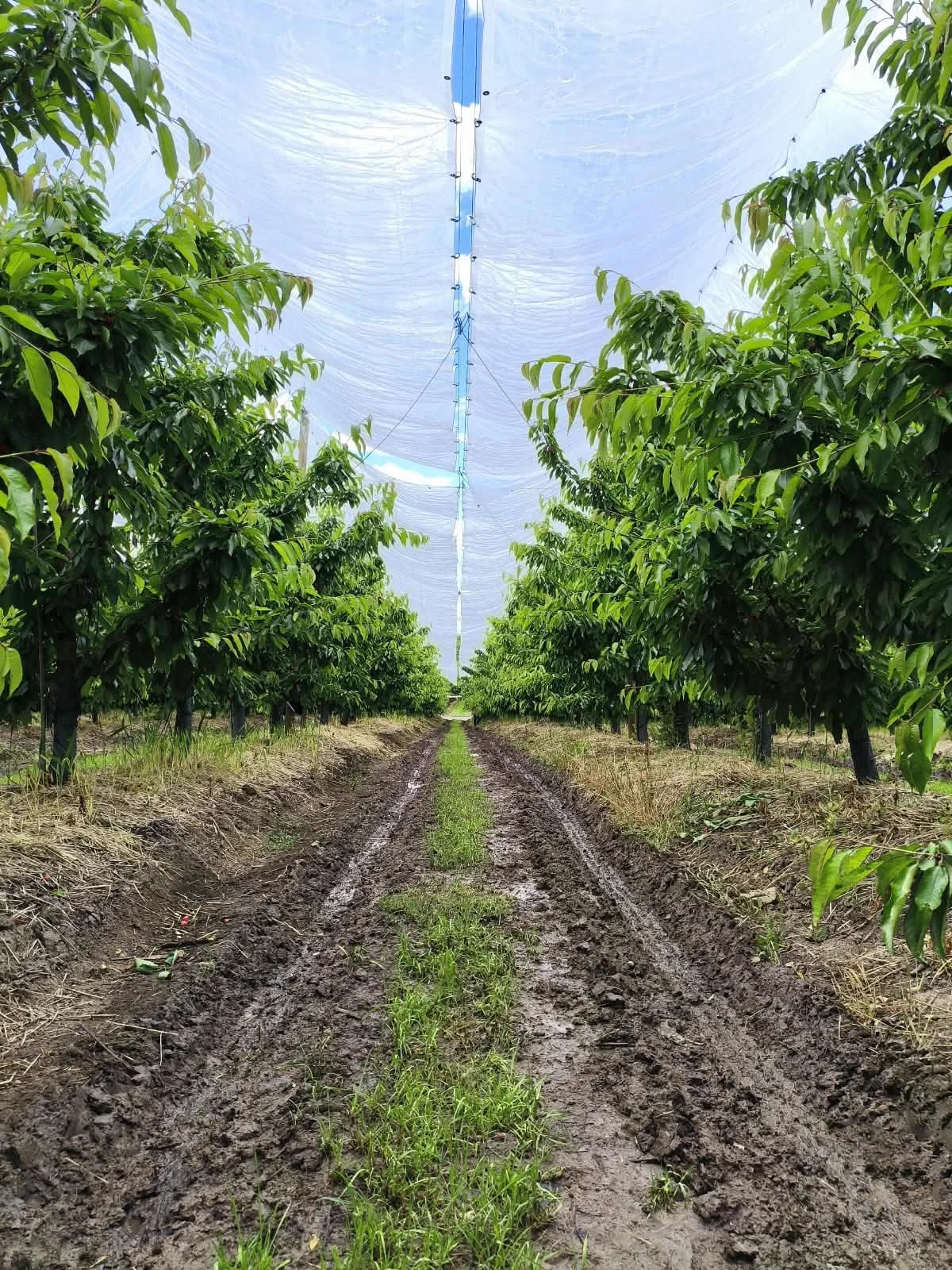
This season made that shift very visible. Heavy rain hit several producing regions in Chile, and some growers lost part or all of their harvest. Our enquirer did not. His orchards sit in a microclimate area where almost no rain reaches, and his early-season fruit is grown entirely under covers.
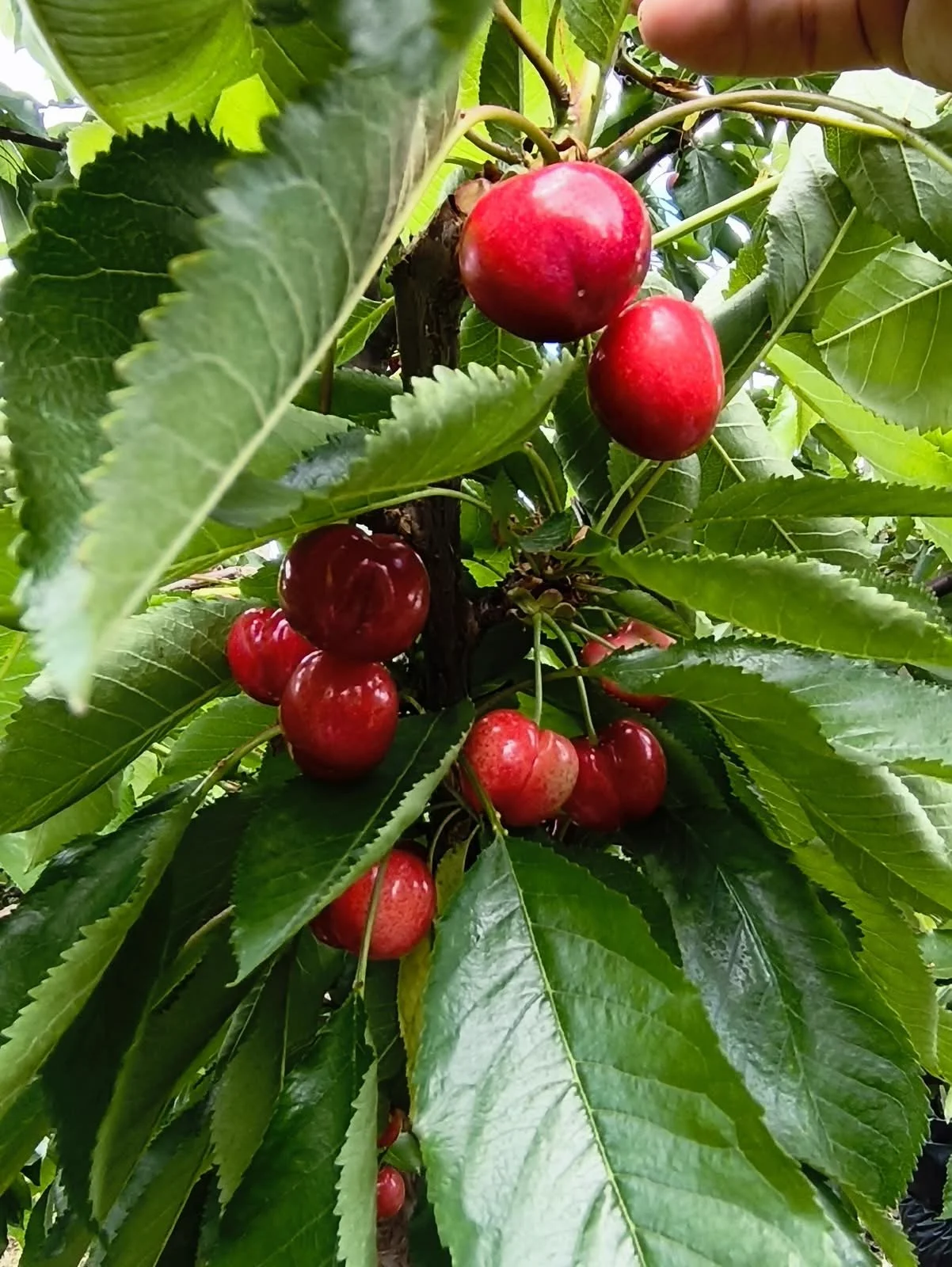
“Our fruit has not been exposed to rain. This ensures exceptional firmness, excellent sugar levels, and a post-harvest shelf life significantly longer than that of fruit grown in open-field conditions.”
In Chile, he told us, growers use three methods: open-air, roof-covered and full greenhouse. Each step up the protection ladder costs more per hectare — and produces fruit that survives long-distance shipping better. We have written before about how weather risk reshapes packaging economics, but this was the first time a grower walked us through the logic from the orchard side.
Why a grower starts caring about the box
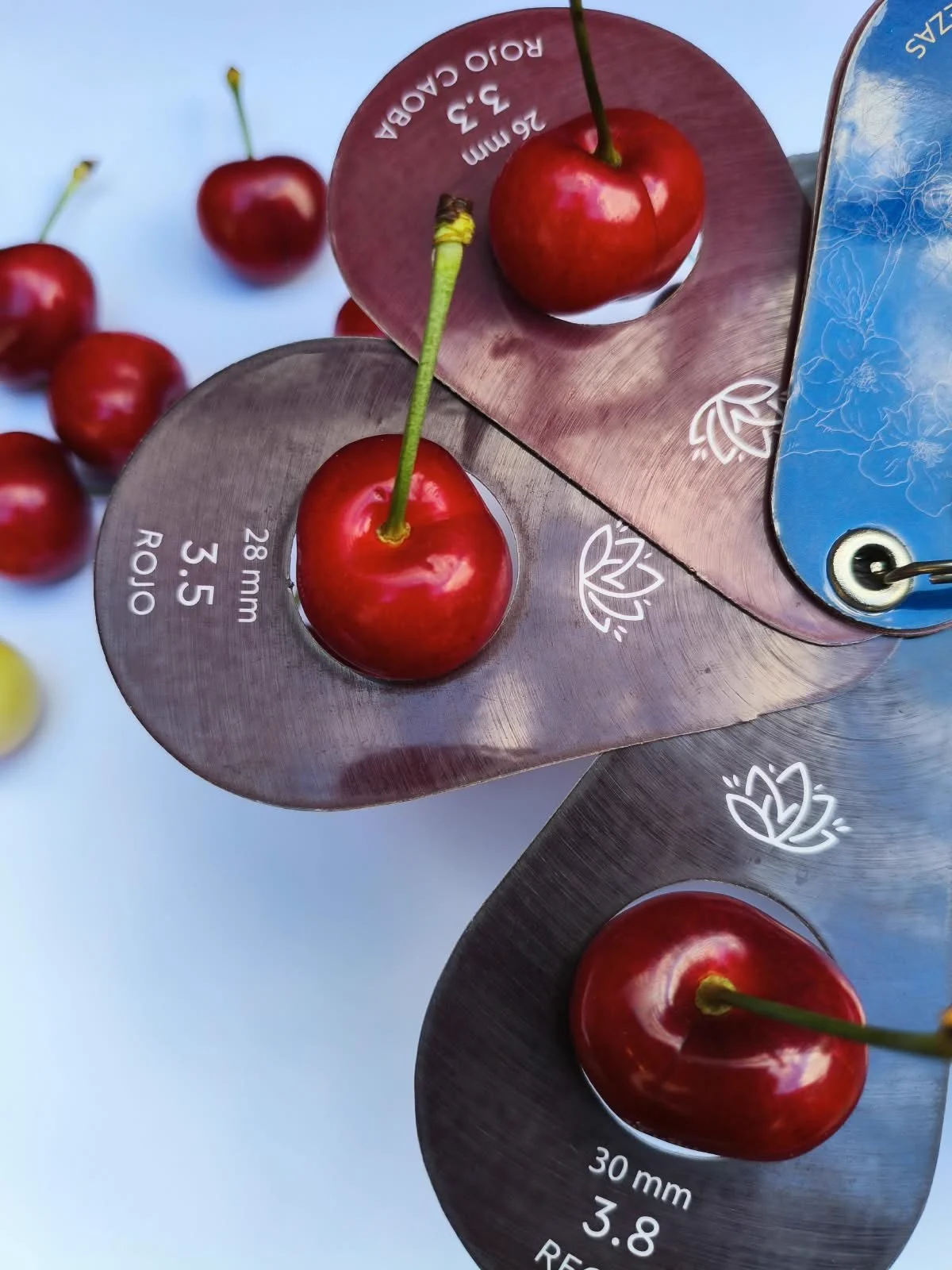
Here is the part most machinery suppliers miss. When a grower invests in covers, greenhouses and an automated, camera-based sorting line — this one runs a line that processed around 200,000 kg in a single December — the fruit that comes out is a different product from open-field fruit. It is firmer, sweeter and graded to tighter calibers.
And then, at the very last step, putting that fruit into a generic box erases the difference.
This season, importing standards in China have become stricter — fruit with damage or defects cannot be shipped. Premium buyers inspect, measure and reject. A generic box says commodity. A custom box with the grower's own brand, correct vents for cooling and a structure sized to 2.5 kg of cherries says that someone stands behind this fruit.
The ROI question we actually discussed
We did not talk about machine models in the first hour. We talked about the shape of his business, because packaging ROI for a grower looks different from packaging ROI for a converter.
| Cost side | Return side |
|---|---|
| Custom print plates and design work | Brand recognition at wholesale markets; repeat buyers who ask for the box by name |
| Slightly higher unit cost than generic boxes | A price premium for consistent, identifiable premium fruit |
| Machine ownership instead of ordering per season | Box production on the orchard's schedule, not the converter's backlog — critical in a compressed harvest window |
| Floor space and an operator | Protection specs tuned to his own cold chain — vents, lock structure, stacking strength — and less shrinkage in transit |
What we asked for before quoting
One thing surprised him. We did not send a price. We asked for his dieline — the CAD or PDF template of the box he wants — and, if possible, a physical sample or clear photos of all sides, including the bottom lock and top lid structure.
This is not bureaucracy. Folding precision is decided at the design stage: fold lines, slotting and the tolerance of the lock. Quoting a machine for a box we have never seen risks a mismatch between the machine setup and the box structure, and a mismatch at harvest time costs far more than two days of engineering review. He took it well — the design will be finalized on his side, then sent to ours for review before any numbers move.
There is a parallel worth noting. He invested in covers before the season to protect the fruit; we ask for dielines before the quote to protect the project. Both are the same discipline: verify the input, or the output will charge you for it later.
Trust is a two-way shipment
Somewhere in the middle, the conversation changed direction. He told us what he actually needs this month: not machinery, but direct buyers — he has premium fruit and is looking for serious importers. We do not trade fruit, but we do know people in the fruit business, so we offered to connect him. His reply: if a deal closes, there is a thank-you in it for us.
That is how relationships actually form in this industry — slower than a sales cycle and faster than a contract. The conversation ended near midnight Chilean time, with him admitting he was exhausted and us answering that health is the most important asset. Nobody pitched anything in the last hour. Both of us left the chat more valuable to each other than we entered it.
We sell folding machines. But what we are actually selling, most days, is the belief that the person across the ocean is thinking about your harvest, your margins and your next season — not just the next payment.
Typical 2.5 kg cherry box: reference specifications
These are reference values, not a universal standard — variety, tray inserts and cold-chain requirements all move the numbers. That is exactly why the dieline comes first.
| Parameter | Typical value |
|---|---|
| Capacity | 2.5 kg loose cherries |
| Outer dimensions | ~400 × 300 × 115 mm, varies by variety and tray layout |
| Board | B-flute or E-flute, white-top or kraft |
| Structure | One-piece die-cut, locked bottom, hinged lid |
| Vents | Side and top venting for forced-air cooling |
| Printing | Flexo up to 4 colours plus brand graphics |
| Machine output | 25–45 boxes per minute depending on model and board |
The takeaway for fruit businesses
If you grow fruit and sell it in somebody else's box, you are renting your brand's shelf presence and absorbing someone else's structural compromises. You do not have to start with a machine — start with the box design, the dieline and the volume math. If those work, the equipment question answers itself.
This enquiry is ongoing at the time of writing — the box design is under review on the customer's side. We will update this case when the first production run happens.
Compare the Xunding carton folding machines
How much does it cost to produce my own cherry boxes instead of buying them?
It depends on box volume, board choice and local board prices. As a rule of thumb, self-production becomes competitive somewhere between one and two million boxes per season; below that, a good converter is usually the better deal. Send your annual volume and current box price and we will run the numbers with you — including the cases where we recommend not buying a machine.
Can one machine handle different box sizes?
Our folding-gluer machines are built with quick-adjust settings, so a single line can switch between a 2.5 kg cherry box, smaller punnet outers and other fruit box formats. If the dieline changes next season, the machine follows the dieline — not the other way around.
Does packaging really matter for air-freighted cherries?
More than for sea freight, in two ways. First, weight: every gram of board flies with the fruit, so the structure has to be strong with minimal material. Second, speed: air-freighted premium cherries pass through more hands per hour, and a box with a reliable lock and clean stacking geometry loses less to handling damage. With import inspections stricter this season, that last point is worth real money.